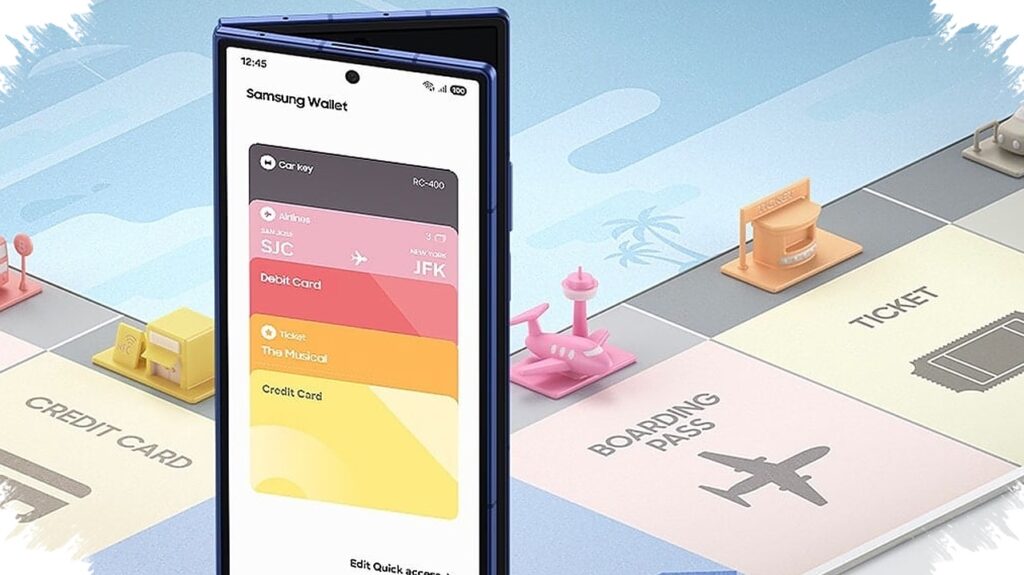
Samsung Wallet is taking a more practical role for travelers by bringing tickets, reservations, and trip details into one place. The new feature, called Trips, is designed to reduce the usual hassle of jumping between email, airline apps, hotel services, and event tickets while on the move.
Instead of leaving travel information scattered across multiple platforms, Trips builds a single timeline that keeps the full itinerary easier to track. Samsung Wallet is therefore evolving beyond a payment app and moving closer to becoming a travel management hub.
A timeline that sorts the trip automatically
One of the main ideas behind Trips is automatic organization. When a user adds a ticket or booking detail, the system reads the available information and arranges it by date and time.
That means the itinerary can appear in a clear order without manual sorting. A flight, hotel check-in, and return journey can all be shown in sequence, making the travel flow easier to understand at a glance.
This structure is especially useful for users who usually store booking confirmations but do not organize them afterward. When information is needed during a trip, having it grouped in one timeline makes access faster and less stressful.
More than flights and hotels
Samsung says Trips is not limited to airline tickets. The feature also supports other forms of transportation, including buses and trains, and these can sit in the same timeline as the rest of the trip.
Hotel reservations and car rentals are also part of the coverage. Event tickets such as concert passes or admission to theme parks can be stored alongside travel documents as well.
That broader support matters because many trips combine several services in one schedule. A person may move from transport to hotel to entertainment, and Trips is meant to keep all of it visible in a single view.
Manual entries still have a place
Trips does not rely only on digital tickets or formal bookings. Samsung also allows users to add manual items, such as local tours, meeting points, or other plans that may not come with an official reservation.
Each entry also includes a notes field. This gives users space to add extra details that may be useful while traveling, especially when an activity needs a reminder or a small instruction attached to it.
The manual input option helps the itinerary feel more complete. In real-world travel, not every part of a plan comes with a ticket, so extra notes can help preserve the full schedule in one place.
Why the feature stands out
The appeal of Trips lies in convenience. By gathering travel information into one space, Samsung reduces the need to open email, then switch to a ticket app, then move again to a hotel service.
Automatic sorting by time adds another layer of usefulness. When travel is busy and plans can change quickly, a clean timeline can reduce confusion and make the next step easier to find.
The feature is not built around a complex concept. Its value comes from handling a common travel problem in a simple way, which may be enough to make it useful for many users carrying multiple bookings at once.
Rollout begins in selected markets
Samsung says Trips in Samsung Wallet will start rolling out at the end of this month. The first markets to receive it are South Korea, the United States, and the United Kingdom.
The company says other regions will follow later, although it has not shared a detailed expansion schedule yet. Because the rollout is gradual, access will not arrive at the same time for all users.
For those who receive the update first, Trips offers a new way to keep tickets and bookings organized without having to open several apps throughout the journey.