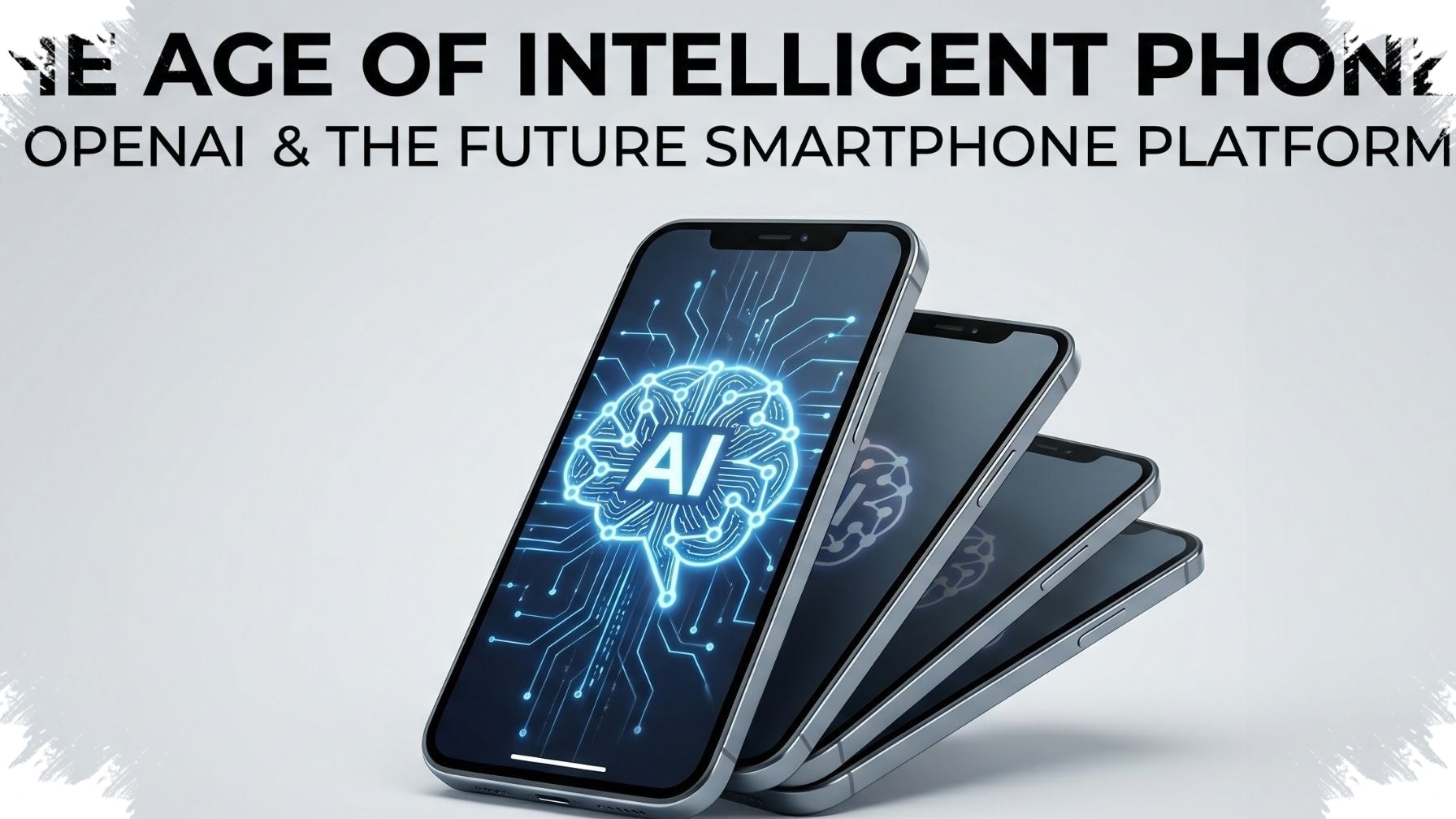
OpenAI is reportedly preparing a move beyond software and into consumer hardware with a smartphone centered on artificial intelligence. According to industry analyst Ming-Chi Kuo, the device would rely on a custom chipset built specifically for AI processing, making intelligence the core of the user experience rather than an added feature.
If the report proves accurate, the company would be stepping into a new category of products that could bring AI closer to everyday mobile use. The idea also reflects a broader shift in the industry, where more computing work is being pushed directly onto the device instead of depending entirely on cloud services.
AI processing closer to the device
The reported strategy fits a wider trend toward on-device AI, where part of the workload runs locally on the smartphone. That approach can reduce reliance on external servers and may improve response speed for tasks that need fast, context-aware processing.
This matters for functions such as digital assistants and natural language handling. When AI operates closer to the handset, interactions can feel more seamless because the system does not always need to send requests to a remote cloud server.
Custom chip design could define the product
Kuo’s report also points to OpenAI considering a custom chip for the smartphone. Such a move would give the company more control over performance, power efficiency, and how hardware and software work together.
A chip designed for this purpose can be especially important for AI-heavy tasks like real-time image and video processing. In that setting, hardware efficiency becomes a key factor because the device must handle smart features without sacrificing speed or battery life.
That kind of specialized component could also separate the product from conventional smartphones. Instead of treating AI as a secondary layer, OpenAI could build a device where the chipset is designed around AI functions from the start.
Manufacturing would likely depend on partners
OpenAI is said not to have its own hardware production line, which makes a manufacturing partner the most likely route. Working with an experienced producer could speed up development and reduce the technical burden of entering the consumer device market.
This collaboration model would also help OpenAI avoid building an entire supply chain from scratch. At the same time, it shows that the company’s push into hardware would still depend heavily on outside partners for execution and manufacturing strength.
A crowded race in AI devices
The reported project arrives as competition in AI-powered consumer devices continues to intensify. Many technology companies are trying to embed AI more directly into hardware so interactions become faster, more personal, and more contextually aware.
Should OpenAI’s smartphone materialize, it could offer a different way of using a phone through natural commands and deeper AI integration. Users may be able to rely more on voice or language-based instructions to reach apps, services, and information without moving through menus manually.
For now, the smartphone remains an unconfirmed report, and OpenAI has not publicly detailed any specifications, launch timeline, or target market. Even so, the direction described by Kuo suggests a potential shift in how the company could approach mobile technology, with AI placed at the center of the device rather than delivered only through cloud-based services.
Source: selular.id-
-
-
-