Pixel 11 may be headed into launch season with a split personality. The latest Tensor G6 leak points to a major CPU upgrade, while its graphics side appears far less ambitious.
That contrast matters because Tensor sits at the center of Google’s performance story. If the leak holds up, Pixel 11 could feel noticeably faster in everyday use and demanding compute tasks, yet not deliver the same kind of leap in gaming or graphics-heavy work.
A new CPU layout built around ARMv9.3-A
Mystic Leaks shared the Tensor G6 details through Telegram and tied the chip to ARMv9.3-A architecture. The leaked configuration suggests a new CPU design built on ARM C1-Ultra and ARM C1-Pro cores.
According to the leak, Tensor G6 uses one ARM C1-Ultra Prime core at 4.11 GHz, four ARM C1-Pro cores at 3.38 GHz, and two ARM C1-Pro cores at 2.65 GHz. That forms a 1+4+2 setup, which differs from the 1+5+2 arrangement said to be used by Tensor G5.
The change in core type is the main reason this leak is drawing attention. ARM C1 cores are described as much more powerful and more efficient than the A-series cores they replace, so the shift suggests Google is prioritizing a stronger compute foundation for the next Pixel generation.
Why the CPU gains could matter most
If these specifications are accurate, Pixel 11 should benefit in areas that depend heavily on processor speed. That includes interface responsiveness, app processing, and heavier CPU-driven workloads.
Power efficiency may improve as well, since the new cores are said to be more energy-efficient. For users, that could translate into a phone that feels quicker without necessarily needing a dramatic design overhaul.
The leak also links ARM C1 cores to the Dimensity 9500 chipset. That connection helps frame Google’s direction, since it suggests Tensor G6 is following a broader industry move toward more serious compute upgrades.
The graphics side looks much more conservative
The GPU story is less exciting. Tensor G6 is said to use a PowerVR C-Series CXTP-48-1536, with only a modest overclock possible.
The concern is not only frequency. The GPU design itself is seen as relatively old, which makes the graphics upgrade look far smaller than the CPU jump.
That creates a likely imbalance for Pixel 11. Processor-heavy tasks may improve sharply, but gaming and demanding visual workloads may not advance at the same pace expected from a flagship phone.
What this could mean for Pixel 11’s appeal
A chip can feel very strong in one area and merely adequate in another when one side of the design moves much faster than the other. Tensor G6 appears to be shaping up that way, with CPU performance taking the lead while GPU progress stays restrained.
For Google, that may still fit a strategy focused on core system responsiveness and on-device computation. But for a premium device, the market often expects broader gains, especially in graphics and gaming.
The leak also gives internal codenames for the Pixel 11 lineup. The standard model is said to be “Cubs,” the Pixel 11 Pro is “Grizzly,” and the Pixel 11 Pro XL is “Kodiak.”
Those names do not reveal specifications directly, but they do indicate the Pixel 11 family is already deep in internal development. Details like that often surface alongside platform and hardware information as a device gets closer to launch planning.
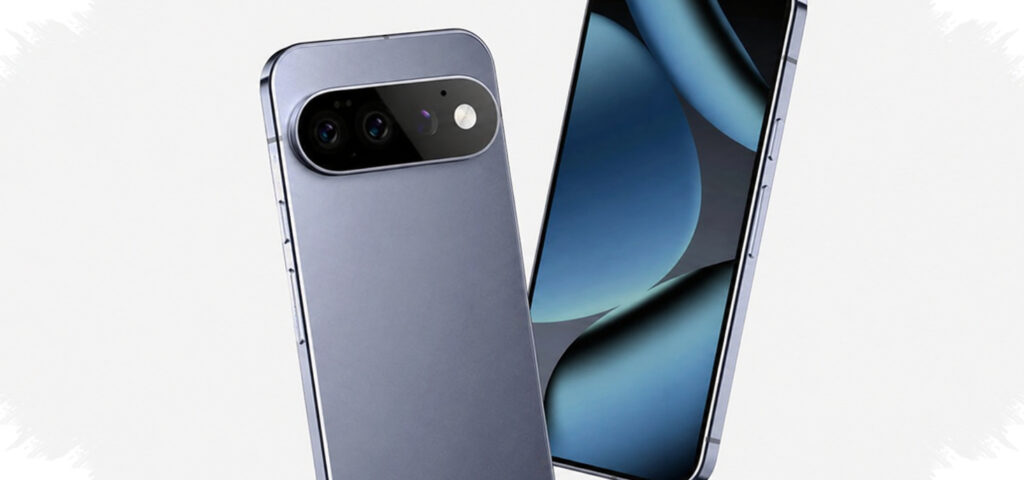
Render leaks for Pixel 11 have also reportedly appeared more than once. Google is expected to give an early preview at Google I/O 2026 in May, ahead of a full Pixel 11 launch that is said to arrive in August 2026.
For now, Tensor G6 looks set to become the most talked-about part of the Pixel 11 story. The CPU promise is the headline attraction, while the GPU may be the part that sparks the biggest debate when the phone moves closer to launch.