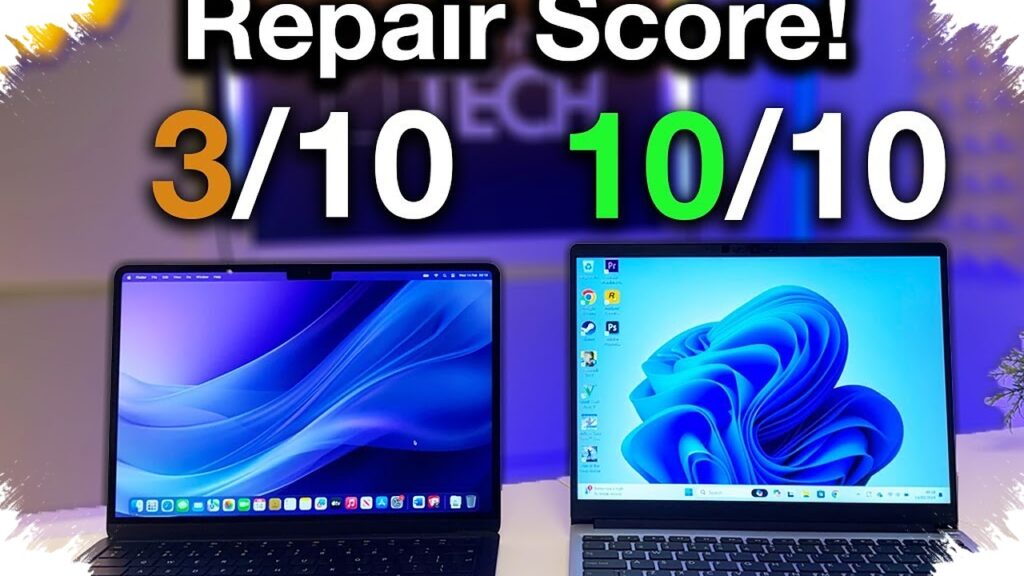
Framework is pushing its modular laptop idea into a more premium lane with the Framework Laptop 13 Pro, a machine designed to appeal to users who want high-end hardware without giving up the freedom to repair and upgrade it themselves. The company describes it as a kind of “MacBook Pro for Linux” experience, pairing first-party Linux support with a hardware platform that still follows a bring-your-own-OS approach.
That positioning matters because the laptop is not trying to look like a compromise. It combines performance-focused components, a more refined chassis, and the same modular philosophy that has defined Framework’s products from the start.
High-end chip options with flexible power behavior
Framework Laptop 13 Pro is built around Intel Core Ultra third-generation processors based on the Panther Lake architecture. The lineup starts with the Ultra 5 325 and goes up to the Ultra X9 388H, while an AMD Ryzen AI 300 version is also available.
At the top end, the Intel model includes Intel Arc B390 graphics and an NPU with up to 50 TOPS of AI performance. The laptop can also shift its power use from a 15W efficiency mode to 60W when more performance is needed.
Modular parts remain a core feature
One of the most notable design choices is the use of LPCAMM2 memory based on LPDDR5X. Unlike soldered LPDDR memory, this format keeps upgradeability open while still aiming to preserve power efficiency.
Framework says memory capacity can go up to 64GB. Storage is handled through a PCIe Gen5 M.2 2280 slot, with support for SSDs up to 2TB, while larger PCIe Gen4 drives can still be used.
The company’s expansion-card system is also still part of the package. Users can swap ports as needed, including USB-C, HDMI, and Ethernet.
A display and chassis aimed at a more polished feel
The screen follows a 13.5-inch 3:2 format with a resolution of 2880 x 1920 pixels. It uses an LTPS panel with adaptive refresh rates from 30Hz to 120Hz, 100 percent sRGB coverage, and brightness reaching 700 nits.
Framework also applies a matte layer to reduce reflections. Combined with the taller aspect ratio, the display is meant to work better for long stretches of productivity in different lighting conditions.
The hardware design has also been refined. The chassis now uses CNC-machined aluminum, while the keyboard offers 1.5mm key travel and the haptic touchpad uses piezoelectric technology for more precise feedback.
Compatibility is still part of the pitch
Framework is also keeping backward compatibility in focus. That means owners of earlier generations should still be able to use components they already have instead of replacing the entire laptop.
The battery inside the Framework Laptop 13 Pro is rated at 74Wh and is targeted for up to 1,000 charge cycles. It also includes Wi-Fi 7 and a 1080p webcam with a physical privacy switch.
For DIY buyers, pricing starts at $1,199. Framework says the laptop is designed to be assembled in about 10 to 20 minutes, after which users can tailor RAM, storage, ports, and operating system to match their needs.