


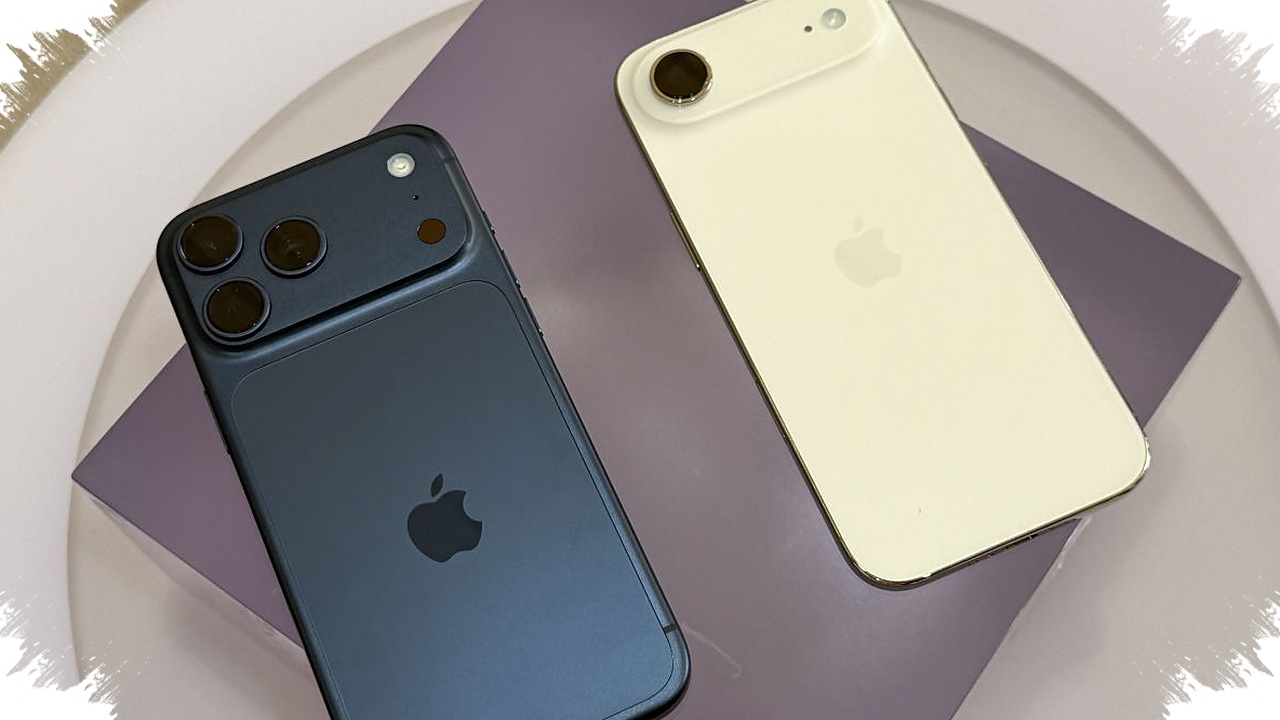
At first glance, the safer pick between the two new mid-tier iPhones is not the one that looks most futuristic. The more restrained choice, iPhone 17, is the model that appears easier to recommend for most everyday users.
That does not mean iPhone Air lacks appeal. It is the more striking device, built around an extremely thin 5.6mm body and a 165 gram weight that immediately set it apart from the 8mm, 177 gram iPhone 17.
Price and value set the tone
The gap starts with the price. iPhone 17 begins at around $799, while iPhone Air starts at $999, making the difference close to $200 before storage enters the conversation.
That extra spending also buys a different ceiling. iPhone Air goes up to 1TB of storage, while iPhone 17 tops out at 512GB.
Design is where iPhone Air makes its strongest case
iPhone Air leans heavily on a premium feel. Its titanium frame and ultra-thin profile give it a more distinctive presence than the aluminum-built iPhone 17.
The camera layout also helps separate the two. iPhone Air uses a horizontal module, while iPhone 17 keeps a more traditional vertical dual-camera arrangement.
Even so, the core protections are still shared. Both phones keep Dynamic Island, a flat display, and IP68 certification.
The display gap is smaller than the design gap
On the screen side, the two models are almost on equal footing. Both use OLED panels with a 120Hz refresh rate and peak brightness of up to 3,000 nits.
The main difference comes down to size. iPhone 17 has a 6.3-inch display, while iPhone Air stretches to 6.5 inches.
That makes iPhone Air feel more comfortable for scrolling and watching video. In pure visual quality, though, the two are close enough that the difference is not easy to separate.
Camera versatility still favors iPhone 17
For people who care about photography, iPhone 17 carries the more complete setup. It includes a 48MP wide camera and a 48MP ultra-wide camera.
iPhone Air has only a single 48MP wide rear camera. That means iPhone 17 is better suited for wider scenes and more flexible shooting options.
Video support is similar on both devices. Each model handles 4K at 60fps and 1080p up to 240fps.
Performance goes to Air, but the gap is not decisive for daily use
iPhone Air has the stronger hardware on paper. It runs on the A19 Pro chip and 12GB of RAM, while iPhone 17 uses the A19 chip with 8GB of RAM.
In day-to-day use, both are described as smooth for gaming, editing, and multitasking. That means Air’s advantage is more about longer-term headroom than an obvious everyday speed leap.
For most users right now, iPhone 17 already has more than enough performance.
Battery life is the most practical split
The thinnest phone is also the one that gives up the most on battery capacity. iPhone Air carries a 3,149 mAh battery, while iPhone 17 comes with a larger 3,692 mAh cell.
That difference makes iPhone 17 look safer for full-day use. iPhone Air can still handle normal use, but it is less certain to last until night.
Charging speeds widen the gap further. iPhone 17 supports 40W charging, while iPhone Air is limited to 20W.
There is a MagSafe battery option for Air, but it adds extra cost and takes away some of the advantage of buying such a thin device in the first place.
The more balanced choice is also the less dramatic one
The decision comes down to priorities. iPhone 17 is the better fit for buyers who want a more reasonable price, longer battery life, a more complete camera system, and a balanced overall package.
iPhone Air is built for users who value thinness, lightness, and a more premium appearance. It also brings a titanium frame and stronger future-proof performance.
For most people, though, iPhone 17 stands out as the safer choice. iPhone Air remains interesting, but its biggest strengths are design and in-hand feel rather than feature completeness.