


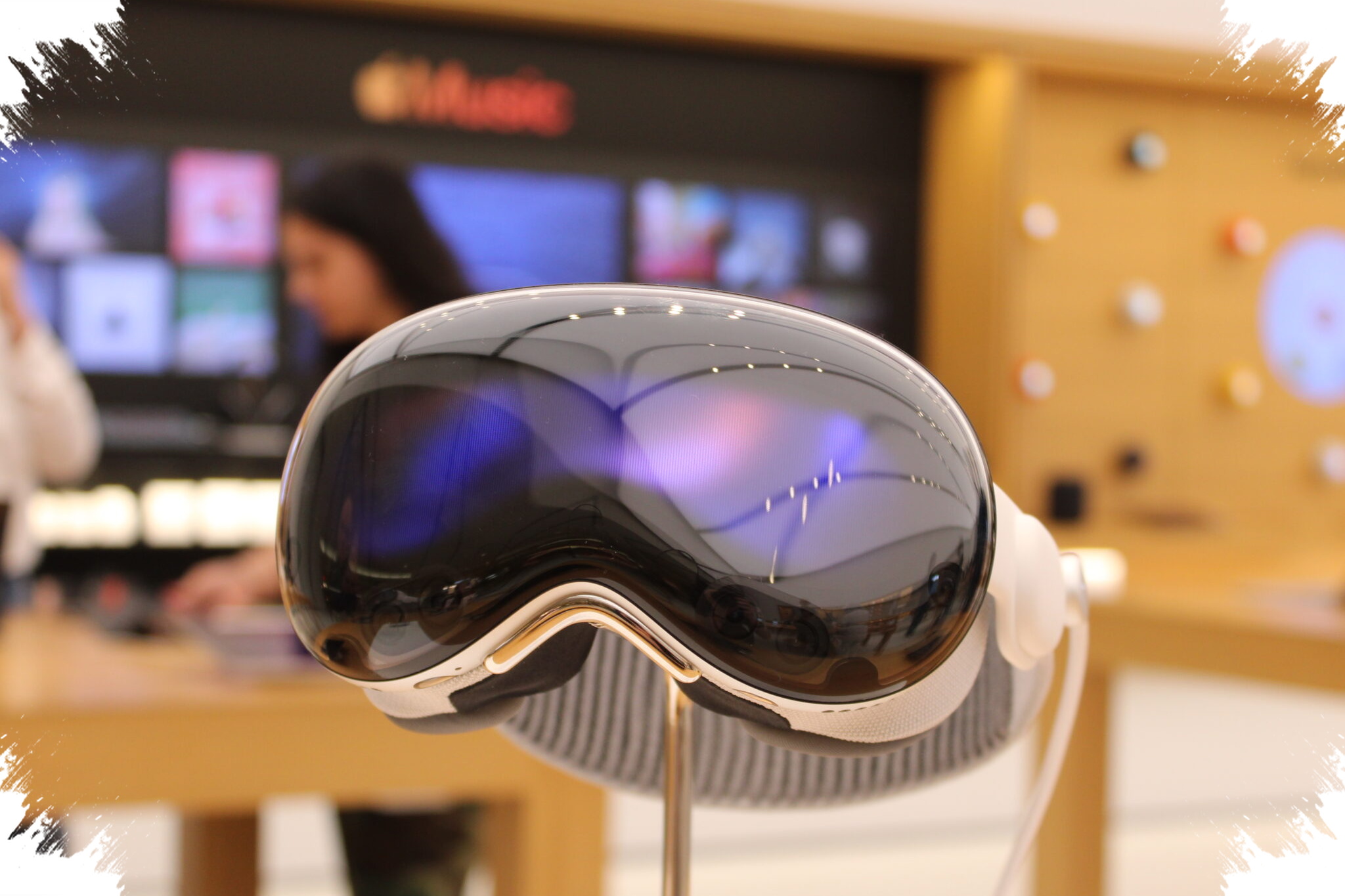
Apple’s wearable roadmap may be entering a pivot point. Instead of moving quickly into a next-generation Vision Pro, the company is reportedly giving more weight to smart glasses that are lighter and more practical for everyday use.
That shift matters because Vision Pro was presented as Apple’s entry into spatial computing, yet the headset has faced familiar hurdles from the start: a high price, a heavy build, and demand that has not grown as strongly as expected.
A product that has not reached mass-market scale
Apple introduced Vision Pro in February 2024 with a starting price of US$3,499. The device later received an update with a more advanced chip in 2025, but market interest reportedly did not increase in a meaningful way.
Sales have been estimated at around 600,000 units. That is a notable figure for a new product, but it is still far from the scale Apple typically reaches with iPhone and Mac devices.
As a result, Vision Pro is increasingly seen as a technology showcase rather than a mainstream Apple product. The situation also suggests that Apple is still searching for the right formula to make spatial computing attractive to a wider audience.
Ambitious hardware, limited comfort
On paper, Vision Pro remains one of Apple’s most advanced devices. It uses micro-OLED displays with more than 23 million pixels in total and relies on laptop-class chips to keep apps running smoothly.
The challenge appears once the device is worn for longer periods. Its weight is estimated at about 750 to 800 grams, which can feel burdensome on the nose and head during extended use.
Apple has already prepared several headband options to improve comfort. Even so, the weight distribution is still considered less than ideal, making long-term wear a major issue for a device built around daily immersion.
The premium price has also narrowed the audience. With an app ecosystem that is still developing, many buyers appear to be waiting rather than committing to a costly product that has not fully matured.
Smart glasses are emerging as the more practical bet
Against that backdrop, Apple is now rumored to be looking at smart glasses as a higher priority. This category is expected to bring a lighter design, simpler handling, and a form factor that fits everyday routines more naturally.
That approach is seen as more realistic for an early stage of wearable adoption. Compared with the bulkier and more complex Vision Pro, smart glasses would offer a more modest experience that is easier to live with.
The trade-off is clear. Apple is reportedly planning to reduce the hardware ambition, including moving away from laptop-class chips. Instead, the focus is expected to shift toward more basic functions.
Camera, audio, and light integration with the Apple ecosystem are said to be the main priorities. The goal would be to make the product useful without forcing it to match the processing demands of Vision Pro.
A strategy that follows industry reality
The direction also reflects a broader pattern in the wearable market. Meta Platforms has already taken a similar path through its collaborations, emphasizing lifestyle use and practical features rather than pushing the most complex hardware possible.
If this change is accurate, Apple appears to be resetting its priorities. The company is no longer focused only on building the most advanced device, but on finding a product that aligns better with daily consumer needs.
For wearable devices, that balance can matter more than raw technical ambition. Comfort, pricing, and a mature ecosystem often decide whether a new category can move beyond curiosity and into wider adoption.
Apple has not confirmed the rumor. Still, if the company does move in this direction, smart glasses could become a new entry point for Apple’s wearable ambitions.