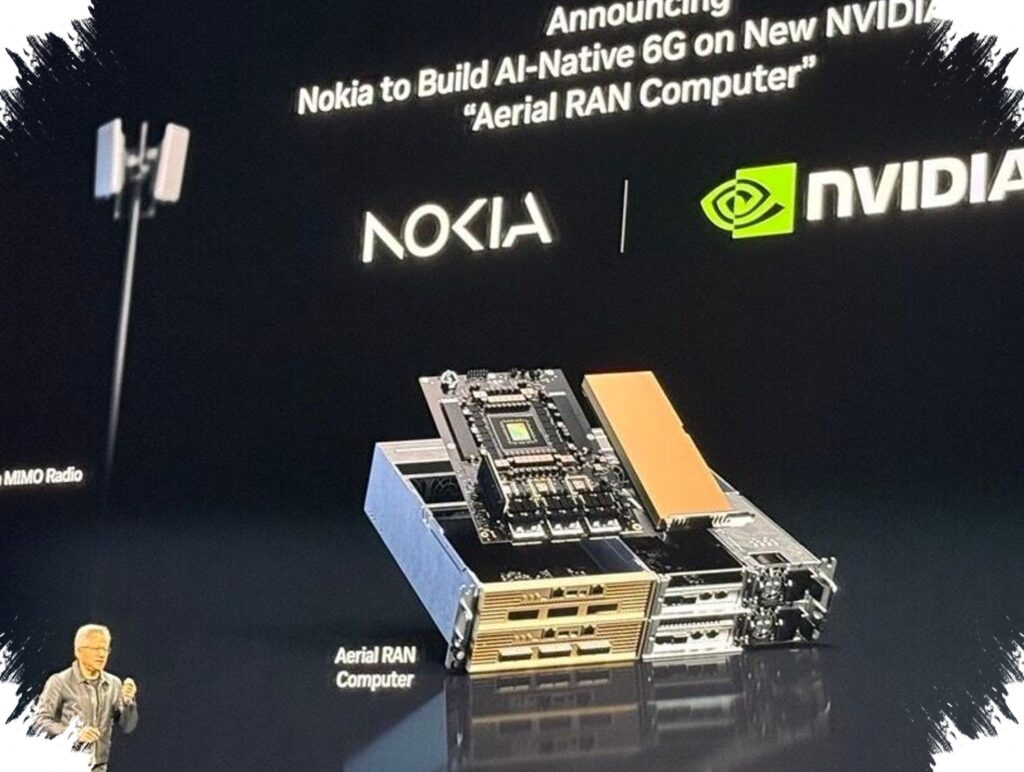
Nokia is gaining an unexpected second act from the AI infrastructure boom, with its optics business moving closer to the center of a market that is demanding faster and more reliable data movement. That shift has become even more visible after Nvidia committed $1 billion for a 3% stake in Nokia, a move that signals confidence in the company’s role inside high-speed network infrastructure.
The change in perception matters because Nokia is no longer being viewed only through the lens of mobile networks. As AI data centers expand, the company is increasingly seen as a supplier of the optical systems that help move massive amounts of data across those facilities.
AI data centers are reshaping Nokia’s growth story
The buildout of AI infrastructure depends on connectivity that can handle far greater speed and reliability than many older networks were designed to provide. That is where Nokia’s optical networking business has become more strategically important.
This trend is also reflected in Nokia’s longer-term revenue outlook. Data center networks are expected to account for 40% of Nokia’s revenue by 2028, a level that points to a major shift in the company’s mix of business.
That projection suggests Nokia’s future may depend less on legacy categories and more on the role it plays in large-scale AI infrastructure. In that setting, optical networking is not a side business but a core part of the data delivery chain.
Nvidia’s investment adds strategic weight
Nvidia’s $1 billion investment is more than a capital injection. The 3% ownership stake also sends a clear message that Nvidia sees value in Nokia’s technology direction.
For the market, the deal strengthens Nokia’s position in mobile networks while also broadening its relevance in faster-growing high-speed infrastructure. Support from Nvidia is often interpreted as a sign that a company has a meaningful role in the AI and data center supply chain.
That perception has drawn more attention to Nokia’s business beyond its traditional network equipment and handset-era legacy. It has also helped frame the company as part of a much larger infrastructure cycle tied to AI demand.
A new valuation narrative is emerging
If the forecast for data center network revenue proves accurate, the implications for Nokia’s valuation could be significant. Growth in optics, combined with Nvidia’s backing and Nokia’s existing presence in mobile networks, creates a more compelling story for investors.
The stock has already risen 170% last year. Even after that move, some analysts still see substantial room for upside over the next three to five years, as demand for AI infrastructure continues to expand.
The key question now is execution. Markets will watch closely to see how quickly Nokia can turn rising data center demand into actual revenue, especially as the 40% target for 2028 becomes a benchmark for measuring progress.
What is clear is that optical networks have returned to the center of global technology competition. Nokia now sits between a mature mobile network business and a much larger opportunity tied to the AI buildout.