


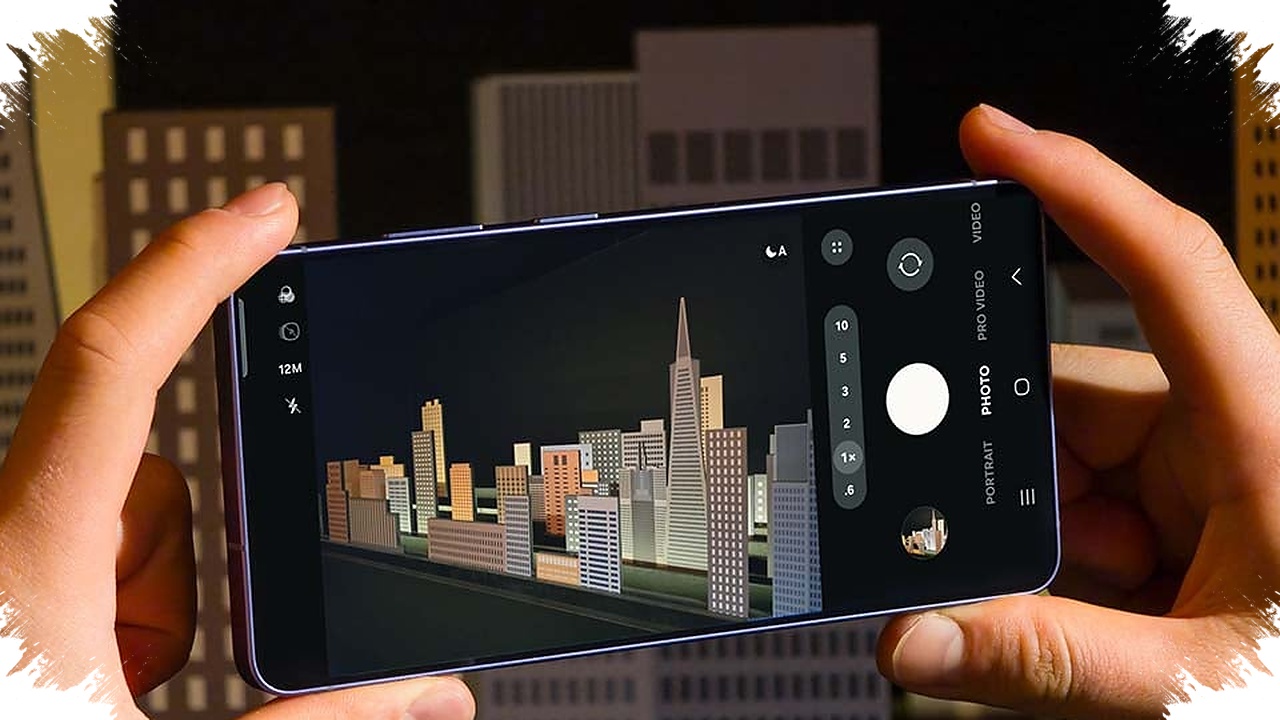
Samsung is pushing Galaxy S26 Ultra’s low-light shooting in a more deliberate way, with Nightography now built around both brighter optics and smarter processing. The focus is not only on making scenes visible, but on preserving a natural look when light is scarce.
The main camera now uses a 200MP sensor with an f/1.4 aperture, which is designed to pull in more light in dark environments. Compared with Galaxy S25 Ultra, Samsung says the main camera can capture 47% more light, helping night photos look cleaner and less artificial.
Brighter optics across the system
The low-light upgrade is not limited to the primary camera. The 50MP telephoto lens with an f/2.9 aperture also receives a gain in light capture, with Samsung claiming a 37% improvement.
That increase is meant to reduce noise while keeping color accuracy under control. In dim scenes, the goal is to preserve detail without flattening the atmosphere that makes night photography distinctive.
AI processing takes a bigger role
Behind the camera hardware, Galaxy S26 Ultra relies on Snapdragon 8 Elite Gen 5 for Galaxy. The chipset includes AI ISP, or Image Signal Processor, which processes images more intelligently while a shot is being taken.
Samsung says the system separates facial elements, backgrounds, and color in real time. That approach is intended to sharpen images and reduce grain, especially in night selfies and other difficult low-light shots.
The combination of a larger sensor and AI-driven processing forms the core of the phone’s Nightography approach. Samsung is clearly treating low-light performance as more than a hardware upgrade, with software now handling a larger share of the work.
Video in low light also gets attention
Night shooting is not only about still images on Galaxy S26 Ultra. Samsung also adds Super Steady with Horizontal Lock for video, which works like a virtual gimbal to keep footage stable.
The feature is meant to hold the horizon level while recording during movement, whether the user is walking or running. In dark conditions, that kind of stabilization matters even more because small motion can quickly make video look shaky.
Simple controls for everyday use
Despite the more advanced Nightography setup, Samsung keeps the camera experience straightforward. Users can open the Camera app, switch to Photo or Video, and let the system detect low light automatically.
A Moon icon or Night mode can also be enabled manually for stronger results. For extremely dark situations, Pro mode is available, while long-exposure controls can be accessed with help from the Camera Assistant app.
Testing in misty, low-light conditions
The camera system was also tested in Sapa, Vietnam, a location known for cold weather, thick fog, and limited city lighting. Sites such as Sapa Stone Church and Sun Plaza were used to evaluate how the sensor handled difficult conditions.
In that setting, Galaxy S26 Ultra was reported to maintain building texture and the natural mood of the night scene. The results were described as avoiding the overly bright, unrealistic look that sometimes appears in aggressive night processing.
Taken together, the upgrades suggest Samsung is not relying on sensor size alone. Wider aperture, a brighter telephoto lens, AI ISP processing, and video stabilization all work toward the same goal: making Galaxy S26 Ultra a more serious camera for use after sunset.