


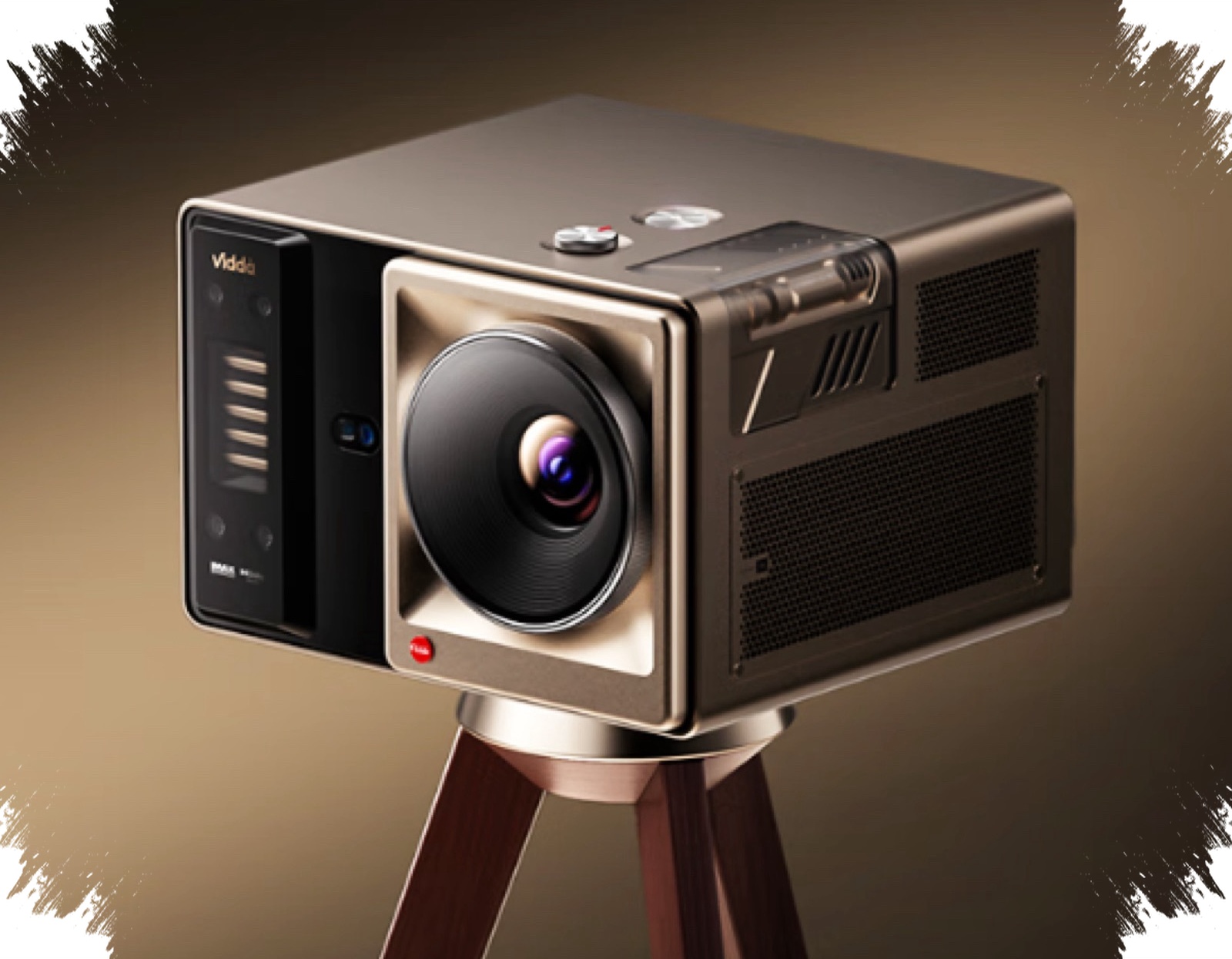
Hisense is pushing its portable projector lineup in a more ambitious direction with the Vidda LightGo, a model built around triple laser imaging and a 20,000mAh battery. That combination immediately sets it apart from many mobile projectors that still rely on simpler light sources and depend heavily on a power outlet.
The new device is aimed at users who want a big-screen setup without giving up mobility. Hisense appears to be targeting more flexible use cases, including outdoor viewing, temporary rooms, and other spaces where a compact projector has to perform under less controlled conditions.
Two versions, same portable focus
Vidda LightGo arrives in two models: a standard version and a Plus variant. The standard model is priced at 3,899 yuan, while the Plus version costs 3,999 yuan.
Both versions use 1080p resolution rather than 4K. Even so, Hisense is leaning on triple laser technology to improve color accuracy and contrast compared with many portable projectors that still use conventional LED-based systems.
At the core of the projection system is the QuaLas 42 laser engine. Hisense pairs it with HDR10+ support and 110 percent BT.2020 color coverage, aiming to keep images vivid and visually rich.
Brightness and setup flexibility
The two models differ mainly in brightness. The standard version delivers 1300 CVIA lumens, while the Plus model increases that figure to 1400 CVIA lumens.
That extra brightness is modest, but it should still help in outdoor or partially lit environments. In those situations, every additional amount of light can make the image easier to see and more comfortable to watch.
Hisense also gives the LightGo an optical zoom lens with a 1.0 to 1.3:1 throw ratio. With that setup, the projector can display a 100-inch image from roughly 2.2 meters away.
To make installation easier, the projector includes autofocus and automatic keystone correction. It also comes with a 360-degree gimbal stand, which helps users direct the projection upward or downward without complicated adjustments.
Built for movement, not just home use
Portability remains one of the strongest parts of the package. The LightGo weighs 2.1 kg and includes a built-in strap, making it easier to carry from place to place.
Hisense is also emphasizing durability for harsher environments. The projector is said to operate in freezing temperatures down to -20 degrees Celsius, a detail that is unusual for a portable projector and especially relevant for outdoor use.
Battery life and onboard sound
A major selling point is the 20,000mAh battery. Hisense estimates that this capacity is enough for about two and a half hours of video playback.
That runtime is close to the length of a standard movie, which means the projector can be used for short outdoor viewing sessions without depending entirely on wall power. For users who want a flexible setup in the yard or while camping, that battery capacity is one of the most important parts of the device.
Audio is handled by two 7W speakers with Dolby Atmos support. The built-in sound setup is meant to keep the projector usable on its own, without requiring external speakers right away.
Smart features and gaming support
Vidda LightGo also runs on a smart platform integrated with DeepSeek and Hisense’s own AI model. The software supports basic voice control and media streaming, adding convenience to its portable design.
On the connectivity side, Hisense includes an HDMI port with VRR and ALLM support. Those gaming-related features give the projector additional value for users who want to connect a console and use a large screen in a more flexible setting.
The LightGo launched alongside the Vidda C5 series, though the two products are positioned differently. While the C5 emphasizes JBL audio and 240Hz gaming support, the LightGo is clearly centered on portability and outdoor-ready use.