
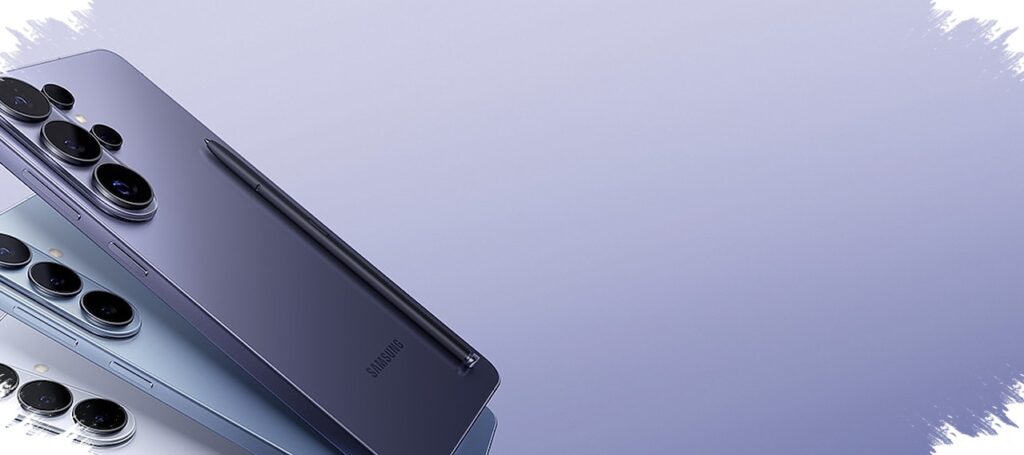
Samsung’s presence in the global smartphone sales charts for Q1 2026 was hard to miss. Five of the ten best-selling phones worldwide came from the company, and every one of them was an Android device.
What stands out most is that the strongest results did not come from Samsung’s flagship line. Instead, the company won through a mix of entry-level and mid-range models that paired accessible pricing with practical specifications and long software support.
Galaxy A07 4G leads Samsung’s affordable push
Among Samsung’s bestselling models, the Galaxy A07 4G emerged as the top-selling Android phone. It ranked fourth globally and posted strong sales in developing markets such as the Middle East, Africa, and Latin America.
Launched in August 2025, the Galaxy A07 4G focuses on a simple but appealing formula. Samsung backs it with 6 years of software updates and 6 years of security updates, a benefit that is still uncommon in the entry-level segment.
The hardware is modest but usable for daily needs. The phone comes with a 6.7-inch PLS LCD display with a 720 x 1600 pixel resolution and a 90Hz refresh rate.
Inside, Samsung uses the MediaTek Helio G99, paired with 4GB, 6GB, or 8GB of RAM and 64GB, 128GB, or 256GB of storage. The camera setup includes a 50MP f/1.8 main camera and a 2MP f/2.4 depth sensor, while a 5000 mAh battery with 25W charging keeps the device running.
The A17 duo also helps Samsung stay near the top
Samsung also placed both the Galaxy A17 5G and Galaxy A17 4G in the top five. The 5G version uses the Exynos 1330 and receives the same 6 years of software updates and 6 years of security updates.
Its 6.7-inch Super AMOLED screen offers 1080 x 2340 resolution, a 90Hz refresh rate, 800 nits of brightness, and Gorilla Glass Victus protection. The rear camera system consists of a 50MP f/1.8 main camera with OIS, a 5MP f/2.2 ultrawide camera, and a 2MP f/2.4 macro camera.
The Galaxy A17 4G uses the MediaTek Helio G99 and keeps the same 6.7-inch Super AMOLED panel with 1080 x 2340 resolution. It also carries the same rear camera arrangement, including the 50MP f/1.8 OIS main camera, 5MP ultrawide, and 2MP macro unit.
Both versions are equipped with a 5000 mAh battery and 25W charging through USB Type-C. On the 4G model, Samsung adds a 13MP f/2.0 front camera, mono speaker, side-mounted fingerprint sensor, and IP54 certification.
Mid-range demand remains a major advantage
Samsung’s higher-positioned Galaxy A56 shows that the company still has a strong pull in the mid-range segment. It was the third most popular model in the list and serves as the most premium version of the 2025 Galaxy A series.
The phone uses an aluminum frame, Gorilla Glass Victus+ on both the front and back, and an IP67 rating. Its 6.7-inch Super AMOLED display runs at 1080 x 2340 resolution, 120Hz refresh rate, and up to 1900 nits of brightness.
Samsung equips the Galaxy A56 with the Exynos 1580, 6GB or 8GB of RAM, and 128GB, 256GB, or 512GB of storage. The camera system includes a 50MP f/1.8 OIS main camera, a 12MP f/2.2 ultrawide camera, and a 2MP f/2.4 macro camera.
Power comes from a 5000 mAh battery with 45W charging. The phone also features stereo speakers and an under-display fingerprint sensor.
The cheaper A36 still carries many of the same selling points
Below the A56, the Galaxy A36 gives Samsung another strong presence in the same family. It is positioned as the more affordable option, but it still keeps 45W charging, long software support, stereo speakers, an under-display fingerprint sensor, and IP67 resistance.
The main trade-off is its plastic frame. Even so, the Galaxy A36 is powered by the Snapdragon 6 Gen 3 and comes with 6GB, 8GB, or 12GB of RAM plus 128GB, 256GB, or 512GB of storage.
Taken together, Samsung’s five entries in the top-selling list point to a clear market formula. The company is spreading its strength across low-cost and mid-range devices, while long software support appears to be one of the most important reasons buyers keep choosing them.