


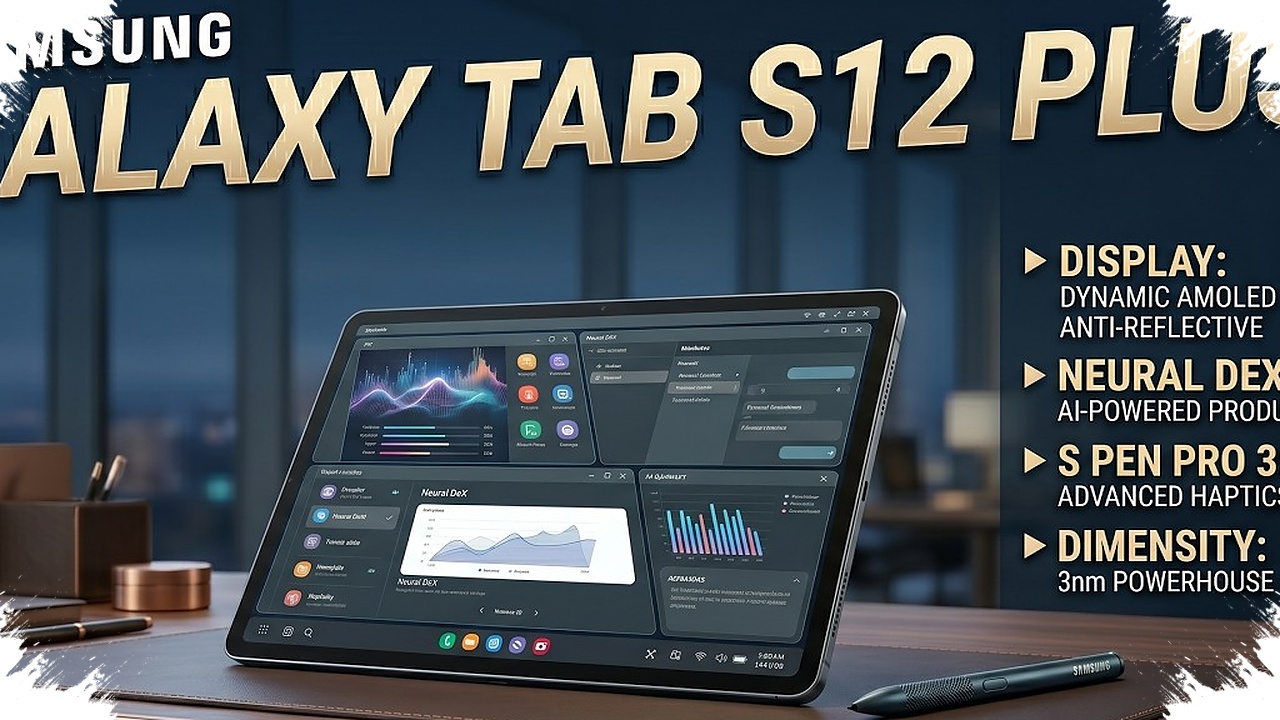
Samsung’s next premium tablet may be heading in a direction that puts on-device AI at the center of the experience. Clues found inside the company’s own AI Core app point toward a Galaxy Tab S12 lineup built around MediaTek’s Dimensity 9500 rather than a Snapdragon chip.
The detail matters because it suggests Samsung is not only changing its chipset strategy again, but also shaping the tablet around local AI processing. Android Authority reported references to MT6993, a model number associated with the Dimensity 9500, which gives the strongest early hint yet about the hardware path for Samsung’s upcoming flagship tablet family.
A familiar shift in Samsung’s tablet strategy
The possibility of another MediaTek-powered flagship tablet is not entirely surprising. Samsung has already been moving in that direction with its upper-tier tablets, and the Galaxy Tab S10 and Galaxy Tab S11 were also linked to high-end Dimensity chips.
That pattern would continue if the Galaxy Tab S12 series follows the same route. It would also reinforce the idea that Samsung no longer relies solely on Qualcomm for its premium tablet lineup, especially where the company wants more control over performance, efficiency, and AI behavior on a large-screen device.
Why Dimensity 9500 stands out
The Dimensity 9500 is said to be built on TSMC’s 3nm process. It is also described as placing strong emphasis on AI processing and power efficiency, two areas that fit a premium tablet well.
MediaTek is also said to use an all-big-core CPU configuration for the chip. Combined with a newer Mali GPU, that setup is expected to support gaming and multitasking on tablets that often run heavier workloads than smartphones.
That is important for a device in the Galaxy Tab S12 class. Tablets are frequently used for productivity apps, split-screen work, and media handling, so stable performance and battery efficiency matter as much as raw speed.
AI Core hints at the software direction
The software clues are just as revealing as the chipset reference. Inside AI Core, several on-device AI features are mentioned for the Tab S12 line, including AI-generated wallpapers, generative image editing, image expansion, and Image Harmonization.
Those features point to a broader push toward local processing. Generative image editing and image expansion suggest Samsung wants users to handle more creative tasks directly on the tablet without depending entirely on cloud services.
Image Harmonization is especially notable because it is described as adjusting lighting and color intelligently when a subject is moved to a different background. That kind of processing is designed to make edits look more natural while staying on the device.
What this could mean for users
If Samsung follows through on this direction, the Galaxy Tab S12 series would likely be positioned as more than just a performance upgrade. The emphasis appears to be on practical AI tools that work quickly and with less dependence on remote servers.
Local AI processing can reduce latency and may also ease privacy concerns, since not every task needs to be sent to the cloud. For tablet users, that could make image editing, interface personalization, and visual processing feel more responsive, even when offline.
The rumored lineup is also expected to include Galaxy Tab S12+ and Galaxy Tab S12 Ultra models. Specific hardware details have not surfaced yet, but the launch window is said to be toward the end of the year, with September mentioned as the most likely period based on Samsung’s usual premium tablet timing.
For now, the chipset reference in AI Core remains an early sign rather than official confirmation. Even so, it paints a clear picture of where Samsung may be heading: a flagship tablet family built around MediaTek silicon and a much stronger focus on AI that runs directly on the device.