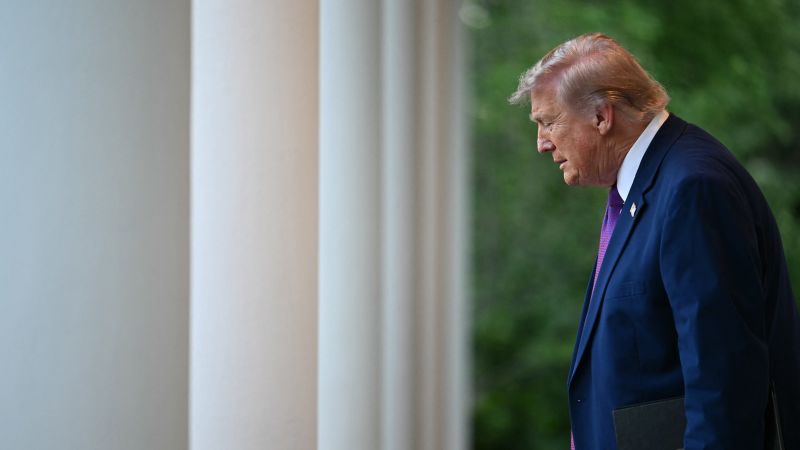
President Donald Trump is facing a sharper political squeeze as Congress moves to curb his war powers over Iran, and four Republicans helped make that rebuke unusually direct. The House passed the resolution 215-208, a result that underscored how even members of Trump’s own party are becoming less willing to give him wide latitude on a war that is already creating political risk at home.
The vote matters not only because it challenges Trump’s authority, but because it shows growing impatience inside the GOP with how he is handling the conflict. Speaker Mike Johnson tried to stop the measure, warning CNN that it would be “dangerous” and could weaken Trump’s bargaining leverage, yet the final tally still sent one of the clearest legislative warnings of his presidency.
A warning sign inside Trump’s party
The four Republicans who broke ranks gave the resolution enough momentum to pass the House and force a new round of scrutiny over Trump’s conduct on Iran. Their vote suggested that support for keeping the president fully free to manage the war is no longer as solid as it once looked.
That shift has broader implications ahead of November’s elections, especially as Trump’s poll numbers fall to historic lows. Republican concern is not limited to foreign policy, because a prolonged and politically costly war could deepen worries about the party’s prospects across the ballot.
If the measure clears the Senate, Trump would face a stark choice. He would either need Congress to approve the war or withdraw troops from Iran, although the White House has indicated it may view the underlying law as unconstitutional and could try to ignore the resolution.
Congress is checking him in other areas too
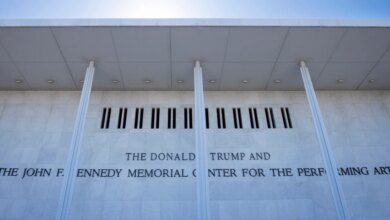
The Iran vote is part of a wider pattern in which Trump is running into resistance from institutions and lawmakers he often expects to bend to his will. He recently appeared to retreat on his push to control the Kennedy Center after an unfavorable federal ruling, signaling that Congress could take over the performing arts center instead.
That response stood out because it came from a president who usually acts as though the other branches of government are obstacles rather than partners. In this case, the judicial branch checked him first, and the legislative branch became the possible fallback.
A larger fight is also brewing over the “anti-weaponization” fund, which would set aside $1.776 billion for people who claim they were wronged by the Biden administration. Senate Republicans have largely resisted the idea, fearing it could become an unaccountable slush fund that rewards allies, including some January 6 defendants who assaulted police.
The budget fights are tightening the screws
Trump’s maneuvering room is also being narrowed in fights over money and personnel. Republicans have already balked at funding his requested East Wing ballroom, another example of a project they see as politically troublesome rather than essential.
The same pattern is showing up around the “anti-weaponization” fund, where even Trump’s own messaging has sounded uneven. Acting Attorney General Todd Blanche has said the idea is dead, while Trump has sounded less certain, leaving Congress with more room to block it if he keeps pressing ahead.
There is now even talk that lawmakers could vote to stop him from pursuing the fund at all. That kind of move has long been available, but Republican leaders have usually avoided going that far because they do not want to inflame Trump.
Personnel choices are creating more friction
Trump’s decision to name Federal Housing Finance Agency director Bill Pulte as acting director of national intelligence also drew skepticism on Capitol Hill. Republicans have not welcomed the pick, particularly because Pulte appears to lack intelligence experience.
That appointment could become a bargaining chip if Congress wants to renew Section 702 of the Foreign Intelligence Surveillance Act, a surveillance authority that is due to expire soon. Democratic votes will be needed for renewal, which gives opponents leverage if they want Trump to back down on the selection.
The combination of personnel fights, spending disputes, and war-powers pressure is creating a more constrained political environment than Trump usually prefers. Instead of setting the agenda freely, he is increasingly being forced to react to what Congress and the courts will allow.
Primary losses and less loyal allies add to the pressure
Trump also absorbed another political setback in the primaries, where his endorsed candidate, Rep. Randy Feenstra, lost the GOP gubernatorial primary in Iowa. That came after Trump had unseated several other high-profile incumbents and Indiana GOP state senators in earlier contests.
Some of those defeated incumbents are now becoming more unpredictable for Trump in Congress because they no longer have reelection pressure. Rep. Thomas Massie of Kentucky voted against him again by backing the war powers resolution, while Sens. John Cornyn of Texas and Bill Cassidy of Louisiana have grown more openly critical.
Cassidy’s stance is especially notable after he voted to let a war powers resolution move forward in the Senate following his own defeat. Those kinds of defections matter because they show Trump cannot assume every Republican will fall in line when his agenda collides with their political instincts.
Iran remains the biggest trap
Even with the congressional resistance, the deepest problem for Trump is the war itself. He appears to believe time is on his side and that pressure on Iran will eventually force a deal, but there are few signs the conflict is moving in a direction that helps him politically.
Trump told reporters Wednesday, “A ceasefire there is much different than a ceasefire in other parts of the world,” and said a deal might come together this weekend. But he has made similar claims before, and Iran has shown little reason to treat his threats of renewed large-scale strikes as credible.
That is why the House vote carried such weight. It did not just challenge one policy choice; it revealed how much more boxed in Trump has become as the war drags on, Republicans grow more uneasy, and Congress becomes less willing to wait for him to find a way out.
Read more at: www.cnn.com-
-

-

-