


A series of speeding penalties in the Monaco Grand Prix reshaped the race order and helped explain why Pierre Gasly lost a podium finish. The issue was not a simple case of drivers being wildly above the limit, but a subtle pitlane measurement problem that punished marginal line-cutting in a place where every metre matters.
Five drivers were given five-second penalties for speeding in the pitlane, including Lewis Hamilton, who finished second on the road, and championship contender George Russell. Gasly, Oscar Piastri and Franco Colapinto were also penalised, while Gasly later picked up a second penalty during a safety-car period after Lance Stroll’s crash at the final corner.
How the pitlane trap worked
The trigger appears to have been the way drivers positioned their cars through the pitlane. The area near the Cadillac end of the pits was slightly more open this year, which encouraged some drivers to cut the white line that marks the fast lane.
That move is legal in principle, but it created a hidden risk. Formula 1 measures pitlane speed with electronic timing loops and FIA transponders, not with cameras or radar guns, so the system calculates speed from the distance and time between loops.
If a driver cuts the line too tightly, the measured distance becomes shorter. A car can then appear to have covered that distance a fraction too quickly, even if its real speed stayed extremely close to the 60km/h limit.
Tiny margins, big consequences
The problem was already visible in practice, where four drivers were penalised for exceeding the limit by 0.5km/h or less. Russell was one of them, along with Kimi Antonelli, Alex Albon and Fernando Alonso.
Albon was later warned during the race that several drivers were being penalised and that it related to “cutting the line around the Cadillac area.” The detail mattered because the pitlane layout had changed enough to make that route more tempting than before.
The FIA and the teams had already discussed the issue during the weekend, and some drivers were warned before the race to be careful about their pitlane positioning. That background makes the wave of penalties less surprising, even if the scale of the impact still stood out.
Russell’s penalty became a drive-through
Russell’s race was hit hard when Mercedes failed to serve his penalty correctly during a double-stacked stop under the safety car. Instead of a clean five-second punishment, he received a drive-through penalty and fell to 13th after a late restart tightened the field.
Russell said Mercedes had told him “there was nothing I did wrong” and added that there was a “software issue.” That left the punishment tied not only to the original speeding call, but also to how the team handled the stop.
Hamilton’s penalty also showed how unforgiving Monaco can be, even when the original offence is tiny. In a race where track position is already at a premium, a five-second sanction can still reshape the order among the front-running cars.
Gasly’s podium disappeared after a second offence
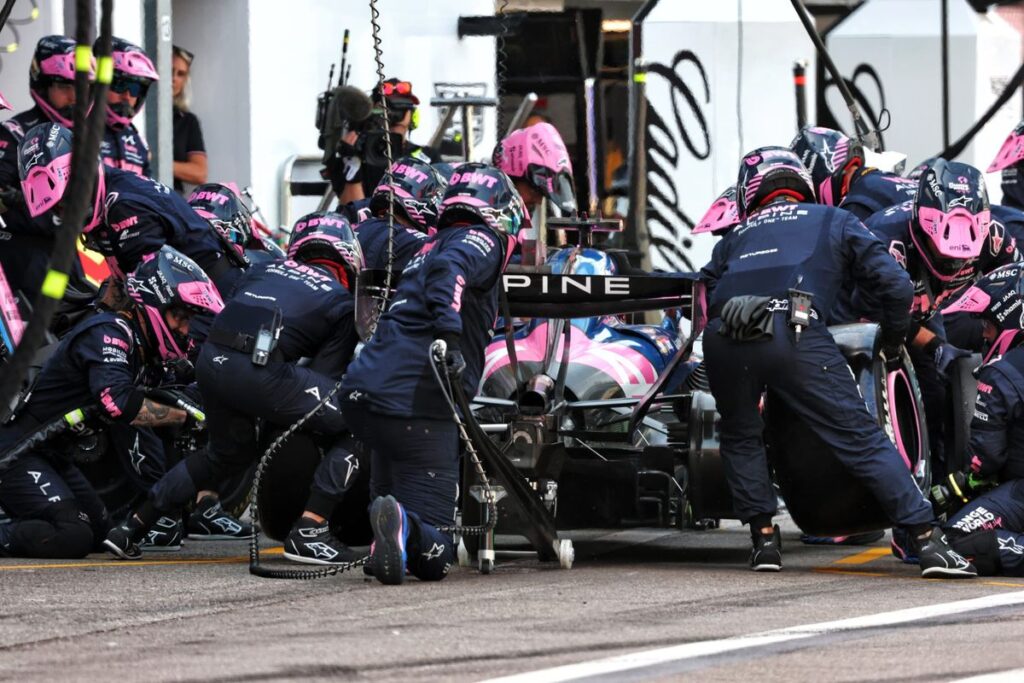
Gasly suffered the biggest sporting loss among the penalised drivers. He crossed the line third on the road, but his second penalty added 10 seconds to his total and dropped him to seventh.
His two offences were recorded at just 0.1km/h and 0.4km/h over the 60km/h limit, underlining how narrow the margins were. Gasly was left visibly disappointed after the race, and he indicated that Alpine would be speaking with the FIA about what happened.
The final outcome showed how a detail in pitlane geometry can change a Monaco result as much as overtaking or strategy. In a race that already rewards precision more than raw pace, a slightly altered line through the pits was enough to trigger penalties that reached the top 10 and altered the podium fight.
Read more at: www.the-race.com