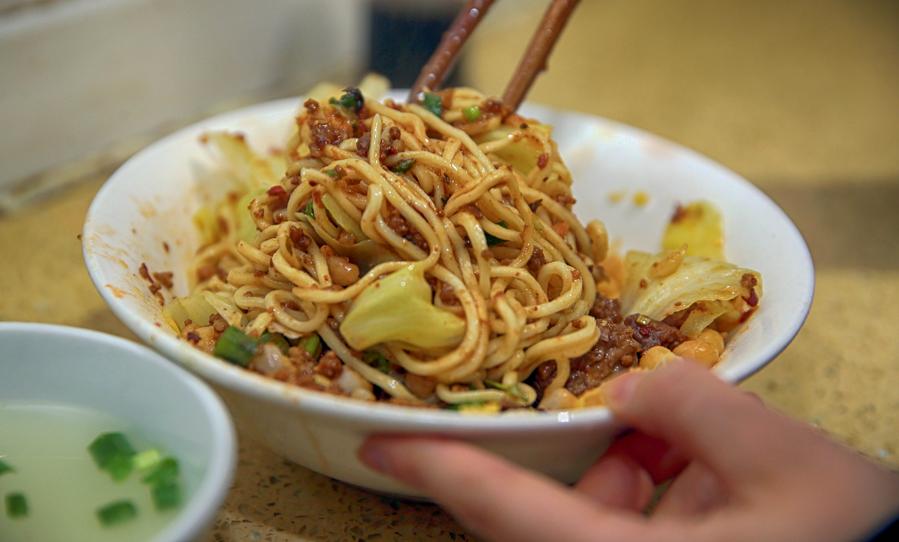
Chongqing Spicy Noodles Transform from Street Food to Global Industry
Chongqing, a municipality in southwest China, is renowned for its noodle-centric cuisine that contrasts with southern China’s rice-based diet. Locally called xiaomian or small noodles, these spicy noodles have become deeply embedded in the city’s culture and daily life.
The xiaomian market is now worth over 56 billion yuan, illustrating a dramatic rise from humble street snack origins to a booming industry. With roughly 86,000 noodle shops across Chongqing, the sector was once scattered and fragmented, consisting mainly of small family-owned eateries.
To boost growth, the Dadukou District initiated the Chongqing Xiaomian Industrial Park in response to models like Liuzhou’s popular snail rice noodles. This park integrates production, research, and sales to create "ready-to-produce and ready-to-cook" noodles, attracting more than 80 companies.
Standardization is key to scaling production. The park established quality criteria for noodle texture, chili oil spiciness, and seasoning balance, which ensure consistent flavors across mass-produced products. At facilities like Chongqing Jinguyuan Food Technology Co., automated lines produce semi-dried noodles with precise quality control.
"We cooperate with universities to improve shelf life and maintain uniform taste," said Fu Yong, chairman of Jinguyuan Food Technology. Such efforts allow consumers nationwide to enjoy authentic Chongqing flavors conveniently packaged.
The industry also embraces online and offline marketing innovations. On October 24, a pop-up noodle event in Chengdu attracted thousands, generating sales above 5 million yuan through interactive tastings and live cooking shows. Social media platforms like Douyin have boosted brand recognition for seasoning producers such as Xiangliao, which offers multiple flavors adapted to regional tastes.
Domestically, daily sales exceed 12 million bowls, creating nearly half a million jobs in the local economy. Internationally, pre-packaged Chongqing noodles have penetrated over 30 countries, including U.S. supermarkets in major cities like Los Angeles, with companies meeting FDA standards and retailers such as Costco.
Leveraging its strategic location on the Belt and Road and Yangtze River Economic Belt, Chongqing acts as a trade hub. Overseas sales surpass 40 million yuan annually, supported by events like the Chongqing Noodle Promotion Season and Xiaomian Cultural Festival, which secured 1.345 billion yuan in investments for brand expansion, technology, and exports.
This transformation demonstrates how traditional street food can evolve into a robust global industry through innovation, standardization, and strategic marketing.
Read more at: english.news.cn