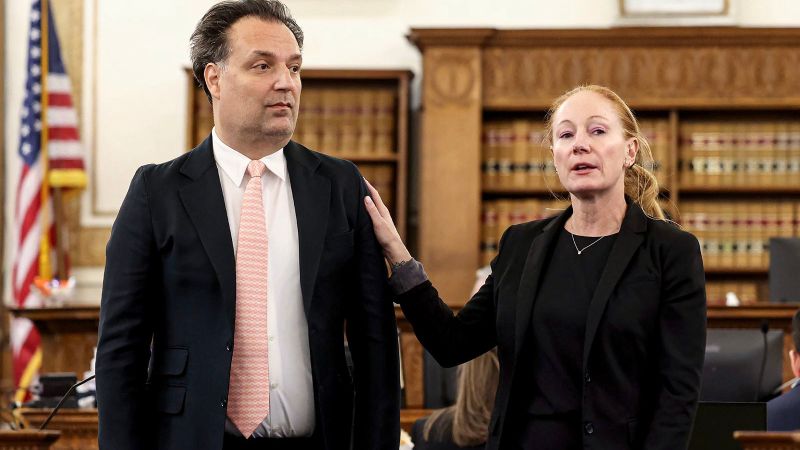
Brian Walshe, a Massachusetts man accused of murdering his wife, has pleaded guilty to lesser charges related to disposing of her body and misleading police. However, his defense team insists he has not admitted to murder in connection with his wife Ana Walshe’s disappearance in early January.
The guilty pleas came just before jury selection for the murder trial, which centers on whether Brian Walshe caused Ana’s death. Ana, a corporate real estate manager and mother of three, vanished after visiting family for New Year’s. Her body remains undiscovered, making the case primarily dependent on circumstantial evidence.
Legal experts view the guilty pleas as a strategic decision. Harvard law professor Ronald Sullivan remarked that by admitting to the disposal and obstruction charges, the defense narrows the trial’s focus solely on the murder allegation. This move may limit the jury’s exposure to some evidence. It could also be paving the way for a plea to a lesser homicide charge, potentially avoiding a mandatory life sentence without parole.
Key facts gathered by investigators include Walshe’s presence at stores buying cleaning supplies shortly after Ana’s disappearance. Video footage reportedly shows him dumping black bags in dumpsters. Authorities also found Ana’s blood in their home basement and personal belongings in a dumpster, alongside tools potentially used in the crime.
The prosecution alleges a financial motive connected to Walshe’s art fraud restitution and suggests knowledge of Ana’s affair with a Washington man as possible motives. Walshe’s legal team disputes his awareness of the affair and emphasizes lack of direct evidence linking him to murder. They highlight the absence of physical proof of Ana’s death since her body has not been found.
Jury selection concluded with 12 members and four alternates. They were instructed by the judge to avoid media and social networks about the case. Opening statements are scheduled soon.
As the case unfolds, Walshe’s testimony may be crucial. His lawyers might argue a tragic accident or self-defense to explain Ana’s death. Professor Sullivan notes such defenses lack corroboration since the victim cannot testify but could still influence the jury’s decision.
Walshe faces up to 10 years for misleading police and up to three more for body disposal. These sentences could be extended to 20 years if convicted of murder. Additionally, he serves time for a prior federal conviction relating to forged art sales, which will run concurrently with any new sentence.