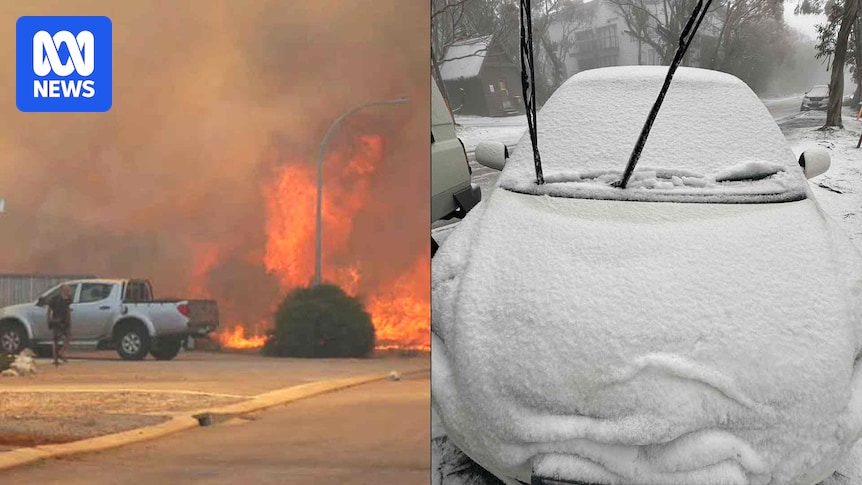
Western Australia experienced a record-breaking heatwave as summer began, while the southeast of the country faced unprecedented cold. Perth reached 39°C, marking the hottest start to the season in its history, with temperatures continuing to rise.
The heatwave extended across the west and south coasts, impacting numerous communities. Meanwhile, a severe bushfire in the mid-west caused emergency alerts as firefighters battled extreme hot, dry, and windy conditions.
In stark contrast, states including New South Wales, Victoria, and Tasmania endured a chilling beginning to summer. Alpine regions received snow and felt temperatures as much as 15°C below average.
The Bureau of Meteorology attributed these cold conditions to a polar air mass traveling far north of its usual December path. Senior meteorologist Sarah Scully explained that repeated cold fronts reinforced the cold air, suppressing daytime temperatures.
Several locations in the southeast, such as Thredbo (NSW) and Mount Hotham (VIC), are on track to break records for the coldest maximum temperatures on December 1st. Thredbo saw a record low daytime high of -0.8°C, smashing the previous 3.3°C set in 2019.
Other notable cold readings include:
1. Khancoban, NSW: 14.2°C, beating the earlier 18.7°C record.
2. Ivanhoe, NSW: 21.1°C, near its record low maximum.
3. Hobart: 14°C, the coldest start to summer since 1942.
Melbourne recorded a maximum of 16.1°C, slightly above its coldest December 1st on record. Strong winds contributed to a ‘feels like’ temperature as low as 2.5°C at Melbourne Airport.
In Western Australia, heat records have taken a toll with Geraldton hitting 42.2°C, the hottest December 1st since 1924. Albany reached 36.2°C, the highest for this date since 1907.
Despite these extremes, both hot and cold anomalies are expected to be temporary. A warm air mass will gradually shift eastwards, bringing higher temperatures to inland WA and southeast states by midweek. Authorities remain vigilant due to ongoing fire risks linked to the heatwave in the west.
Read more at: www.abc.net.au