


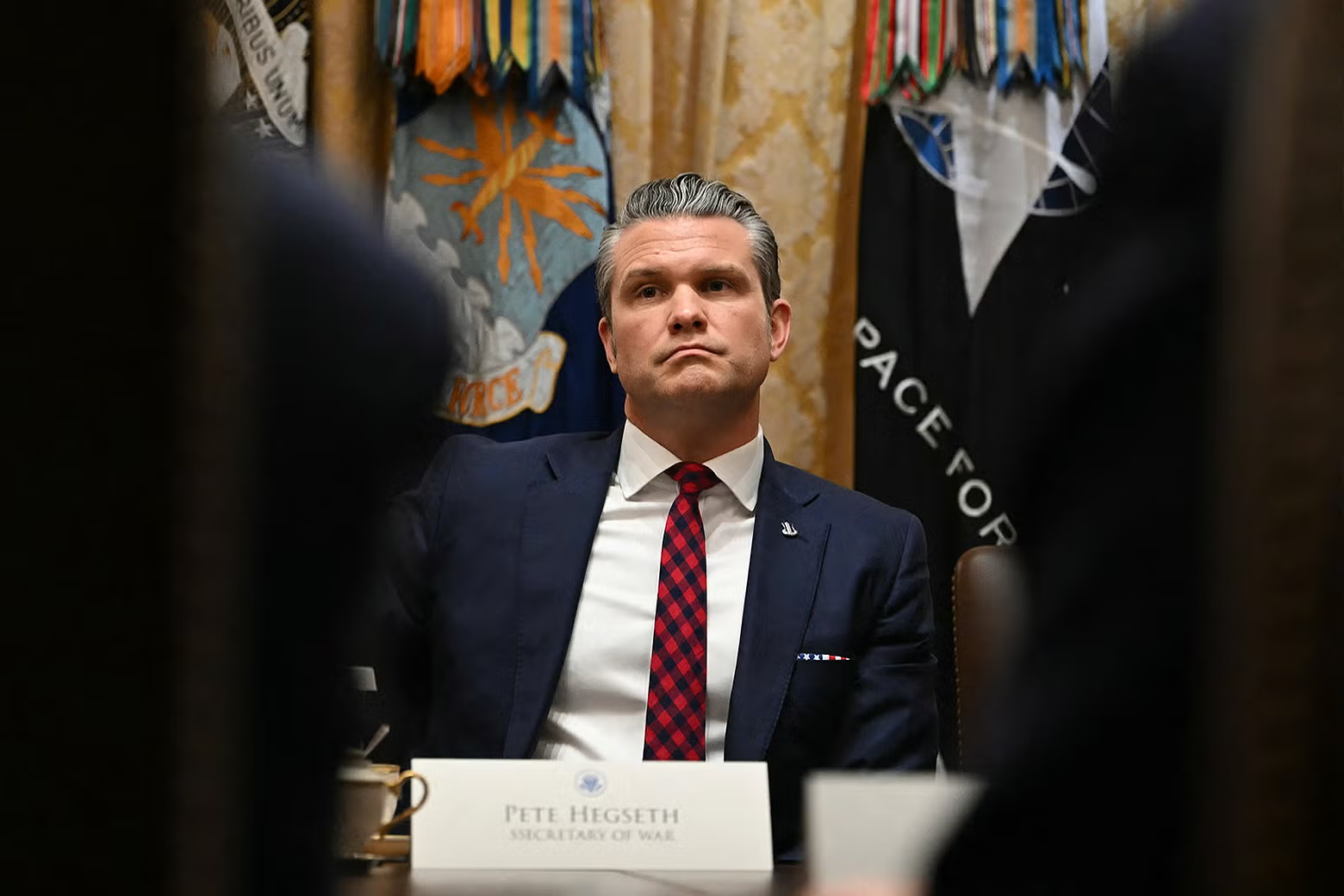
Please Don’t Go to Jail for Pete Hegseth
The U.S. military has clear rules regarding the use of force and the responsibility of service members to disobey unlawful orders. Historically, "just following orders" has not been a valid defense in cases of illegal killings or war crimes. This principle is codified in the Uniform Code of Military Justice and reinforced by international law since the Nuremberg trials. Soldiers are trained to recognize and refuse "patently unlawful" orders to prevent atrocities and uphold the rule of law.
Recent actions under the Trump administration, particularly involving Defense Secretary Pete Hegseth, have raised serious concerns about adherence to these rules. Since early September, strikes authorized by the administration have killed at least 83 people in the Caribbean Sea and eastern Pacific, many of whom were not lawful combatants. These strikes lack Congressional approval, making them potentially illegal under U.S. law. Trump himself dismissed the need for authorization, stating the intent was to kill drug smugglers outright.
Reports indicate that survivors of these strikes were subjected to follow-up attacks motivated by orders to “kill them all,” reportedly influenced by Hegseth’s stance. This raises the prospect of war crimes, as military law requires wounded combatants to be secured and treated humanely. High-ranking officials and those pulling the triggers could face prosecution, even if the former president has immunity for his official acts. Hegseth, as well as other officers, are not protected by such immunity and can be held accountable.
Military history shows multiple examples where personnel were convicted and imprisoned for following unlawful orders. Cases such as the My Lai massacre and abuses at Abu Ghraib prison underline that soldiers face severe consequences for illegal acts, irrespective of orders from above. The responsibility lies with each individual to refuse unlawful commands to avoid criminal liability.
Service members today face a difficult choice: obey potentially unlawful orders that may lead to criminal charges or refuse and risk confrontation with superiors. As one former infantryman recounts, the best decisions often involve restraint that saves lives and prevents lasting harm. The message is clear: do not accept illegal orders to commit killings that could send you to prison for the sake of political agendas pushed by leaders like Pete Hegseth.