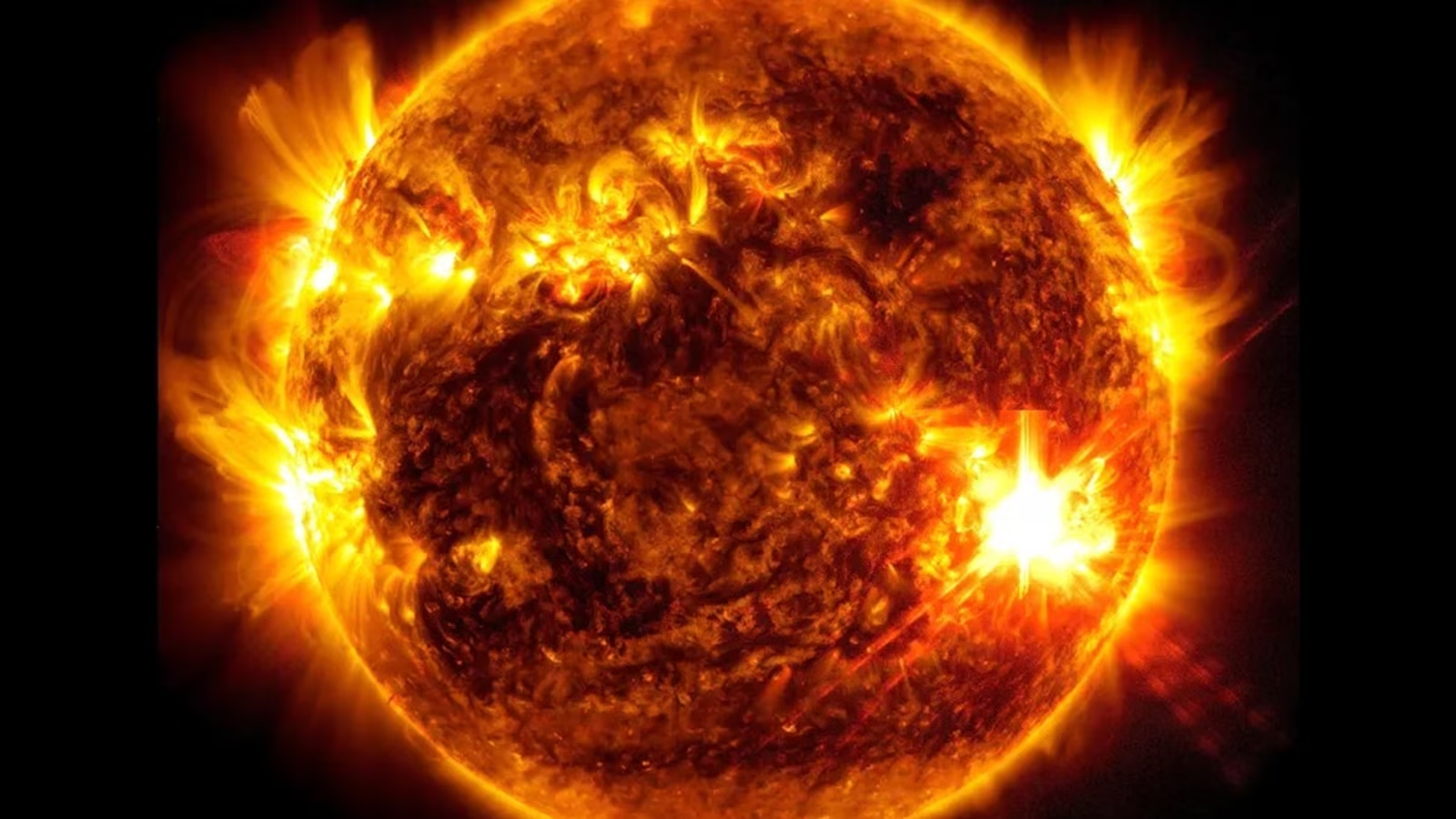
The National Oceanic and Atmospheric Administration (NOAA) has forecasted a strong geomagnetic storm expected to impact Earth on Tuesday. This event follows the arrival of a coronal mass ejection (CME), a large burst of solar material linked to an M8.1 solar flare, predicted to reach our planet early to midday.
NOAA classifies this storm at level G3 on the Space Weather Scale, which indicates a “strong” geomagnetic storm. Such storms can cause minor technological disruptions, including satellite interference and radio communication issues. The disturbance in Earth’s magnetic field may also enhance northern lights visibility, extending it across more northern U.S. states and some areas from the lower Midwest to Oregon.
Understanding Space Weather and Its Monitoring
Space weather results from the sun’s emission of charged particles, plasma, and radiation. When these interact with Earth’s magnetosphere and atmosphere, they can produce phenomena like auroras and affect technology on the ground. NASA and NOAA continuously monitor these conditions, with NOAA’s Space Weather Prediction Center specializing in forecasting events that could impact life and infrastructure.


NOAA uses a space weather scale from G1 to G5 to describe geomagnetic storm severity. Levels G1 and G2 are common and minor, while G3 to G5 represent stronger storms that can cause notable impacts. The current forecasted G3 storm is significant but not uncommon during the solar maximum, which recently peaked in the sun’s 11-year activity cycle.
Potential Impacts and Precautions
Geomagnetic storms may disrupt GPS systems, radio communication, and power grids. Previous strong storms have caused issues such as high-voltage line trips, transformer overheating, and interference with aviation navigation. Airlines and satellite operators often prepare for such events with contingency measures to mitigate risks.
For those interested in skywatching, this geomagnetic storm could provide an opportunity to see spectacular auroras from regions not normally associated with such displays. NOAA and other agencies will continue to provide updates and safety guidance as the event unfolds.
The public and industries reliant on satellite and communication technologies should remain aware of NOAA’s alerts to minimize potential disruptions during this solar-induced space weather event.
Read more at: abcnews.go.com