


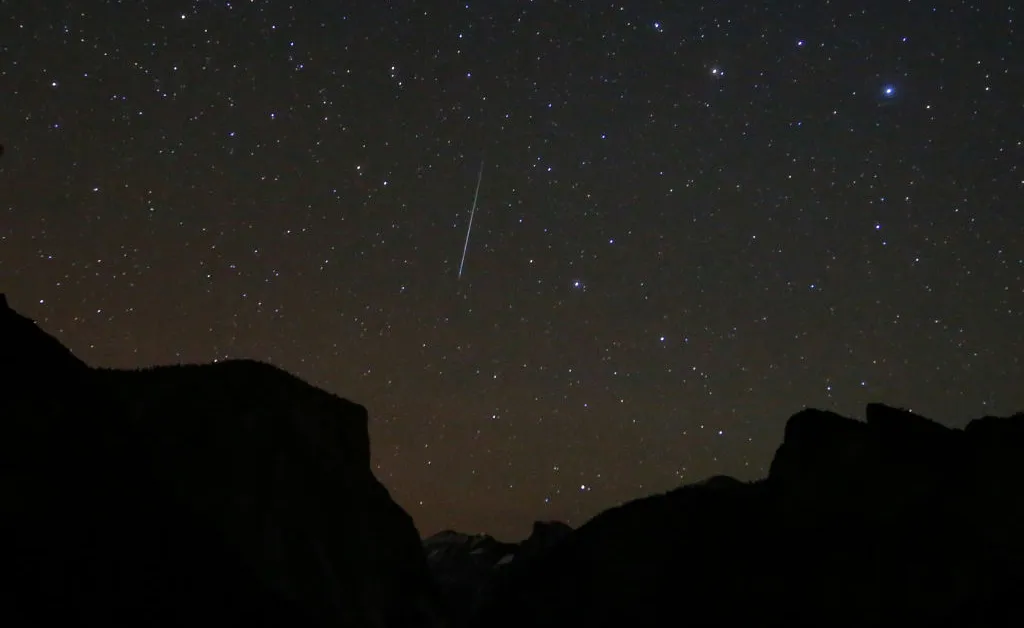
Each year in December, the Geminids meteor shower offers a spectacular celestial display observable worldwide. This shower typically peaks during a couple of nights in mid-December, with this year’s zenith predicted on December 12th and 13th.
During peak, observers could witness up to 120 meteors per hour streaking across the sky from as early as 9 p.m., assuming clear and dark conditions. This event is renowned for its reliability and brightness, making it one of the best meteor showers annually.
What is the Geminids Meteor Shower?
Meteor showers occur when Earth passes through debris trails left by comets or asteroids. The Geminids are unique because their meteoroids originate from asteroid 3200 Phaethon, discovered in 1983. Unlike most meteors from comet dust, the Geminids come from this small, 3.17-mile-wide asteroid that orbits close to the Sun.
The shower gets its name from the Gemini constellation, the apparent radiant point where the meteors seem to emerge. First recorded in the mid-1800s with only 10 to 20 meteors per hour, the Geminids have steadily grown in intensity and popularity.
How to Best See the Geminids
The Geminids are visible globally, but optimal viewing requires minimizing light pollution. For the best experience, observers should find a dark location away from city lights under clear skies. NASA advises lying flat on your back with feet pointing south to view as much sky as possible.
Allowing your eyes to adjust to darkness for about 30 minutes enhances meteor visibility. Although peak activity is around 2 a.m., the shower continues until dawn, and patience is key for spotting these bright, yellow fireballs.
To summarize, clear, dark skies in mid-December, especially on its peak nights, offer the best chance to observe the vivid Geminids meteor shower. Staying comfortable and patient while watching will maximize this impressive natural spectacle.