


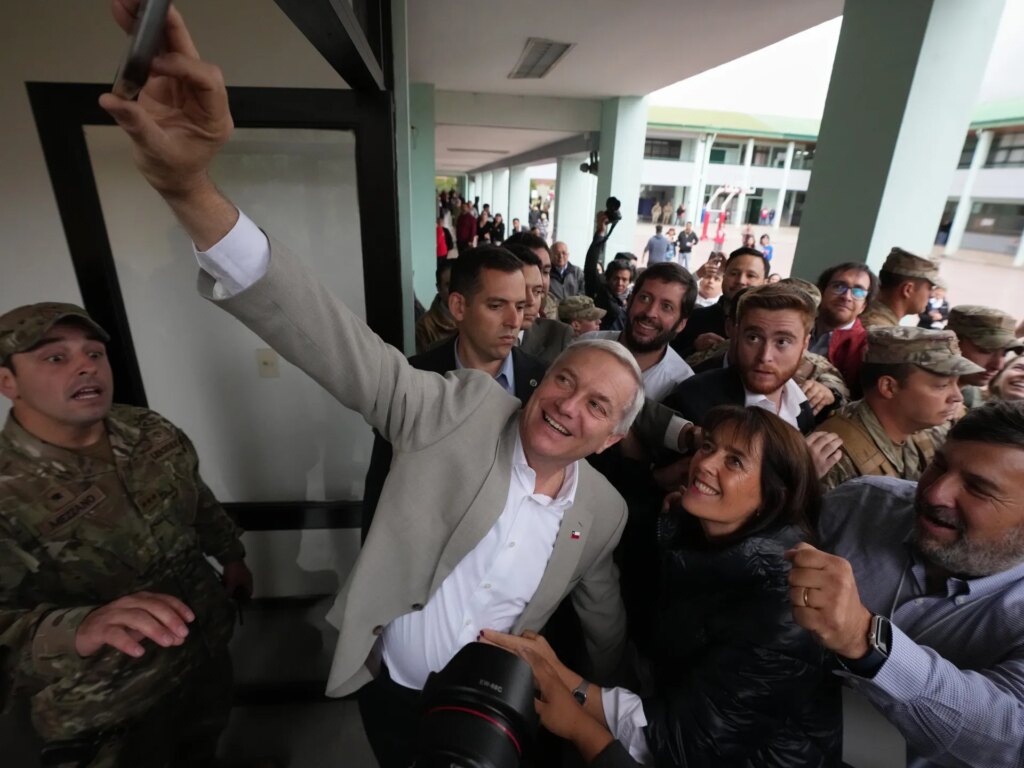
Far-Right Leader Jose Antonio Kast Wins Chile’s Presidential Election
Far-right candidate Jose Antonio Kast has won Chile’s presidential runoff election, securing nearly 58 percent of the vote. He defeated Jeannette Jara, a Communist Party politician representing the ruling centre-left coalition, Unity for Chile.
Jara conceded shortly after polls closed and expressed commitment to continue working for Chile’s future. She wrote on social media, “Democracy has spoken loud and clear,” and wished success to the president-elect Kast.
Kast’s victory marks a notable shift in Chile’s political landscape and a broader trend of right-wing leaders rising in Latin America. This win comes after his third attempt at the presidency, having lost to outgoing President Gabriel Boric by a 10-point margin in the previous election.
Boric, a former student leader and Chile’s youngest president, saw his popularity drop to around 30 percent late in his term. He was also barred from seeking re-election under current law. Public dissatisfaction with crime, immigration, and a weakening economy played a critical role in voters’ decisions.
During the campaign, Kast promised strict measures on crime and immigration, including mass deportations modeled after former U.S. President Donald Trump’s policies. His “Implacable Plan” outlines mandatory minimum sentences, increased incarceration, and isolating cartel leaders.
Kast opposes abortion even in cases of rape and has taken firm stances on social and health issues. However, his sympathies towards former dictator Augusto Pinochet and his father’s Nazi Party ties sparked controversy and criticism.
Pinochet’s 1973 military coup led to a brutal dictatorship noted for widespread human rights abuses. Kast has defended Pinochet’s legacy, famously stating, “If he were alive, he would vote for me.” Critics remain wary of how far-right policies might impact democracy.
Despite these concerns, Kast moderated his rhetoric this campaign to broaden voter appeal. This election marks the first time since Chile’s return to democracy in 1990 that a conservative government will hold power.
Voting was compulsory for the first time since 2012, with 15.7 million eligible voters. Kast initially placed second in the first round with 23.9 percent, behind Jara’s 26.8 percent. However, consolidation of right-wing votes secured his runoff victory.
Kast will face a divided Congress, expected to limit some of his more extreme proposals. He is set to be sworn in as Chile’s 38th president in March.
Read more at: www.aljazeera.com