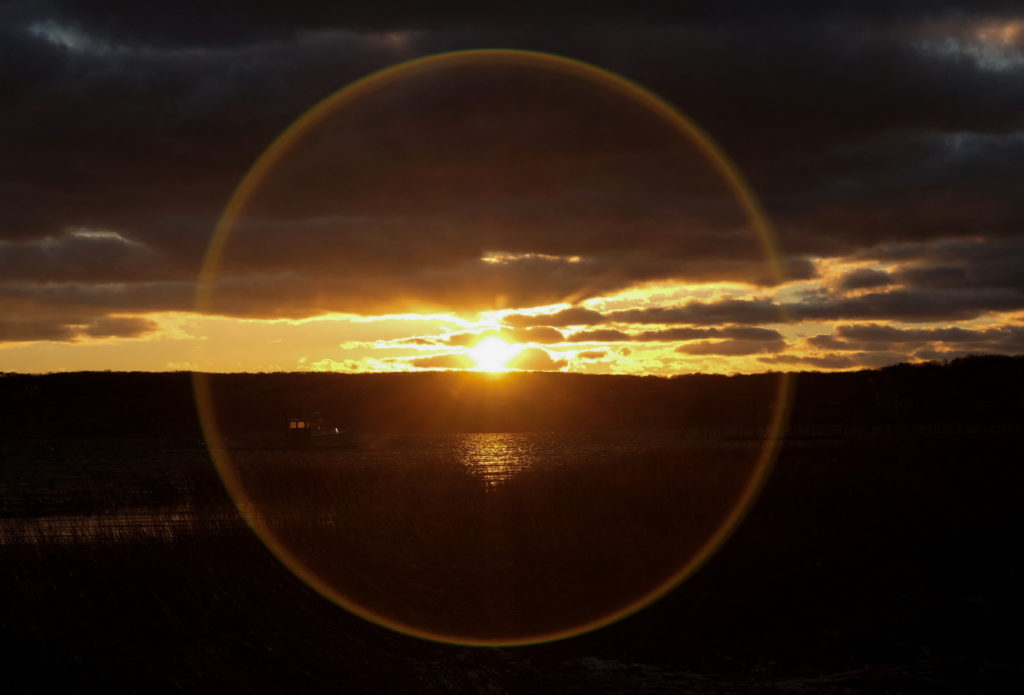
The winter solstice is almost here for the Northern Hemisphere, marking the shortest day and longest night of the year. This event signifies the official start of astronomical winter in this region.
During the solstice, the Earth’s tilt is at its maximum angle away from the sun in the Northern Hemisphere. As a result, the sun travels its lowest and shortest arc across the sky.
The term “solstice” originates from Latin, meaning “sun” and “pause,” reflecting the sun’s apparent halt in its seasonal movement. After this date, the sun gradually climbs higher each day, bringing longer daylight hours until summer.
Solstices are significant across cultures and have been celebrated for millennia. Monuments like Stonehenge were precisely aligned with the sun’s position during solstices, underscoring their importance.
The solstice occurs because Earth’s axis is tilted relative to its orbit around the sun. This tilt causes one hemisphere to receive less sunlight during its winter solstice.
Here’s what happens during the solstice:
1. The Northern Hemisphere leans farthest from the sun.
2. Daylight hours reach their minimum.
3. Nights are the longest.
4. The Southern Hemisphere experiences its summer solstice with the longest day.
It is important to distinguish between solstices and equinoxes. During equinoxes, the Earth’s axis is aligned so that both hemispheres receive nearly equal sunlight, balancing day and night duration.
Meteorological seasons differ from astronomical seasons, relying on fixed calendar months and temperature patterns rather than Earth’s position relative to the sun. Winter meteorologically begins on December 1, but astronomically starts with the solstice in late December.
This winter solstice signals a turning point, where despite the darkness, increasing sunlight will soon lead to brighter days ahead.