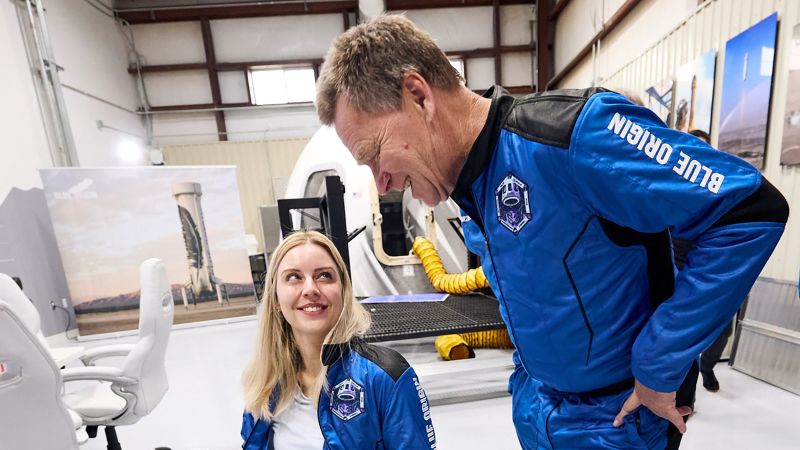
A Blue Origin rocket is set to launch with a pioneering crew that includes Michaela Benthaus, the first wheelchair user slated to travel to space. Benthaus, an aerospace engineer at the European Space Agency, will join former SpaceX executive Hans Koenigsmann on the suborbital mission NS-37.
The idea originated during a chance meeting in Munich between Benthaus and Koenigsmann, a veteran of SpaceX’s early days who left the company amid internal disagreements. Koenigsmann quietly worked to arrange Benthaus’s opportunity with Blue Origin, a direct competitor of his former employer. “She said she was only thinking about a suborbital flight,” Koenigsmann told CNN, noting that Blue Origin was receptive to the proposal.
Koenigsmann and Benthaus will be part of a six-person crew launching from Blue Origin’s Texas facility. New Shepard rockets offer about 10-minute flights that cross the Kármán Line—commonly recognized as the boundary of space at 62 miles above Earth. This mission will continue Blue Origin’s record of flights with notable passengers, including Jeff Bezos and William Shatner.
Benthaus faces unique challenges due to a spinal cord injury sustained in a 2018 mountain biking accident. She plans to use a strap during weightlessness to prevent her legs from moving uncontrollably as passengers float inside the capsule. Koenigsmann will assist her throughout the mission, ready to help in emergencies or as needed during flight operations.
This mission marks a milestone for the inclusion of people with physical disabilities in space travel. Advocates highlight weightlessness as an enabling environment for those with mobility impairments. While previous missions included astronauts with prosthetic limbs, Benthaus is the first wheelchair user to reach space.
Benthaus hopes her mission encourages broader accessibility in commercial spaceflight. “We need to open our minds more and be willing to change existing systems,” she said. Additionally, she emphasizes the importance of inclusivity for future long-duration missions where medical emergencies could affect any crew member. The flight also supports the spinal cord injury research nonprofit Wings for Life, reinforcing the broader impact of this historic journey.
-

-

-

-