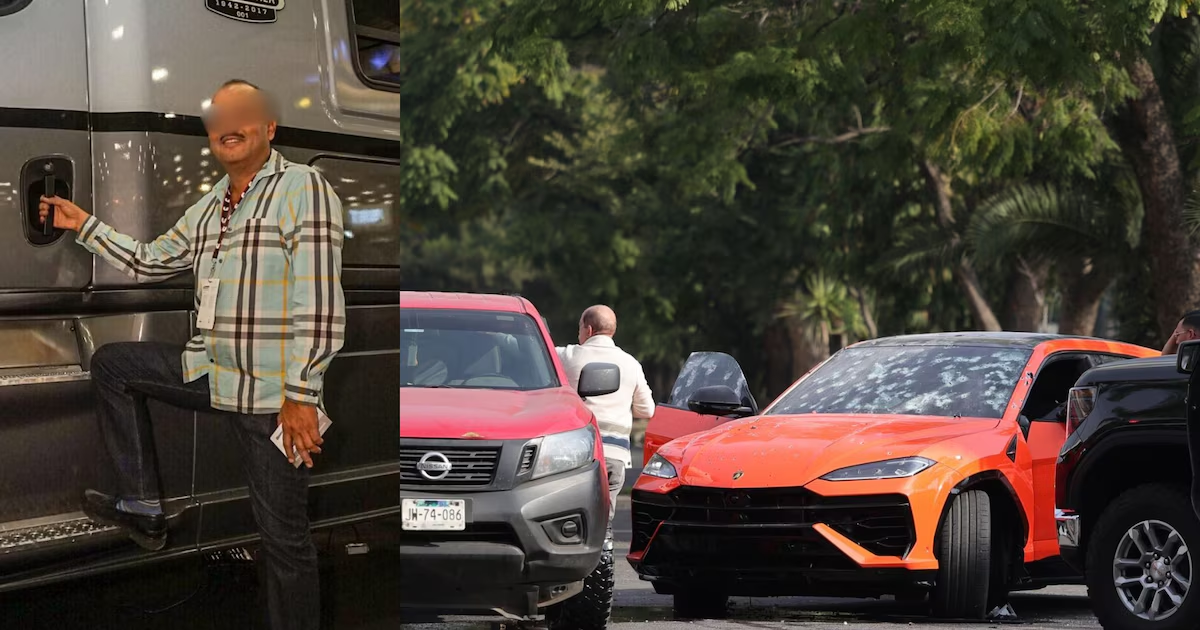
The armed attack on December morning at the Guadalajara-Zapopan border resulted in the death of Alberto Prieto Valencia, his 16-year-old daughter, and one of his bodyguards. Prieto Valencia, a 57-year-old Veracruz native, was a prominent wholesale merchant and founder of Transportes Odal, a logistics company certified under the U.S. C-TPAT standard.
Traveling in a Lamborghini Urus escorted by a group of private security personnel, some ex-military, the convoy was ambushed around 10:20 a.m. Approximately 30 armed assailants utilized large vehicles, including an abandoned GMC Yukon, to block and assault the convoy.
The security team returned fire, resulting in a prolonged shootout across four locations with over 200 cartridge casings recovered. Locals captured video showing continuous gunfire amid panic in the area. Alongside Prieto and his daughter Sara, one bodyguard died; four other security members were wounded.


Authorities from Guadalajara, Zapopan, Jalisco State Police, the National Guard, and the Mexican Army responded swiftly with aerial patrols and armed units. Salvador Zamora, Jalisco’s Secretary General of Government, confirmed that some attacker vehicles were identified and seized during ongoing investigations, though no arrests have been made yet.
The state prosecutor’s office is exploring motives, including Prieto Valencia’s alleged links to illicit Colombian-style raffles operating in the Mercado de Abastos, according to Zamora. He referenced previous media reports suggesting such a connection must be investigated as part of the case.
Colombian Raffles: The Illegal Practice Under Scrutiny
These “rifas colombianas” are illegal lotteries operated by networks predominantly made up of Colombian nationals collaborating with local actors at the Mercado de Abastos. Merchants are coerced into buying raffle tickets, typically costing around 20 pesos, which function as de facto extortion payments or “protection fees.”
According to reports, the raffles have been documented since 2021 and have exploited merchants via forced ticket purchases, fraud, and threats of retaliation for non-compliance. The promised prizes, ranging from cash to cars and appliances, are seldom awarded. Organized crime protection allows these networks to amass significant sums while occasionally giving minor prizes to maintain interest.
These raffles also intertwine with “gota a gota” loan schemes, known for their outrageously high daily interest rates, where indebted merchants are forced to buy raffle tickets as part of debt repayment.
Historical Context and Law Enforcement Actions
In June 2024, Colombian national Camilo Andrés was apprehended for human trafficking and labor exploitation related to raffle operations. Investigations linked him to a coercive network forcing at least 18 people to sell tickets under duress.
As early as 2019, Mexico City’s Attorney General’s office was investigating foreign-organized raffles in the Central de Abasto, with interventions from the National Institute of Migration.
The Guadalajara Mercado de Abastos is a massive commercial hub employing over 20,000 workers and receiving up to 70,000 daily customers. Its strategic size makes it an appealing target for extortion and territorial control, historically governed by cartels such as the Jalisco New Generation Cartel (CJNG).
According to recent Jalisco State Prosecutor data, 18 usury complaints have been filed since 2020, with three in the current year. Two extortion investigations were initiated recently, leading to six arrests—five Colombians among those detained.
Anonymous vendors describe how raffles are aggressively marketed by provocatively dressed women in market aisles, pressuring merchants to buy tickets under threat. One merchant stated the raffle operations began shortly after the pandemic, protected by organized crime groups who allowed them to work in exchange for a share of profits. Defaulters allegedly faced violent repercussions.
Unconfirmed Links to Alberto Prieto Valencia
Authorities have not verified whether Prieto Valencia was involved in operating these raffles or was a victim of the extortion schemes. His assassination, however, has renewed focus on the menace these illegal raffles represent within the Mercado de Abastos and how they may intersect with broader criminal networks.
Investigations remain open, with efforts focused on tracing vehicle usage, analyzing recovered evidence, and clarifying the victim’s role relative to these illicit activities. The case underscores the persistent challenge of controlling organized crime’s infiltration into commercial hubs via extortion and illegal gambling practices.
Read more at: www.infobae.com