


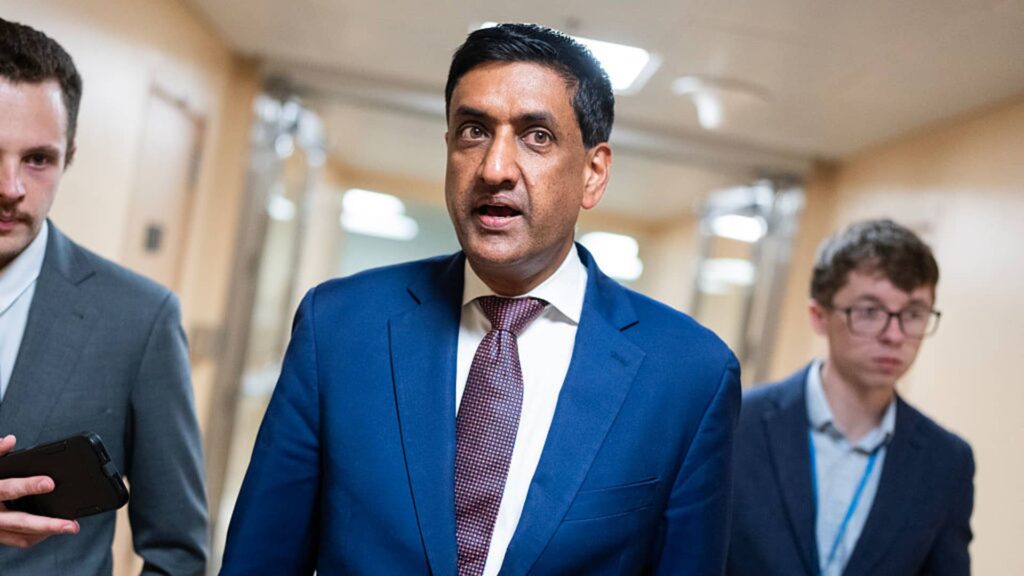
Ro Khanna Urges Fraud Investigation Amid California Wealth Tax Controversy
California Representative Ro Khanna responded decisively to the uproar surrounding the proposed wealth tax targeting billionaires in the state. The measure, backed by labor unions and set to appear on the November ballot if sufficient signatures are gathered, has sparked significant debate among Silicon Valley elites and political allies.
Khanna called for a bipartisan effort to investigate potential fraud at the state level to ensure that revenues from the tax are effectively used. As a member of the House Oversight and Government Reform Committee, he emphasized the importance of public trust, stating that taxpayer money must be accounted for to support programs like Medicare for all and other essential services.
In reaction to criticism from wealthy donors and some tech leaders, Khanna highlighted that combating fraud and government waste is key to securing progressive reforms. He outlined plans to collaborate with Republicans to commission a Government Accountability Office report and hold congressional hearings focused on uncovering fraud in state governments.
The representative referenced reports from the California State Auditor that identified possible fraud, alongside similar cases in Minnesota that have attracted national attention. These instances have fueled opponents’ arguments that a wealth tax would be ineffective or prone to exploitation.
Chamath Palihapitiya, a prominent tech investor, expressed skepticism by linking audits and budgets to revenue gaps, arguing that without clear fiscal shortfalls, a wealth tax would only incentivize fraud and manipulation. Khanna stressed that his oversight initiative stems from constituent concerns and will address fraud beyond just California and Minnesota.
He insisted the investigation would avoid partisan framing to promote accountability wherever fraud might occur in state governments. Californians and Minnesotans alike face scrutiny as both states are governed by Democrats, with the latter’s governor up for reelection and federal oversight intensifying under House Oversight Chair James Comer.
The proposed tax, known as the 2026 Billionaire Tax Act, aims to levy a one-time 5% tax on assets of billionaires to address California’s healthcare funding shortfalls. Labor unions like the Service Employees International Union-United Healthcare Workers West are leading the push for the ballot measure.
Among the primary concerns voiced by tech leaders is the tax’s application to unrealized gains, potentially burdening founders whose net worth is heavily tied to illiquid private stock. Khanna acknowledged these challenges and indicated support for structuring the tax so it does not disproportionately impact startup founders holding restricted or non-profitable company shares.
He emphasized the feasibility of designing the wealth tax with provisions "that don’t hurt the startup paper billionaires with restricted stock." This concession highlights efforts to balance taxation goals with economic realities faced by innovative entrepreneurs in Silicon Valley.
Khanna’s approach combines advocacy for progressive tax policies with vigilance against misuse of tax revenues. His initiative to forge bipartisan agreements and demand transparency aligns with his broader political agenda to increase healthcare funding while maintaining fiscal responsibility.
The evolving debate around California’s wealth tax proposal encapsulates tensions between raising state revenues for social programs and ensuring fair implementation without driving out key economic actors. Khanna’s call for a fraud probe introduces a new dimension focused on oversight that could shape perceptions of the tax’s viability and fairness as voters prepare for the upcoming ballot decision.