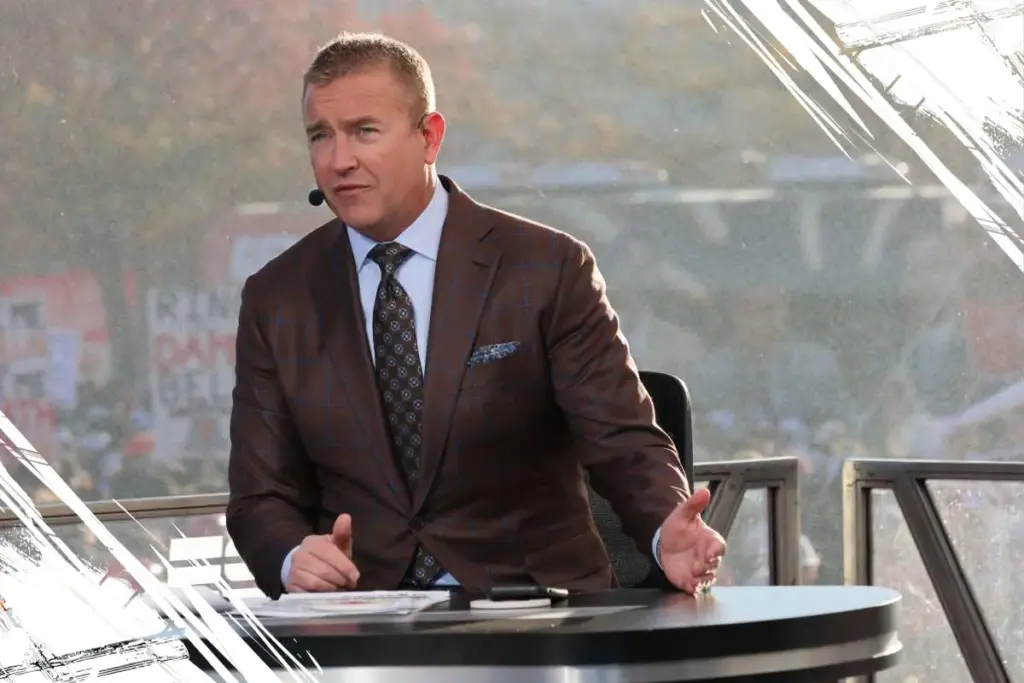
ESPN college football analyst Kirk Herbstreit recently voiced a significant concern to his network regarding the current state of college football bowl games. He highlighted that the sheer number of bowl games has diluted the prestige and excitement traditionally associated with the postseason.
Herbstreit, who has been a prominent figure in ESPN’s college football coverage since the 1990s, described the oversaturation of bowl games as problematic. He believes the abundance of games undermines the idea that bowl games should be a special reward for teams having strong seasons.
Concern Over Bowl Game Proliferation
Herbstreit raised his concerns during a recent episode of his podcast, Nonstop with Kirk and Joey, admitting that his feedback did not resonate well with his colleagues at ESPN. He stated, “Bowl games are supposed to be special. They’re supposed to be a reward for a great year. Do we have to have all these 6-6 teams and like creating these bowl games just because they rate well? I feel like we’re oversaturating the bowl season.”
Currently, there are over 40 bowl games scheduled each season, compared to approximately 15 to 18 in past decades. This exponential increase allows teams with merely six wins to qualify, a sharp contrast to earlier standards where an 8-4 record was often necessary to secure a bid.
Herbstreit Advocates for Reducing the Number of Bowls
Herbstreit suggested cutting the number of bowl games about in half to restore the season’s integrity. He remarked that many bowls now search for any team able to field a roster, regardless of season success. He explained, “It used to be what, 15-18 bowls forever? And you basically had to be 8-4 to even have a chance to be in.”
The analyst noted that when high-quality bowl games featuring top-performing teams occur, he remains fully engaged. However, frequent matchups between mediocre teams have caused widespread disengagement among fans and athletes alike.
Impact on Bowl Season and Player Participation
Herbstreit identified a second issue contributing to the decline in the bowl season’s significance: player opt-outs and the mindset that bowl games are mere exhibitions. He expressed, “I’m not going to play. What’s the point in playing? It’s an exhibition. Who cares?” This attitude, he believes, diminishes the competitive spirit and fan interest.
Despite his criticisms, Herbstreit confirmed he continues watching bowl games when the quality justifies it. He cited recent games such as Penn State’s and Georgia Tech vs. BYU as examples that rekindled his enthusiasm.
Future Outlook
ESPN, which broadcasts the majority of bowl games, has not officially responded to Herbstreit’s concerns. The continuation of a crowded bowl schedule appears likely, but voices like Herbstreit’s emphasize a growing debate about how to preserve the postseason’s relevance and excitement.
The evolution of college football’s bowl season remains a key issue for broadcasters, fans, and teams alike, with discussions ongoing about balancing commercial interests with preserving the sport’s traditions and competitive integrity.
Read more at: sports.yahoo.com