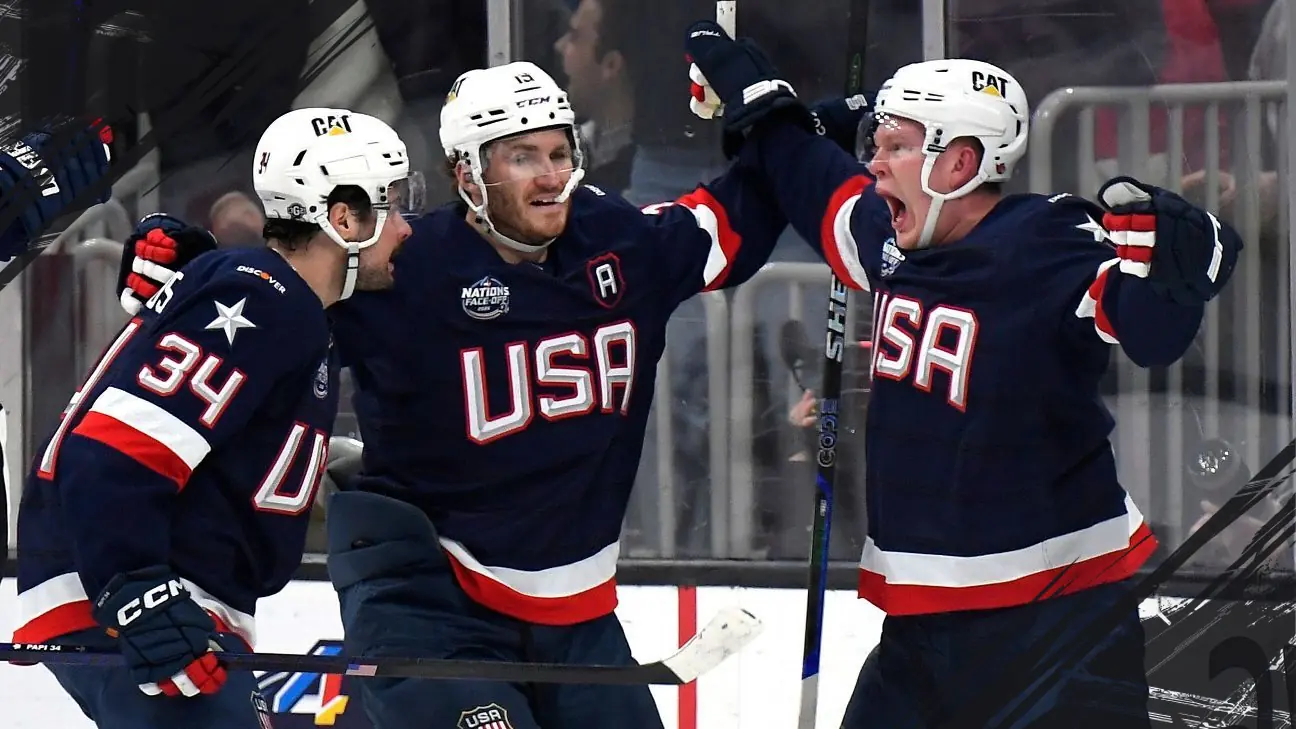
Greg Wyshynski identifies Adam Fox, Jason Robertson and Lane Hutson as the biggest snubs from the U.S. men's Olympic hockey roster. (1:57)
Grading the 2026 Olympic Hockey Rosters: Surprises and Snubs Across Top Nations
The 2026 Winter Olympics men’s hockey tournament, set to begin in Milan, Italy, has finalized its rosters after extensive selection processes. Each national team showcases a blend of established stars, emerging talents, and notable omissions, creating intriguing narratives for fans and analysts alike. Examining the United States, Sweden, Finland, and Canada reveals strategic roster constructions rife with surprises and controversial snubs.
United States


Forwards
The U.S. roster boasted arguably the deepest forward pool in the tournament’s history, anchored by prime-era stars Jack Eichel and Auston Matthews. Matthews, returning from recent injury setbacks, carries the captain’s “A-” grade forward group, backed by the Tkachuk brothers, Tage Thompson, and Dylan Larkin. This combination blends scoring, tenacity, and versatility. Coach Mike Sullivan noted ongoing line adjustments, especially concerning Jack Hughes, who is recovering from a hand injury and adjusting to new roles. Despite this wealth of talent, omissions include dynamic scorers like Cole Caufield and Jason Robertson, whose analytics and offensive output warranted consideration but were superseded by emphasis on defensive responsibility and international experience.
Defensemen
The defensive lineup earned an “A-” grade, combining skillful puck movers like Quinn Hughes and Brock Faber with size and grit from Seth Jones and Noah Hanifin. Jones’s resurgence since his trade to the Florida Panthers notably shaped his impactful presence. The group’s versatility and ability to manage power play and penalty kill duties impressed Team USA GM Bill Guerin, highlighting a balance between offensive capabilities and defensive reliability.
Goaltenders
Backstopped by Connor Hellebuyck, Jake Oettinger, and Jeremy Swayman, the American goaltending corps was graded “A.” Hellebuyck’s recent knee surgery and team struggles affected his statistics, but his proven elite performance remains undeniable. Oettinger’s stellar metrics and competitive drive provide depth, while Swayman’s strong showing in world championships secured his roster spot despite stiff competition.
Notable Snubs and Surprises
- Seth Jones revitalized his reputation with Florida, delivering robust two-way play and leadership.
- Clayton Keller secured his place largely due to his leadership role in the recent World Championships gold run.
- Cole Caufield and Adam Fox, despite exceptional NHL performances, were left off due to defensive concerns and recent international absences.
- The exclusion of Patrick Kane and Lane Hutson raised questions, with the latter billed as one of America’s most dynamic offensive defensemen.
Overall, Team USA earned a B+, characterized by a cautious, veteran-driven approach that may temper high-risk offensive gambles.
Sweden
Forwards
Sweden’s roster, resembling their prior 4 Nations team, received a “B” grade. It features experienced forwards such as Gabriel Landeskog, William Nylander, and Elias Pettersson, supported by a mix of dependable secondary scorers like Jesper Bratt and Mika Zibanejad. Offensive production depth exists but lacks a transcendent superstar. Questions remain about center depth following William Karlsson’s injury, adding pressure on Leo Carlsson and Elias Pettersson to lead offenses.
Defensemen
Rated “A-,” the Swedish defense lineup includes veterans like Victor Hedman, whose injury status presents risk, alongside Rasmus Dahlin and Erik Karlsson. Newcomers like Philip Broberg and Oliver Ekman-Larsson bring a blend of youth and experience. This unit balances offensive creativity with defensive responsibility, although concerns linger regarding Hedman’s recovery.
Goaltenders
The goaltending trio earned a “B” grade, with Filip Gustavsson and rookie Jesper Wallstedt providing promise. Jacob Markstrom, while experienced, has struggled statistically this season. The absence of Linus Ullmark—due to a leave of absence—was a notable development.
Notable Snubs and Surprises
- Pontus Holmberg, a less heralded forward, made the team for his physicality and disruptive style despite modest point totals.
- Jesper Wallstedt impressed as a rookie goalie to secure a roster spot.
- Veteran forwards Mikael Backlund and Mattias Ekholm, among others, were surprisingly omitted, stirring debate on selection criteria heavily favoring experience and team chemistry over youth metrics.
Sweden’s balanced but aging roster aims for cohesion and strategic depth more than star power.
Finland
Forwards
Finland’s forward group received a “C+” grade largely due to the absence of star center Aleksander Barkov, sidelined by preseason injury. The team leans on established contributors like Sebastian Aho and Mikko Rantanen, along with a supporting cast less prolific than rivals. The blend includes checking-line experience from Anton Lundell and Eetu Luostarinen, reflecting a pragmatic approach underpinned by past tournament chemistry.
Defensemen
Graded “B+,” Finland’s defensive corps benefits from key returns, such as Miro Heiskanen, who was absent during the 4 Nations due to injury. Physical presence from Rasmus Ristolainen and improved offensive contributions from Niko Mikkola enhance this group’s profile. Veteran players Esa Lindell and Henri Jokiharju add stability.
Goaltenders
The Finnish goaltending that earned a “B” grade features Kevin Lankinen, Juuse Saros, and Ukko-Pekka Luukkonen. The trio offers a mix of experience and recent form, though overall results have been modest. Saros’s recent uptick boosts the team’s confidence in net.
Notable Snubs and Surprises
- Forward Oliver Kapanen, absent from previous tournaments, earned a surprise call-up thanks to steady NHL performance.
- The offensive potential of Matias Maccelli and Aatu Raty went unselected, while defenseman Urho Vaakanainen’s limited ice time hurt his chances.
Finland’s roster maintains its traditional identity as a defensively resilient, tough-to-play-against team but lacks game-breaking offensive stars.
Canada
Forwards
With an “A+” grade, Canada possesses arguably the most potent forward lineup. Featuring phenomenal centers Connor McDavid and Nathan MacKinnon, supported by Sidney Crosby and young stars like Macklin Celebrini, Canada’s top lines offer unparalleled skill and scoring depth. Additions such as Bo Horvat provide toughness and faceoff specialization. The offense’s blend of youth, experience, and championship pedigree makes Canada a leading gold medal favorite.
Defensemen
The blue line earned a “B+” grade, unchanged from the 4 Nations, anchored by dynamic Cale Makar and stalwarts Drew Doughty and Devon Toews. The group balances offensive creativity with defensive grit but surprisingly lacks a second offensive defenseman who could act as insurance. Physical defenders Colton Parayko and Travis Sanheim contribute strong defensive play.
Goaltenders
Rated “B-,” Canada’s goaltending features Jordan Binnington, Darcy Kuemper, and Logan Thompson. Binnington’s recent poor statistics stirred debate, but his clutch 4 Nations performance kept him as a no-question starter in management’s eyes. Kuemper’s Vezina-level play and Thompson’s strong start form credible support.
Notable Snubs and Surprises
- Macklin Celebrini, at 19, was a breakout inclusion due to his world championship success and NHL dominance.
- Physical forward Tom Wilson adds a valued dimension often underrated by critics.
- Omitted stars like Sam Bennett and Connor Bedard reflect selection priorities such as international experience and injury status.
- The absence of emerging talents like Matthew Schaefer and Zach Hyman raised eyebrows.
Canada’s blend of offensive brilliance, veteran savvy, and championship experience positions them as the tournament frontrunner despite goaltending vulnerabilities.
Summary
Each leading hockey nation exhibits distinct roster-building philosophies for the 2026 Olympics. The United States blends prime stars with reliable veterans, yet leaves high-scoring talents behind. Sweden relies on experienced veterans and defensive depth but faces injury concerns. Finland sticks to a rugged, defensively oriented approach without a marquee center presence. Canada fields an offensive juggernaut supported by a solid defense, though with goaltending questions.
These rosters set the stage for a compelling tournament defined by deep rivalries, potential redemption stories, and the ongoing challenge of balancing international success with NHL performance metrics. Fans can expect intense battles, particularly in marquee USA–Canada clashes, where strategic roster compositions could determine the outcome of Olympic gold.
Read more at: www.espn.com