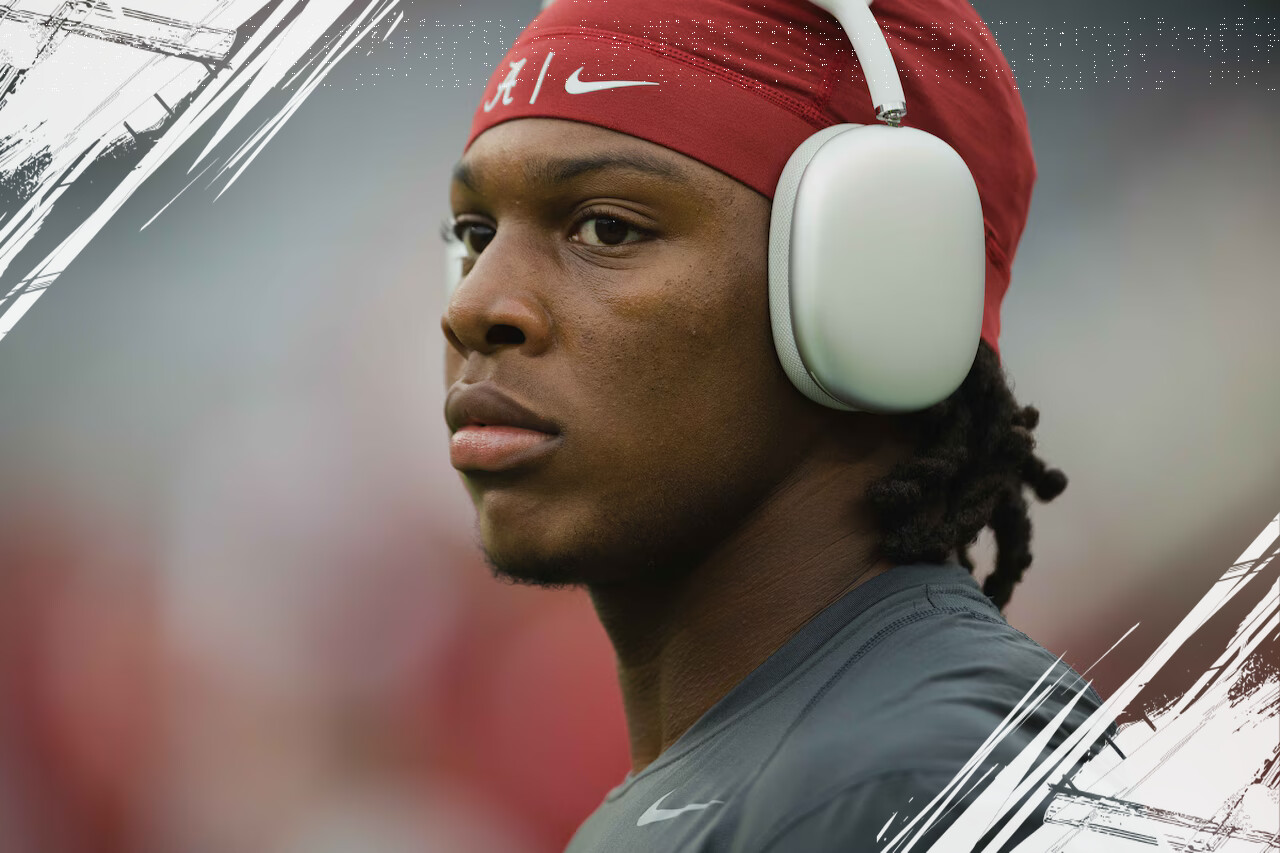
Jaylen Mbakwe entered Alabama football as a highly-touted recruit, but his career quickly became a cautionary tale. Once the No. 1 overall athlete in the country, Mbakwe’s time at Alabama is now widely viewed as a failure that raises questions about the current state of the program.
Mbakwe’s trajectory sharply contrasts with the storied reputation Alabama has long held as a cradle for champions. Instead of thriving, he struggled to adapt and eventually entered the transfer portal after demanding more compensation. This move has cast a spotlight on deeper issues affecting college football and Alabama’s player development.
From Top Prospect to Transfer Portal


Coming out of Clay-Chalkville High School, Mbakwe was considered a blue-chip five-star recruit with exceptional versatility. Yet, despite his promising credentials, his freshman season at cornerback yielded little success. A position switch to receiver failed to revive his impact. His performance did not meet expectations, and he soon demanded additional financial incentives, using the transfer portal as leverage.
Mbakwe’s demands coincided with a period when college football programs increasingly offer name, image, and likeness (NIL) deals. Yet, rather than motivating athletes to improve, this influx of unearned money is argued by some analysts to foster entitlement and complacency. Mbakwe’s case is often referenced as a negative example of this phenomenon.
The System: Spoiling or Supporting Talent?
Critics suggest that the broader collegiate football environment has contributed to a decline in professional discipline. Alabama’s history under past coaching regimes emphasized hard work and fierce competition. Today, some claim players face too many distractions and rewards without earning them, potentially eroding the program’s traditional work ethic.
One former Alabama player described practice as a “lions at war fighting over a piece of raw meat,” symbolizing intense competition to earn playing time and improve. By contrast, current conditions are said to resemble “free food lying around,” where motivation stemming from hunger and survival is lacking. Mbakwe’s perceived loss of drive has fueled this comparison.
Some also highlight extracurricular activities such as podcasts and gaming studios established for players as contributing factors to divided attention. Observers call into question whether these amenities detract from developing discipline and building champions in the mold Alabama once was known for.
Impact on Alabama’s Recruiting and Roster Construction
Mbakwe’s failure to fulfill his potential has sparked debate over recruiting strategy amid the growing transfer portal culture. Teams like Indiana have found success by targeting experienced upperclassmen eager to prove themselves, rather than banking primarily on high-profile freshmen with big NIL deals.
Indiana’s approach, exemplified by their acquisition of Heisman winner Fernando Mendoza, prioritizes experience and hunger to compete. This strategy contrasts with the costly gamble of recruiting high-ranking freshmen who may lack motivation. Alabama may need to reconsider its focus and explore integrating more “starving lions” into its roster.
The transfer portal remains open, and many Power Five programs are expected to continue pursuing seasoned players who display grit and readiness. Alabama’s coach may face pressure to adapt, balancing the allure of top recruits with the need for players who demonstrate professional commitment.
Looking Ahead: Lessons and Recommendations
Jaylen Mbakwe’s story serves as a stark reminder of how talent alone does not guarantee success in college football. The system must inspire discipline and perseverance, not just provide financial rewards. While NIL opportunities create new possibilities for athletes, they also introduce complexities that programs must manage carefully.
Institutions like Alabama face challenges in cultivating a competitive culture that fosters growth and resilience. Reforming support structures, including evaluating non-athletic amenities and emphasizing fundamentals, could be critical in reversing recent trends. Developing “hungry” players who earn their roles remains a key to sustained excellence.
As college football evolves, programs must balance recruiting, player development, and the realities of monetization. Mbakwe’s experience illustrates the risks of prioritizing potential over professionalism. The answer may lie in building rosters filled with determined, battle-tested athletes rather than chasing the next big name alone.
Read more at: www.al.com