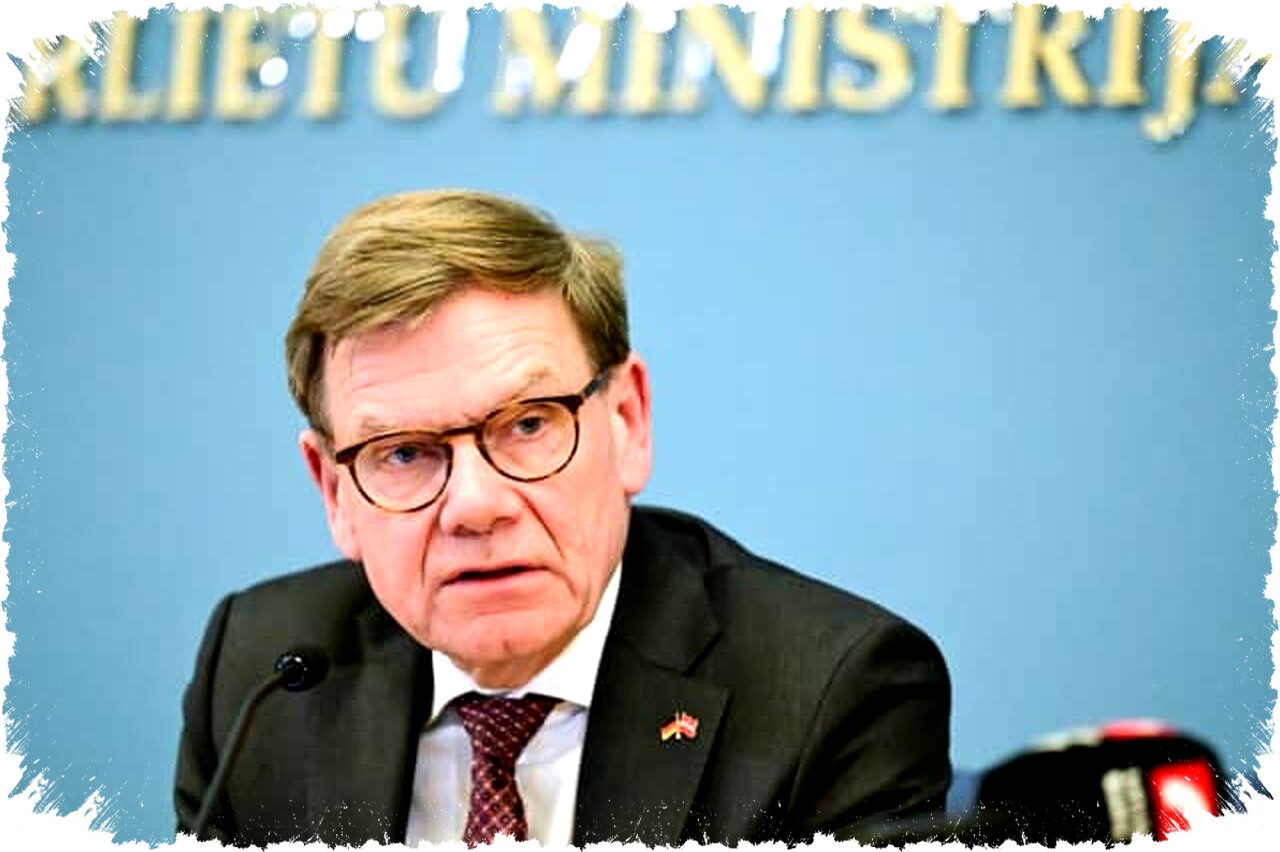
German Foreign Minister Johann Wadephul has urged the international community to take stronger actions against the Russian shadow fleet. This network of tankers is reportedly exploited by Moscow to bypass sanctions on oil exports.
Wadephul emphasized the urgent need to reform international maritime law. This would provide authorities with the legal tools to act against vessels involved, regardless of their registration status.
Speaking in Riga during a meeting with Latvian Foreign Minister Baiba Braže, Wadephul stressed expanding cooperation among Baltic Sea nations. He said, "We must now use all the possibilities offered by maritime law to stop such ships."


Braže supported this stance by calling for targeted measures against financial institutions and ports facilitating the shadow fleet’s operations. She highlighted the importance of closing all loopholes that Russia exploits for these activities.
The German minister’s visit to Latvia and Sweden focused on regional security concerns, particularly hybrid threats originating from Russia. These include the shadow fleet, cyberattacks, and damage to undersea communication cables.
Since Russia’s invasion of Ukraine, the Baltic region has experienced repeated cyberattacks attributed to Moscow. Latvia’s state security service warned that security risks from Russia are rising significantly in Europe.
The agency’s report for 2025 noted no immediate direct military threat from Russia to Baltic EU and NATO members. However, it pointed to ongoing Russian propaganda and disinformation efforts targeting Latvia as part of potential long-term strategies.
Braže remarked that Russia increasingly uses unconventional methods to achieve its goals. She described such tactics as "the new normal" in the geopolitical landscape.
Wadephul concurred, stating that Russia’s attempts to destabilize the region will persist, even if a peace agreement is reached in Ukraine. He highlighted the importance of European unity in facing these challenges.
The German minister also referenced the unpredictability of US foreign policy under former President Donald Trump. He underscored the necessity for Europe to present a united and confident front amid global geopolitical upheavals.
Following his discussions in Latvia, Wadephul traveled to Stockholm for talks with Swedish Foreign Minister Maria Stenergard. Sweden’s recent NATO accession ended over 200 years of neutrality, a decision accelerated by Russia’s actions in Ukraine.
Key Measures Proposed Against the Russian Shadow Fleet:
- Reform international maritime law to enable decisive action against unregistered or ambiguously registered vessels.
- Enhance cooperation between Baltic Sea nations for coordinated monitoring and enforcement.
- Target financial service providers facilitating transactions linked to shadow fleet operations.
- Impose stricter controls on ports that handle cargo from these illicit tankers.
- Improve international communication and intelligence sharing to close existing enforcement gaps.
By pushing for these comprehensive strategies, European leaders aim to curtail the Russian shadow fleet’s ability to evade sanctions. This is part of a broader effort to counter hybrid threats and maintain security in the Baltic region and beyond.
Read more at: www.yahoo.com