


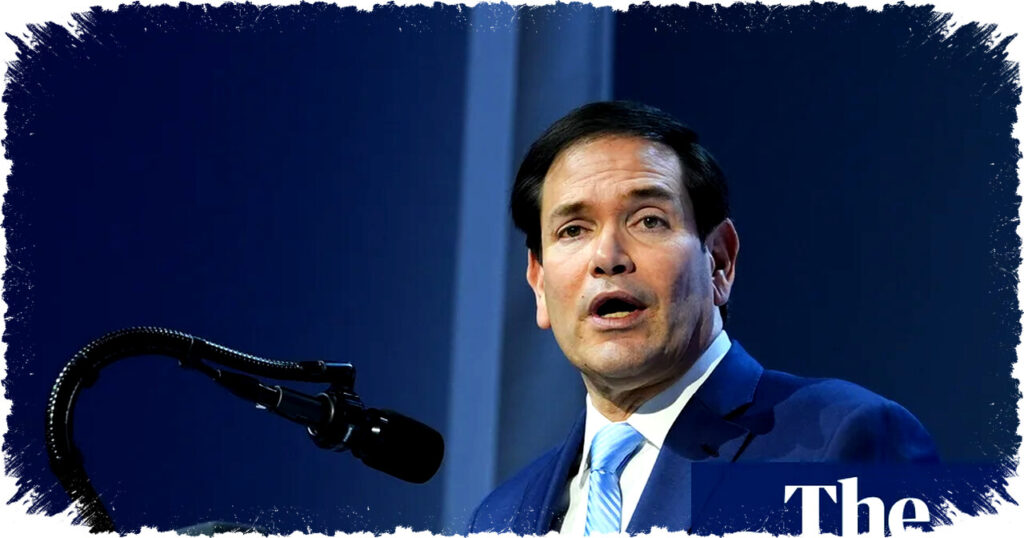
The United States has signaled a firm stance towards Venezuela’s interim leadership, with Senator Marco Rubio declaring Washington’s readiness to employ military force should Venezuela fail to comply with US demands. Rubio, who prepared testimony for a Senate Foreign Relations Committee hearing, emphasized that while the US is not currently at war with Venezuela, the administration remains prepared to escalate its actions if diplomatic and coercive measures do not succeed.
Rubio stated plainly, "We are prepared to use force to ensure maximum cooperation if other methods fail." He clarified that the hope is to avoid such measures, but reaffirmed the US commitment to its responsibility in the Western Hemisphere. These remarks come in the context of recent US operations aimed at detaining Venezuelan President Nicolás Maduro on drug-trafficking charges.
US Policy on Venezuela: Military Action and Diplomacy
Rubio, a former senator from Florida and a vocal supporter of President Trump’s policy in Latin America, defended the administration’s controversial moves. He argued that the removal attempt against Maduro was a law enforcement operation, not an act of war, stressing there are no US troops on Venezuelan soil. The focus remains on cooperation from Venezuela’s interim government and the opening of Venezuela’s energy sector to American companies.
Key points Rubio made include:
- Continued military strikes on vessels suspected of drug smuggling in the Caribbean and eastern Pacific.
- Seizure of sanctioned tankers transporting Venezuelan oil.
- Efforts to use Venezuelan oil revenues to boost trade with the US.
- An end to subsidized oil shipments to Cuba.
Rubio’s testimony also highlighted that Delcy Rodríguez, Venezuela’s acting president and a former vice president under Maduro, is cooperating with US demands. Rodríguez reportedly maintains "respectful and courteous channels of communication" with US officials, implying a strategic alignment born from self-interest.
Political and Legal Challenges Domestically and Abroad
The Trump administration’s approach has generated mixed reactions in Congress. Democrats have strongly criticized the actions, citing concerns over executive overreach and questioning the effectiveness of the US naval blockade and Maduro’s capture, noting that Venezuela’s regime largely remains intact with its former officials still in power.
Senator Jeanne Shaheen, the committee’s top Democrat, argued that the operation cost hundreds of millions of dollars but failed to dismantle Maduro’s government. She plans to scrutinize whether these efforts justify the expenditures and strategic risks involved.
The House of Representatives narrowly defeated a resolution invoking the War Powers Act, which would have compelled President Trump to withdraw US military forces from the region. Opponents of the resolution emphasize that no US troops are officially deployed on Venezuelan territory despite increased military presence nearby.
On the legal front, families of victims killed in US strikes against suspected narcotics traffickers have filed wrongful-death lawsuits, marking an escalation of judicial pushback against US tactics in the Caribbean drug interdiction campaign.
Strategic Objectives Behind US-Venezuela Relations
Rubio articulated that the US aims to reshape Venezuela’s economy and political landscape by leveraging its energy sector and oil exports. US officials seek to:
- Secure preferential access for American companies in Venezuelan oil production.
- Redirect oil revenues to purchase US goods, strengthening bilateral trade.
- Terminate Venezuela’s subsidized oil shipments to Cuba, undermining Cuba’s reliance on Venezuelan energy.
While maintaining pressure on individuals labeled as "narcotraffickers," US authorities are simultaneously working towards normalization of relations with the Venezuelan interim government. This dual approach reflects the complexity of Washington’s Venezuela policy—combining assertive military tactics with cautious diplomatic engagement.
Rubio’s testimony underscores a delicate balance: the US publicly rejects war while reserving the right to use force, signaling that further complicity or resistance from Venezuela’s interim leaders could prompt more direct military involvement. This approach mirrors broader American strategic interests in the region, amid competing global influences and Venezuela’s ongoing internal political crisis.
Read more at: www.theguardian.com