


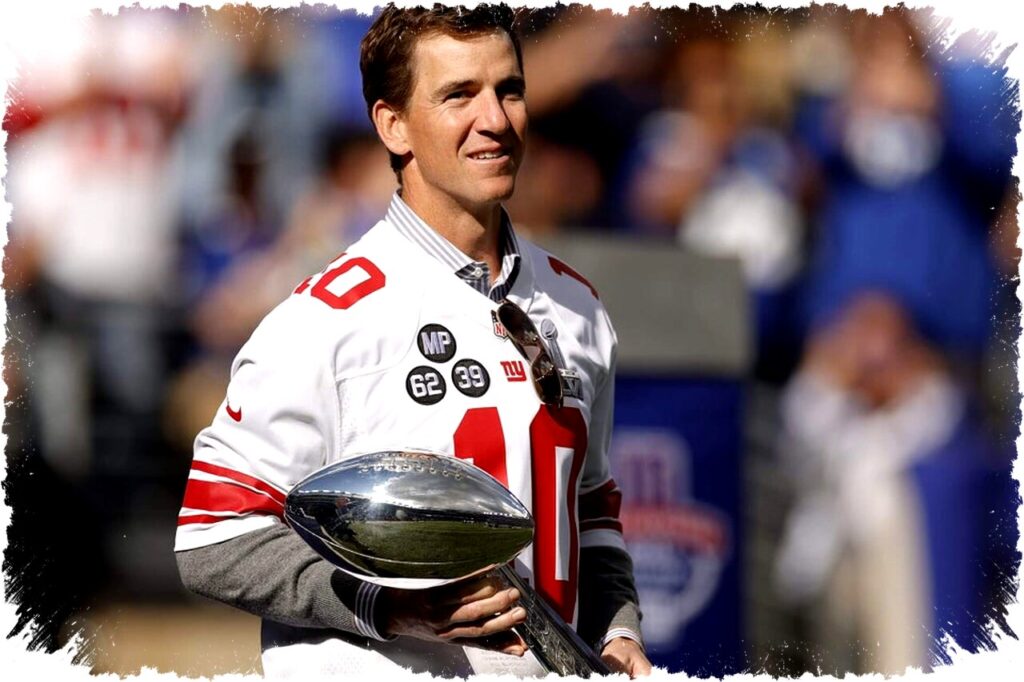
Eli Manning has once again fallen short in his bid for induction into the Pro Football Hall of Fame, sources reveal. Despite being among the 15 modern-era finalists for the second consecutive year, Manning did not secure enough votes to make the cut.
The former New York Giants quarterback’s legacy, marked by significant postseason achievements and solid career statistics, positions him as a strong candidate for future induction. Manning is one of only six players to have earned multiple Super Bowl MVP awards, joining legends such as Joe Montana, Terry Bradshaw, and Bart Starr, all of whom were first-ballot Hall of Famers.
Manning’s career accomplishments include ranking 11th in both career passing yards and touchdowns among NFL quarterbacks. When he retired after the 2019 season, he was seventh in these categories. He spent his entire 16-season career with the Giants and set one of the longest quarterback starting streaks in NFL history, starting 210 consecutive games from 2004 to 2017.
However, several factors complicate Manning’s Hall of Fame candidacy. Unlike many of his peers, he was never considered the top quarterback during what many call a golden era for the position. Manning never earned an All-Pro selection and was only named to four Pro Bowls. His overall record as a starting quarterback stands at an even 117 wins and 117 losses.
Moreover, Manning led the league in interceptions three separate seasons, a point often cited by voters weighing his career legacy. These elements have diluted his candidacy despite his clutch performances and moments of greatness on the biggest stage.
Key points about Eli Manning’s Hall of Fame case:
- Multiple Super Bowl MVP awards reflect elite postseason success.
- Consistency over 16 years with a single franchise.
- Top 15 all-time in passing yards and touchdowns.
- Absence of All-Pro honors and limited Pro Bowl appearances.
- Career starting record stands at .500.
- Led the NFL in interceptions thrice.
Manning’s postseason success and longevity suggest eventual entry into the Hall is likely. Yet, the lack of peak dominance and statistical flags continue to delay his induction. His case illustrates the ongoing debate regarding career production versus peak elite performance in Hall of Fame voting.
As the Hall of Fame voting process unfolds annually, Manning remains one of the most discussed figures among recently retired quarterbacks. Future ballots may give him favorable consideration as voters reassess his contributions in the broader context of NFL history.
Read more at: www.nytimes.com