


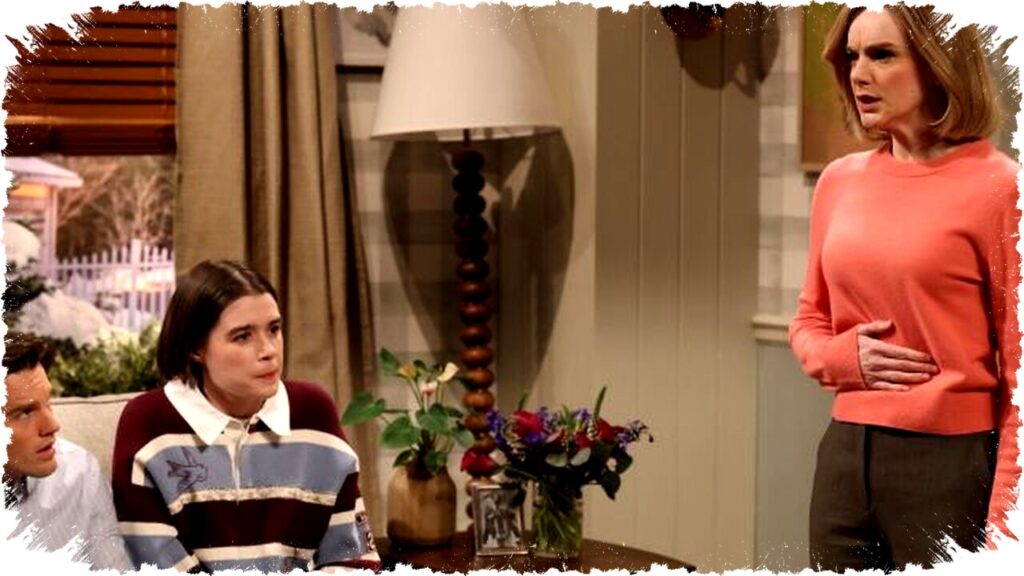
The recent “Saturday Night Live” skit titled “Mom Confession” vividly captures a political moment that resonates with many Americans. It portrays a mother hesitating and expressing doubts about President Donald Trump, a scenario that has gained real-world parallels according to recent data analysis. This satirical sketch highlights a cultural and political dynamic where some former Trump supporters begin to question their loyalties.
This satirical piece appeals across the political spectrum. Conservatives can see the portrayal of liberal adult children interrupting their mother’s vulnerable moment as a humorous exaggeration, while liberals recognize the archetype of a regretful Trump voter starting to rethink their stance. The question remains: how closely does this representation mirror public sentiment among Trump’s base?
Recent polls indicate a noticeable shift within segments of Trump’s voter base. Many express growing skepticism, although the degree and nature of this skepticism vary. It is important to consider that not all who express doubts were fully devoted MAGA supporters to begin with. Their dissatisfaction often appears more subdued rather than overt regret.
A Pew Research Center survey sheds light on the erosion of support among Republicans and Republican-leaning independents. Around 20% described the Trump administration’s performance as “worse than expected.” Support for “all” or “most” of Trump’s policies has also declined from 67% to 56% within a matter of months.
Further detailed data from Fox News and New York Times-Siena College polls confirm notable dissent within the 2024 Trump electorate. In one Fox poll, 16% of Trump voters disapproved of his presidential job performance, a significant figure for a base typically seen as loyal. On issue-specific questions, over 20% disapproved of Trump’s handling of ten out of twelve surveyed topics, including areas outside border control and immigration. In half of these cases, disapproval surpassed 25%.
The New York Times-Siena poll recorded slightly lower overall disapproval, at 12%. However, it revealed noteworthy negative perceptions on more specific fronts:
1. 17% labeled Trump’s first year back in office as “unsuccessful,” with 9% saying “very unsuccessful.”
2. 16% felt Trump’s recent year was worse than anticipated.
3. 16% expressed negative emotions about his presidency, contrasting with higher positive sentiment among Harris supporters.
Such data imply a nuanced form of skepticism. While many supporters might hesitate to outright express disapproval when asked directly, their dissatisfaction emerges more clearly when questioned about specific policies or issues. This pattern aligns with previous research on Trump voter regret.
The last comprehensive study on regret from October, conducted by Washington Post-Ipsos, showed 7% of Trump voters expressed regret supporting him, compared to 3% for Kamala Harris supporters. Notably, 19% of non-White Trump voters indicated regret. This reflects a modest but meaningful constituency reconsidering their political decisions.
Additional polling by the University of Massachusetts Amherst found the percentage of Trump voters “very confident” in their 2024 vote declining from 74% to 69% over several months. Although only 1% outright regretted their vote, nearly 30% expressed some level of uncertainty or mixed feelings. These ranged from minor regrets (2%) and ambivalence (6%) to concern despite confidence (19%).
Such findings suggest that Trump voters may underreport disenchantment, possibly due to social pressures or reluctance to admit perceived error. This dynamic mirrors the hesitation portrayed in the SNL skit, where the mother is wary of admitting doubts because of anticipatory criticism or backlash.
Interpreting these data points reveals an electorate grappling with complex emotions. Their views on Trump are evolving, featuring a spectrum from quiet disapproval to mild regret. These voters might not yet be fully open about their changing attitudes, especially in a polarized environment where acknowledgment of doubts invites immediate judgment.
This emerging trend demonstrates how entertainment like SNL’s “Mom Confession” can effectively reflect and dramatize underlying political and social currents. While the full extent of regret among Trump supporters remains uncertain, evidence confirms some measure of shifting opinions and growing scrutiny. It also exemplifies how political sentiment is rarely static and often influenced by personal, family, and social dynamics.