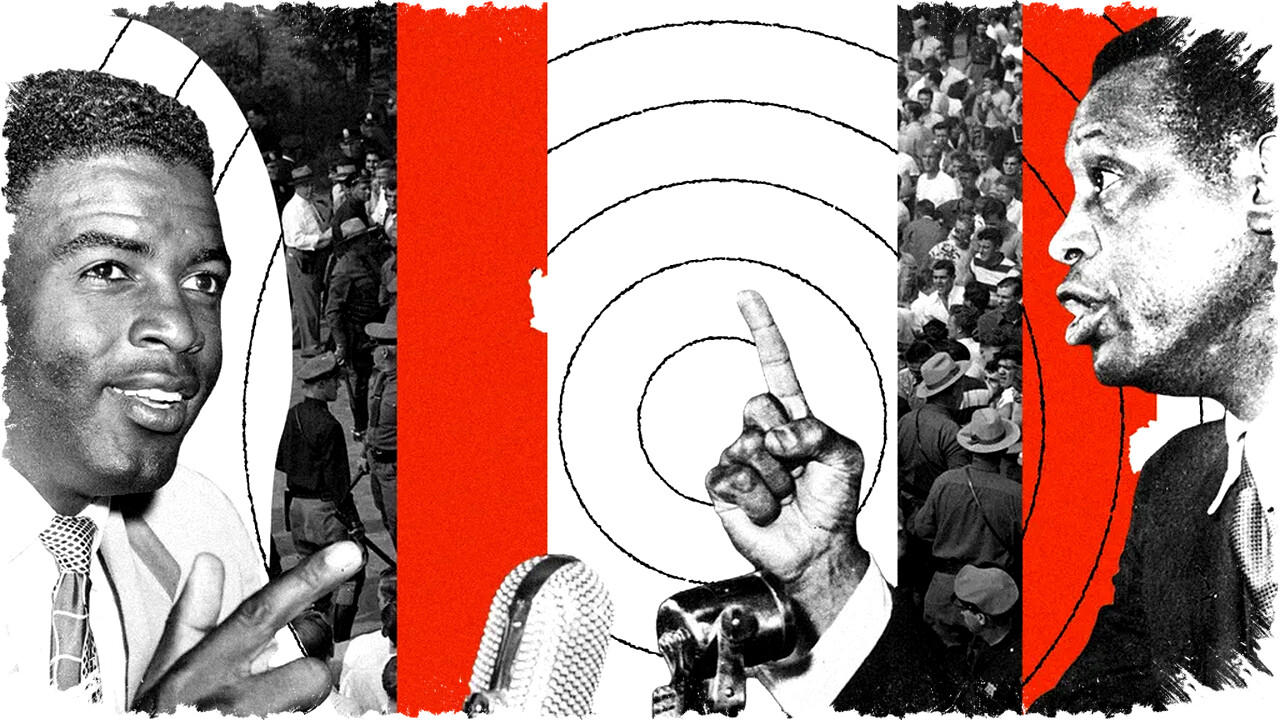
Jackie Robinson’s testimony against Paul Robeson before the House Un-American Activities Committee (HUAC) reveals complex tensions within the African American community during the early Cold War era. Robinson appeared at the committee’s hearing reluctantly and sought to balance his response by acknowledging the legitimate grievances of Black Americans while distancing himself from Communist associations.
Robeson, a prominent Black artist and activist, had publicly criticized U.S. policies and expressed admiration for the Soviet Union’s stance on racial equality. His speech in Paris, condemning the arms race and questioning Black Americans’ loyalty to a country that oppressed them, alarmed U.S. authorities. Robeson’s remarks were portrayed in the media as a call for insurrection, escalating government scrutiny amid fears of Communist infiltration.
Robinson’s testimony attempted to minimize the Communist threat by stating, “Just because communists kick up a big fuss over racial discrimination when it suits their purposes, a lot of people try to pretend that the whole issue is a creation of the communist imagination.” However, his comments about Robeson became the most newsworthy aspect. Robinson stated, “If Robeson did make those comments, well, then, it sounds very silly to me,” a phrase reflecting his measured but unequivocal distancing.
Robinson further remarked that Robeson “has a right to his personal views,” but he criticized the notion of throwing away progress in America over what he called a “siren song sung in bass,” an expression likely crafted by Branch Rickey, Robinson’s manager. Rickey, often simplified as a progressive figure for breaking baseball’s color barrier, also functioned as a hard-nosed nationalist who opposed leftist influences such as those represented by Robeson.
The phrase “siren song sung in bass” encapsulates the intense political pressure and ideological conflicts of the time. Robinson’s alignment with Rickey’s nationalist stance highlights the delicate position Black leaders faced in navigating Cold War fears while advocating for civil rights. Robinson’s testimony reflected a broader tendency within the Black press and leadership to prioritize future progress over alliances with ideologically contentious figures.
Robinson’s role as a veteran of World War II and supporter of the “Double V” campaign—victory over fascism abroad and racism at home—shaped his perspective. His cautious approach to Robeson’s radicalism was influenced by a desire to protect gains made by Black Americans rather than risk alienating mainstream political support. This context clarifies why Robinson’s testimony cannot be simply read as betrayal but as a strategic compromise under intense political duress.
In reviewing this historical episode, it becomes clear that Robinson’s testimony must be understood against the backdrop of Cold War anti-communism and the evolving civil rights movement. The pressures facing Black leaders then were multifaceted and fraught with potential consequences. Robinson’s testimony illustrates how fears of Communist influence complicated internal debates on racial justice and loyalty.
Read more at: www.newyorker.com