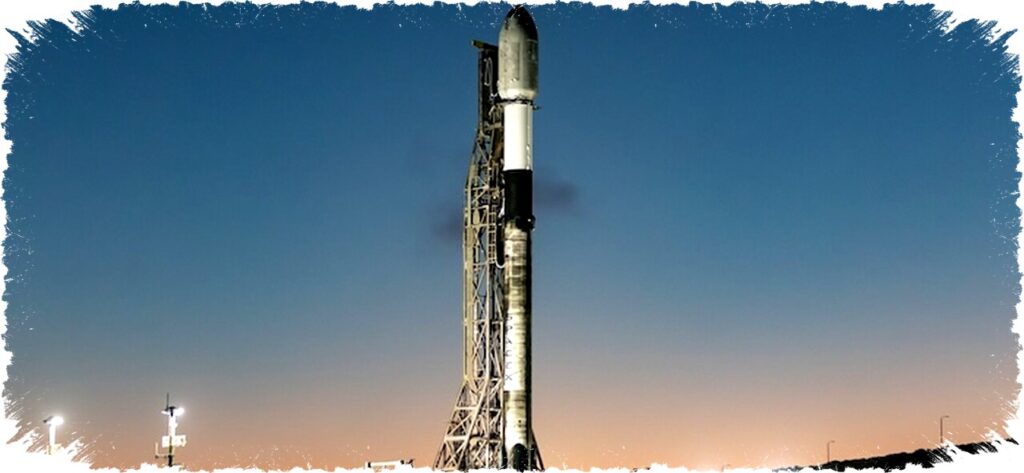
SpaceX is poised to mark a significant milestone by launching its 600th Falcon 9 rocket. The launch, set for Saturday evening, will deploy 24 Starlink V2 Mini satellites into low Earth orbit from Vandenberg Space Force Base in California.
The launch window opens at 5:59:59 p.m. Pacific Standard Time from Space Launch Complex 4 East. The Falcon 9 booster, designated B1081, will follow a southerly trajectory upon liftoff. Spaceflight Now will provide live coverage starting approximately 30 minutes before launch.
Booster B1081 is a veteran of 21 prior missions, including four notable NASA-supported flights: Crew-7, CRS-29, PACE, and TRACERS. This upcoming mission will mark its 22nd flight, highlighting its extensive reuse history. The booster aims to land on the autonomous drone ship "Of Course I Still Love You" stationed in the Pacific Ocean roughly eight minutes after launch.
Successful recovery will represent the 178th booster landing on this particular drone ship and the 571st overall booster landing executed by SpaceX. These milestones underscore the company’s continued focus on reusability and cost efficiency within the commercial spaceflight industry.
Earlier on the same day, SpaceX’s Crew Dragon spacecraft named Freedom docked at the International Space Station. The arrival at 3:15 p.m. EST occurred about 34 hours after launch from Cape Canaveral Space Force Station, carrying three NASA astronauts and one Roscosmos cosmonaut. This mission marks SpaceX’s 20th human spaceflight, reflecting its critical role in supporting crewed orbital operations.
Falcon 9 Reusability and Launch Cadence
- Total Falcon 9 launches to date: 599 prior, upcoming launch 600th
- Booster B1081 flights: 21 prior, 22nd flight upcoming
- Projected booster landings on drone ship "Of Course I Still Love You": 178
- Total booster landings by SpaceX: 571
SpaceX’s rapid launch cadence and extensive booster reuse represent a paradigm shift in launch economics. The Falcon 9 has become the workhorse of the company’s mission portfolio, supporting both commercial and governmental satellite deployments, as well as human spaceflight.
Starlink Mission Details
The Starlink 17-13 mission will expand SpaceX’s broadband internet constellation with the deployment of 24 next-generation V2 Mini satellites. These satellites aim to enhance global internet coverage capabilities, particularly in underserved regions. The continuous replenishment and growth of the constellation are key to maintaining robust internet service and increasing bandwidth.
The Falcon 9’s reliability, demonstrated through hundreds of successful launches, enables SpaceX to maintain a frequent launch schedule. This operational tempo supports ambitious projects such as Starship development and NASA partnerships.
This upcoming launch further illustrates SpaceX’s commitment to advancing space technology through cost-effective and reusable launch systems. The integration of multiple mission types, including crew and satellite deployments, highlights the company’s diversified launch portfolio and its pivotal role in modern spaceflight.