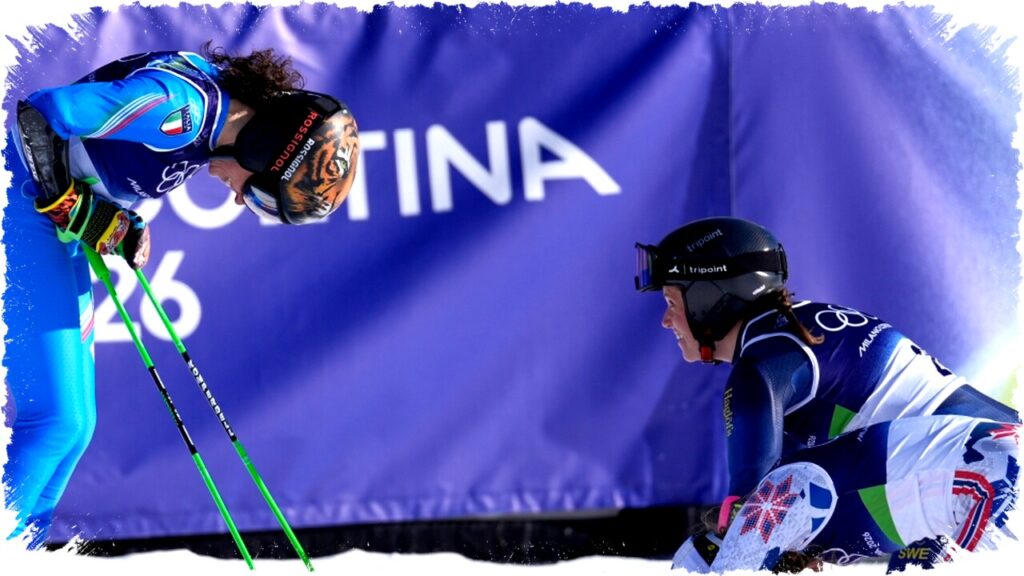
Federica Brignone delivered a stunning performance on the snowy slopes of the Tofane valley, capturing her second Olympic gold medal and equaling the legendary Alberto Tomba’s record. The atmosphere was electric yet silent as Brignone’s tiger-striped helmet appeared at 14:25, signaling the start of an unforgettable race where the course ceased to be just a slope and became a hunted prey.
Throughout her run, Brignone surged ahead of all competitors, including top contenders Sara Hector, Thea Stjernesund, Mikaela Shiffrin, and Sofia Goggia. Each split time revealed her dominance, with her leg brace effectively managing pain and her mental focus unwavering. The crowd’s energy climaxed as she carved clean turns on an easy snow track, showcasing not just skill but also strategic intelligence.
The Roar of Victory and Respect Among Rivals
Brignone’s winning time of 2 minutes 13 seconds and 50 hundredths established her as the most decorated Italian athlete in Winter Olympic history. Her roar of triumph resonated long after the race, symbolizing both her strength and perseverance. The runners-up, Sara Hector and Thea Stjernesund, demonstrated true sportsmanship by kneeling and embracing Brignone, gestures that highlighted their respect for an athlete of superior caliber. They affirmed her inspiring role, praising her not only for athletic excellence but also for her personal integrity.
Resilience and Triumph After Adversity
After enduring ten months in the shadows due to injury, Brignone’s comeback astonished many. Medical expert Andrea Panzeri credited her for having exceptional pain tolerance and mental fortitude—qualities distinguishing elite champions. Despite her 35 years and 213 days of age, she became the oldest female Olympic alpine skiing champion ever. Her humility stood out in the post-race comments, where she downplayed records, focusing instead on the race conditions and her execution.
Family and Community Support
Emotions ran high in the Italian camp, where Brignone’s family expressed deep admiration. Her brother and coach, Davide, spoke of the honor in supporting her journey. Meanwhile, her mother highlighted the mental challenge of the months leading to the Games, noting how Federica maintained composure under immense pressure. Their support underscored the significance of her achievement beyond medals.
Sofia Goggia’s Silence Contrasts the Celebration
The day’s event also drew attention to Sofia Goggia, who finished tenth and remained noticeably silent, refraining from congratulating Brignone publicly. This contrast between the two Italian stars sparked discussion among fans and officials alike. While the rest of the Italian team did not hold back their praise and embraces for Brignone, Goggia’s distant behavior highlighted ongoing tensions.
Recognition and National Pride
Brignone’s victory attracted commendations from high-profile figures, including Italy’s Prime Minister and the commander of the Carabinieri, who honored her dual career as a soldier and athlete. Other prominent leaders emphasized the historical and cultural importance of her accomplishment. Such acknowledgments reflect how sports achievements resonate with national identity and pride.
Summary of Key Points:
- Federica Brignone won her second Olympic gold, matching Alberto Tomba’s medals.
- She dominated the course with precise, calculated skiing despite prior injury.
- Her competitors showed loyalty and respect through emotional gestures.
- Brignone became the oldest female Olympic alpine skiing champion ever at 35 years old.
- Family support was pivotal in her mental and physical comeback.
- Sofia Goggia’s subdued reaction contrasted sharply with jubilation around Brignone.
- National leaders publicly praised Brignone’s historic feat, emphasizing her exemplary character.
Federica Brignone’s triumphant return and emotional display of resilience add a profound chapter to alpine skiing history. Her story is not only about medals but also about courage, respect, and the complexities of competitive sportsmanship among Italy’s finest athletes.