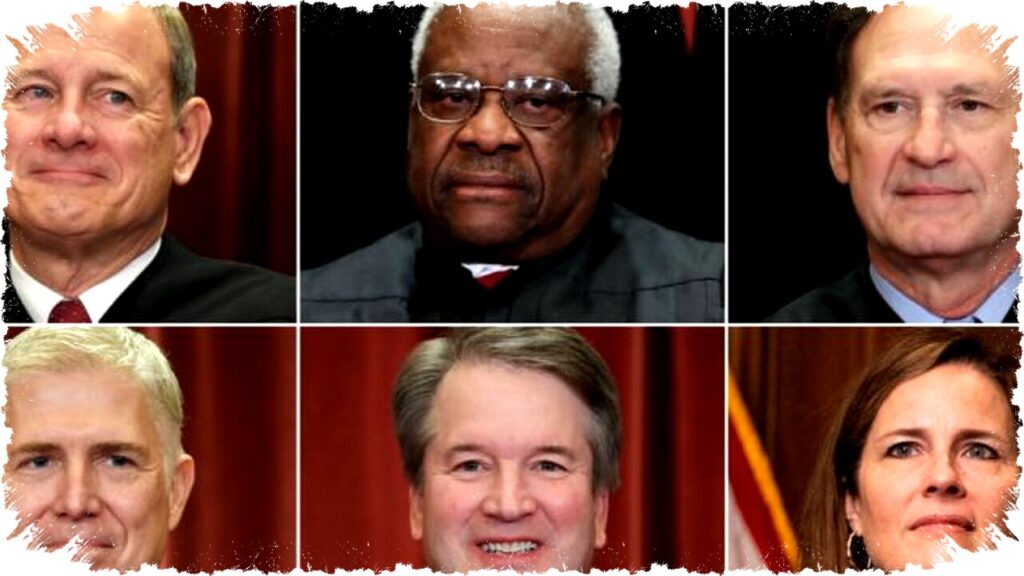
The Supreme Court recently delivered a major ruling that blocked former President Donald Trump’s broad tariffs, declaring the law underpinning them did not grant him clear authority. The decision centered on the “major questions doctrine,” a legal standard requiring Congress to clearly authorize presidents to exercise significant powers. This case revealed a striking split among conservative justices who had previously united against President Joe Biden’s policies using the same doctrine.
At first glance, the ruling rejected Trump’s tariffs, which critics viewed as a $134 billion burden on American consumers. Yet the underlying debate intensified over how the major questions doctrine should be applied. Justice Neil Gorsuch, Trump’s first Supreme Court nominee, wrote a lengthy opinion criticizing his colleagues on both ideological sides for inconsistent interpretations of the doctrine. He stressed that presidents cannot claim vast powers from vague statutory language when it comes to politically and economically major actions.
Chief Justice John Roberts, in the majority opinion, echoed this skepticism about broad presidential authority. He insisted that major legislative delegations must be unmistakably clear. Roberts flatly rejected suggestions from Justices Brett Kavanaugh, Samuel Alito, and Clarence Thomas, who argued for more flexible presidential discretion under broad congressional statutes. He emphasized, “There is no major questions exception to the major questions doctrine.”
The ruling exposed sharp fissures between conservatives on the court. While all conservatives agreed with using the major questions doctrine to block Biden’s student loan forgiveness, environmental regulations, and Covid-19 policies, they diverged sharply over Trump’s tariffs. Three conservatives dissented, arguing the doctrine did not apply here due to the foreign policy context. Three liberal justices joined Roberts’ majority, and two conservatives engaged in extensive debate over the doctrine’s limits and application. This division contrasts their cohesive stance when checking Biden’s executive actions.
Justice Gorsuch criticized Justice Amy Coney Barrett for softening the doctrine’s application, warning this would make it ineffective. Barrett, who also opposed Trump’s tariffs, countered that Gorsuch misrepresented her view and accused him of veering into policymaking rather than legal interpretation. Justice Elena Kagan, representing the liberal wing, dismissed Gorsuch’s approach as unconvincing, noting her own resistance to the doctrine though acknowledging its growing prominence.
Legal scholars highlight the significance of the court’s internal debate. Georgetown law professor Steve Vladeck said the conservative justices’ discord over the doctrine will impact future presidencies, as administrations often rely on ambiguous statutes rather than fresh laws. Stephanie Barclay, a former clerk for Gorsuch, called the justices’ sustained wrestling with the doctrine a sign of its maturation and judicial engagement. She noted the doctrine’s main purpose is neutral: “It is about whether the person who occupies the White House can claim powers that Congress never clearly granted.”
The dissenting conservatives, led by Kavanaugh, reasoned that the major questions doctrine should not intrude in areas like foreign affairs or trade, where presidents traditionally have more leeway. Kavanaugh argued courts have never applied the doctrine in foreign policy and cautioned against using it to limit presidential flexibility in national emergencies. Trump himself praised Kavanaugh’s position, calling him “genius” and praising his judicial philosophy. Conversely, Trump criticized Gorsuch and Barrett for voting against him, labeling their decisions an “embarrassment.”
Earlier uses of the doctrine helped the court strike down Biden’s attempts to waive $430 billion in student debt and to maintain eviction moratoriums during the pandemic. These cases involved statutory interpretations limiting executive authority over major policy issues without clear congressional mandate. Experts note the doctrine emerged from the conservative legal movement to rein in executive overreach, yet its uneven application fuels debate and skepticism, especially on the left.
In the tariffs case, the justices ultimately ruled that a 1977 emergency powers statute did not supply Trump with the authority to impose sweeping trade tariffs. Roberts emphasized that Congress imposes clear constraints when granting tariff powers, and such clarity was absent here. Though the president has other legal options to impose tariffs, this ruling underscores the court’s demand for precise legislative authorization for substantial executive actions.
This decision illuminates a deeper ideological struggle within the Supreme Court’s conservative bloc regarding limits on presidential power. While united in curbing Biden’s executive initiatives through the major questions doctrine, they fractured over how it should be applied to Trump’s actions. The case suggests future battles over statutory interpretation and executive authority will remain fiercely contested and central to the court’s role in balancing political power. As the doctrine continues evolving, it shapes the judiciary’s approach to presidential power regardless of party affiliation.
Read more at: www.cnn.com