


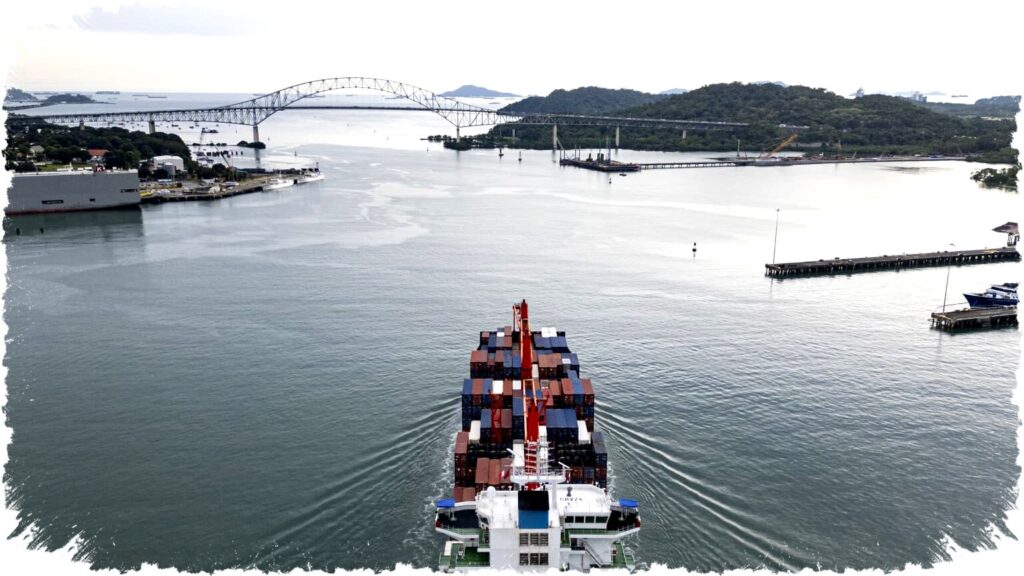
Panama has officially canceled key port contracts held by a Hong Kong-based company linked to China, transferring control of the canal’s terminals to leading global shipping firms Maersk and MSC. This marks a significant shift in the management of critical port facilities on both the Pacific and Atlantic sides of the Panama Canal.
The Panamanian government published a decree formalizing the Supreme Court’s decision that rendered the concessions granted to Panama Port Company (PPC), a CK Hutchison subsidiary, unconstitutional. PPC had operated the Balboa and Cristobal terminals for more than two decades, handling major container traffic near one of the world’s busiest trade routes.
Under the new transitional arrangement, APM Terminals, part of Danish shipping giant Maersk, will manage the Balboa terminal on the Pacific coast. Meanwhile, Terminal Investment, a subsidiary of Swiss-based MSC, will oversee operations at the Cristobal terminal on the Atlantic side. The government emphasized the interim nature of this takeover, aiming to maintain continuous port operations until new concession agreements are finalized within 18 months.
Panama’s move follows increasing geopolitical tensions linked to China’s expanding global influence. The ports had become a contentious issue after U.S. authorities raised concerns about Chinese control over critical infrastructure, culminating in former President Donald Trump accusing China of attempting to “run the Panama Canal.”
The dispute escalated when CK Hutchison negotiated a $23 billion asset sale involving a BlackRock-led consortium, which Beijing blocked, interpreting the deal as surrendering to U.S. pressure. In response, the Hong Kong conglomerate condemned Panama’s executive decree as unlawful and has since ceased terminal operations while pursuing arbitration and legal action to reclaim its concession rights.
CK Hutchison warned that any operations conducted by Maersk or MSC without its consent would trigger further legal challenges. Meanwhile, Beijing has issued stern warnings that Panama risks serious political and economic consequences unless it reverses its course.
This development is viewed as a strategic win for Washington, which prioritizes curbing China’s influence over the crucial Panama Canal trade artery. Reports indicate China has halted negotiations with Panama on infrastructure projects and instructed Chinese shipping companies to explore alternative routes to avoid the canal.
The ports’ reallocation reshapes the operational and geopolitical landscape around the Panama Canal. Panama’s government ensures that all assets, including cranes, vehicles, and computer systems, remain under state control during this transition. The stakes are high as the canal remains a pivotal hub for global maritime trade, linking the Atlantic and Pacific oceans.
The ongoing legal battles and shifting alliances underscore the complexities at the intersection of international commerce, national sovereignty, and global power rivalries. Panama’s decisive action demonstrates an effort to safeguard its strategic interests amid competing pressures from the U.S. and China.
For now, APM Terminals and MSC are key players managing the ports, ensuring uninterrupted service as Panama prepares to negotiate and award new concessions. This period will be crucial in determining the future operational framework and geopolitical ramifications for one of the most vital maritime gateways worldwide.
Read more at: www.cnbc.com