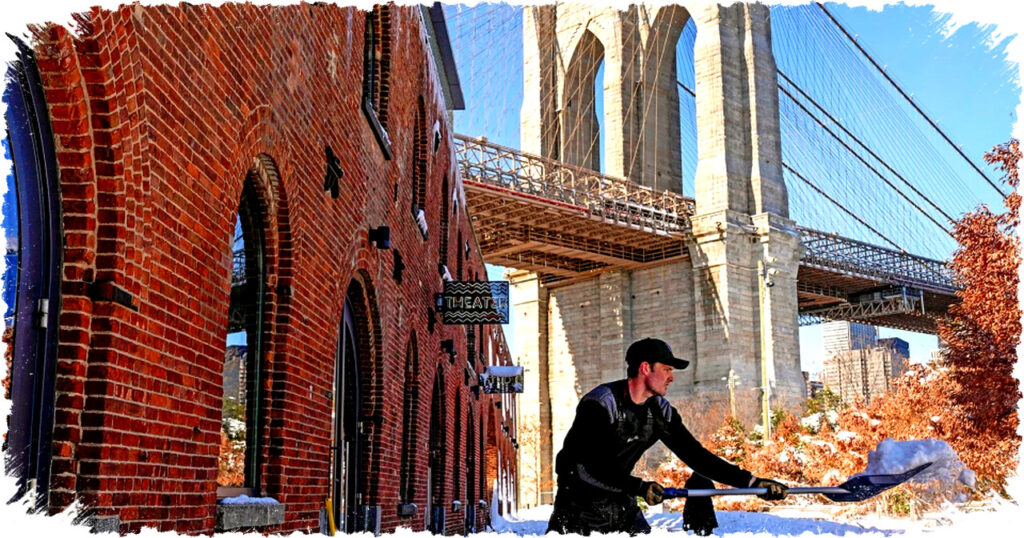
Light snow continued to fall across the Northeast, complicating cleanup efforts after a massive storm dumped heavy snow from Maryland to Maine. Residents and city crews are racing to clear towering piles of snow that remain stubbornly unmelted following the recent blizzard.
The National Weather Service predicted one to three inches of additional snow on Wednesday, much less than the last storm. However, melting snow from earlier precipitation froze overnight, creating hazardous patches of black ice on roads and sidewalks, further challenging commuters.
Efforts to Clear Massive Snow Piles
The previous storm left behind enormous snowbanks that local governments and residents are struggling to manage. New York City alone has spread approximately 143 million pounds of salt to combat icy conditions. Mayor Zohran Mamdani reported the recruitment of over 3,500 emergency shovelers who work $30-per-hour shifts clearing snow from public streets and transit stops.
Sanitation Commissioner Javier Lojan explained that in New York City, snow crews will utilize large basins filled with warm water to melt accumulated snow and ice quickly. This system successfully processed 23 million pounds of snow during an earlier storm, illustrating the scale of cleanup required.
Providence, Rhode Island, is also grappling with the cleanup, transporting snow to at least five designated dumping locations. Josh Estrella, a city communications director, indicated that more dumping sites might be added to handle the sheer volume of snow.
Challenges for People with Disabilities
Snow removal remains uneven, leaving significant portions of sidewalks impassable, especially for residents with disabilities. Jeff Peters from the Center for Independence of the Disabled, New York, likened some city areas to “impassable islands” due to patchy clearance and large snow barriers obstructing mobility devices and walkers.
Harrisville, Rhode Island, experienced roughly 33 inches of snow, forcing residents like Tina Guenette, who uses a motorized wheelchair, to shovel their own driveways. Guenette explained that the town lacks volunteers for a snow-shoveling program that could assist vulnerable residents, further isolating individuals dependent on accessible sidewalks.
Storm Impact and Disruptions
The recent blizzard dropped over three feet of snow in parts of Rhode Island, surpassing the totals recorded in the 1978 historic blizzard. Meteorologist Ryan Maue highlighted the storm’s intensity by estimating that if all the snow from Maryland to Maine had landed on Manhattan, the resulting pile would be more than a mile high.
The severe weather forced widespread flight cancellations, transit disruptions, downed power lines, and unfortunate loss of life. Newport, Rhode Island police reported a carbon monoxide poisoning death linked to the storm conditions.
Despite these difficulties, key Northeast school districts resumed in-person classes this week. Philadelphia and Boston reopened schools following closures, while New York City’s public school system saw over 900,000 students attend classes amid ongoing snow removal challenges.
Power and Transportation Recovery
Power outages affected hundreds of thousands across Massachusetts, New Jersey, Delaware, and Rhode Island. While many customers have regained electricity, nearly 160,000 remained without power in Massachusetts early Wednesday.
Flight disruptions are decreasing, with fewer cancellations and airlines gradually resuming operations. Rhode Island’s T.F. Green International Airport reopened and began processing flights, although some cancellations persisted.
As cleanup continues, the Northeast faces ongoing recovery efforts to restore normalcy. Cities and communities remain vigilant as they address lingering snow, icy conditions, and accessibility concerns brought on by this historic winter storm.