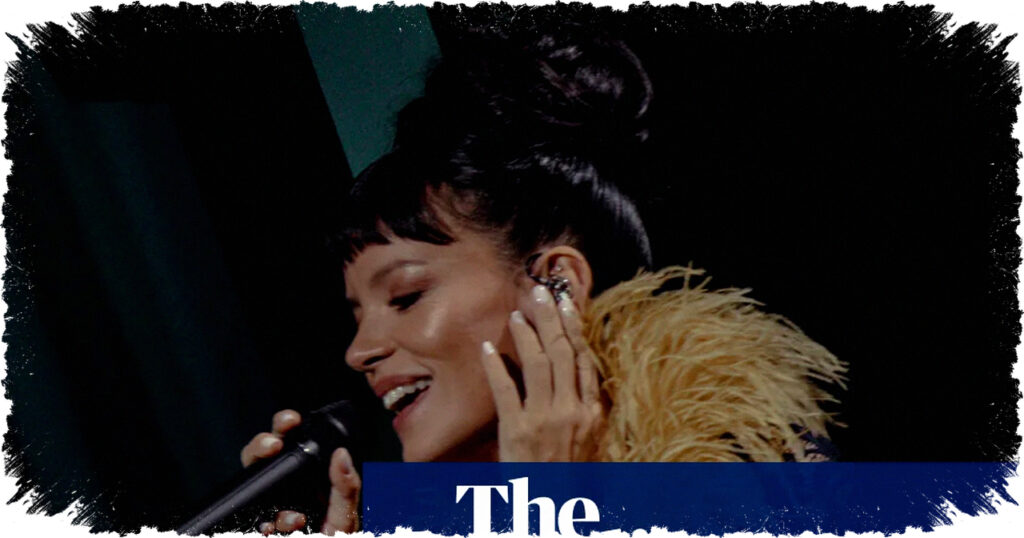
Lily Allen’s return to the music scene with her much-anticipated show featuring the album West End Girl arrives amid high expectations. The album, released in October 2025, had already positioned itself as an intimate narrative of betrayal and divorce, inspired by Allen’s separation from actor David Harbour. Praised for its raw honesty and autofictional depth, it was regarded as a breakthrough work within contemporary female storytelling in music.
The live show is structured in two acts, beginning with theatrical flair through a string ensemble called the Dallas Minor Trio. They open with a version of Allen’s 2008 hit “The Fear,” setting an ominous yet captivating tone that aligns well with the album’s themes of anxiety and crisis. The audience joins in singing karaoke-style lyrics projected on a screen, creating an immersive atmosphere.
However, the initial promise wanes as the string trio continues with nine more songs arranged similarly. While some tracks like “Not Fair” adapt well to orchestral reinterpretation, others such as the controversial “Hard Out Here” fail to resonate, losing impact through their tone-deaf lyrics displayed onstage. This extended instrumental half-hour risks alienating fans expecting a more dynamic comeback and raises questions about balancing album coherence against crowd-pleasing hits.
After the intermission, Lily Allen takes the stage for the second act, performing the title track “West End Girl” and progressing through songs deeply rooted in personal storytelling. The stage design, which includes a stylized bedroom set, aims to ground the performance in the album’s themes of domestic and emotional unraveling. Yet Allen’s onstage presence is sometimes described as stiff and tentative. Movements between props and set pieces feel rehearsed rather than spontaneous, missing an opportunity to emphasize the narrative’s emotional gravity.
Songs that involve explicit or provocative imagery, such as “Pussy Palace” and “4chan Stan,” see Allen interacting awkwardly with props that illustrate the lyrics. Attempts to act out the panic or desperation in “Relapse” come across as half-hearted. There are moments where Allen connects better with the audience during “Nonmonogamummy” and “Dallas Major,” but overall, performances like “Just Enough” show her standing motionless behind a curtain, limiting engagement.
The show’s tone at times borders on lethargy, which could have been an artistic choice to reflect the album’s emotional bleakness. But the lack of dynamic contrasts makes some scenes dull. For example, on “Let You W/In,” the mood aims to portray invisibility and misery, but watching Allen seemingly go through the motions with backing tracks lacks the intended impact.
Despite performance flaws, the audience remains responsive and vocally supportive throughout the second half. Calls of “dump him” accompany the songs’ cathartic content, culminating in a standing ovation. This enthusiasm may stem largely from the public’s existing goodwill toward Allen and a desire to witness her emotional narrative live.
In summary, Lily Allen’s comeback show is a complex mix of compelling artistry and uneven execution. The musical arrangements offer fresh interpretations of familiar hits, while the album’s intimate content promises theatrical innovation. However, the live performance often struggles with energy and engagement, raising questions about how best to bring such a nuanced, personal record to the stage. The absence of a consistently strong presence—perhaps the missing “West End Girl” herself—shapes how the comeback is ultimately received.
Read more at: www.theguardian.com