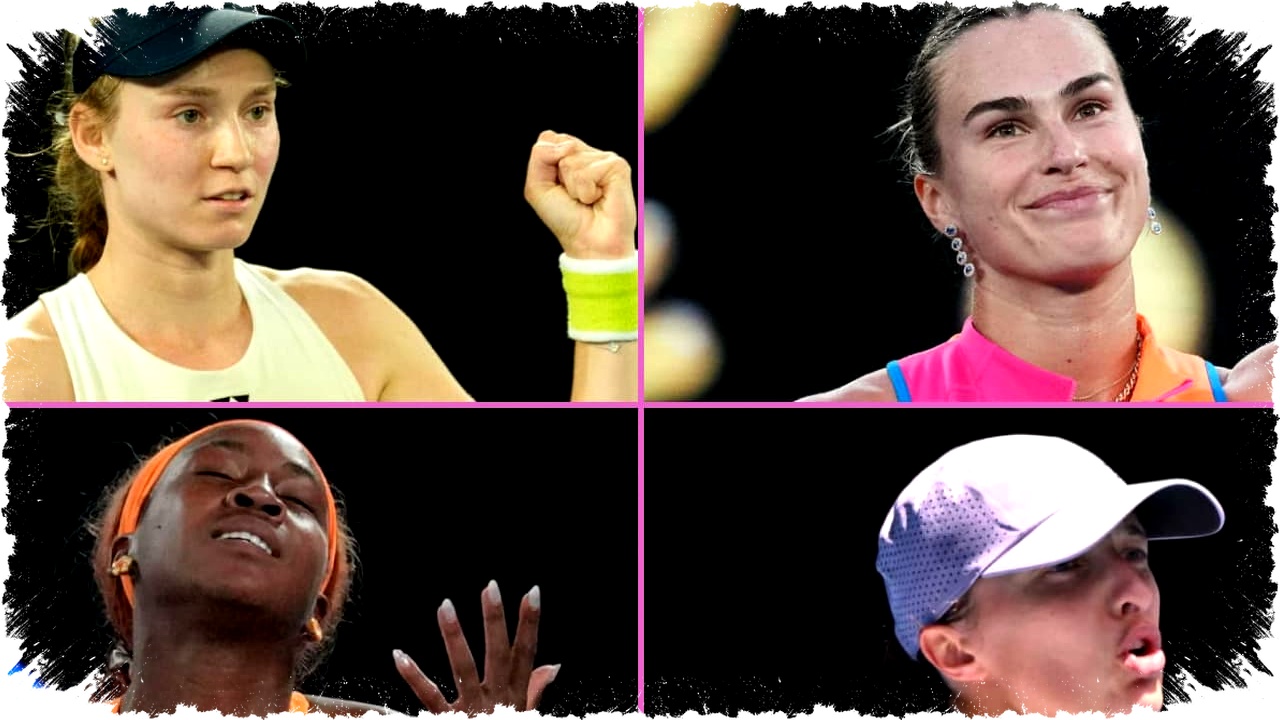
Aryna Sabalenka continues to hold the top spot in women’s tennis according to both the official WTA Rankings and the Universal Tennis Rating (UTR) system. However, the UTR offers a different perspective on the relative positions of other leading players, suggesting a much tighter competition among the top ranks.
The UTR ranking methodology focuses on recent performance and the quality of opponents, analyzing results from the past 12 months and the last 30 matches played. This system rates players on a scale from 1.00 to 16.50, allowing a more dynamic insight into player form compared to the WTA’s 52-week points method.
Swiatek Slips to Fourth in UTR Rankings


Iga Swiatek, currently ranked second in the WTA rankings, experiences a drop to fourth place in the UTR rankings. Her rating stands at 12.97, slightly behind Jessica Pegula and Elena Rybakina. Swiatek’s quarter-final exits at the Australian Open and Dubai Championships have impacted her UTR score, reflecting recent challenges faced on the tour.
Swiatek’s position highlights how the UTR system can diverge from official rankings by weighting recent performances more heavily. This nuance presents a portrait of competitive balance that differs from the traditional ranking system, where points accumulated over the year have greater influence.
Coco Gauff’s Notable Position Drop
Coco Gauff, ranked fourth officially by the WTA, is placed eighth in the UTR ratings with a score of 12.83. This position places her below players like Elina Svitolina and Karolina Muchova, who rank lower in the official standings. Gauff’s UTR rating reflects her recent form and match outcomes over the last 12 months, underscoring the impact of current performance on ranking perception.
This downward adjustment in Gauff’s unofficial rating signals increased competition within the women’s circuit. It also suggests that players outside of the traditional top five by ranking are closing the gap in terms of recent match effectiveness.
Top Eight Players in the UTR Women’s Ranking
- Aryna Sabalenka – 13.26 (WTA No. 1)
- Elena Rybakina – 13.21 (WTA No. 3)
- Jessica Pegula – 12.99 (WTA No. 5)
- Iga Swiatek – 12.97 (WTA No. 2)
- Amanda Anisimova – 12.91 (WTA No. 6)
- Elina Svitolina – 12.90 (WTA No. 9)
- Karolina Muchova – 12.84 (WTA No. 13)
- Coco Gauff – 12.83 (WTA No. 4)
Sabalenka Maintains Clear Lead
Despite the closer ratings at the top, Sabalenka remains the leader overall, rated 13.26 by UTR and holding a significant points lead in the WTA rankings. Her limited play since the Australian Open final has not affected her standing considerably, pointing to the strong baseline established from her prior victories.
Sabalenka’s dominant rating also reflects the quality of wins and consistency she has shown. This highlights her continued status as the player to beat heading into major tournaments, including the ongoing WTA 1000 event at Indian Wells.
Implications for the Women’s Tour
The discrepancy between the WTA and UTR rankings shows how different systems capture player performance nuances. Players like Pegula and Rybakina gain ground through their recent successes, while those such as Swiatek and Gauff face more pressure to maintain form.
These rankings reinforce the competitiveness of the current women’s tour, where the margin between the top players is increasingly narrow. Fans and analysts should watch upcoming tournaments closely, as performances there may further impact unofficial ratings and official standings alike.
The UTR system provides valuable context for understanding player momentum and match quality beyond traditional rankings. This makes it a useful tool for following the evolution of women’s tennis rankings in real time.
Read more at: www.tennis365.com