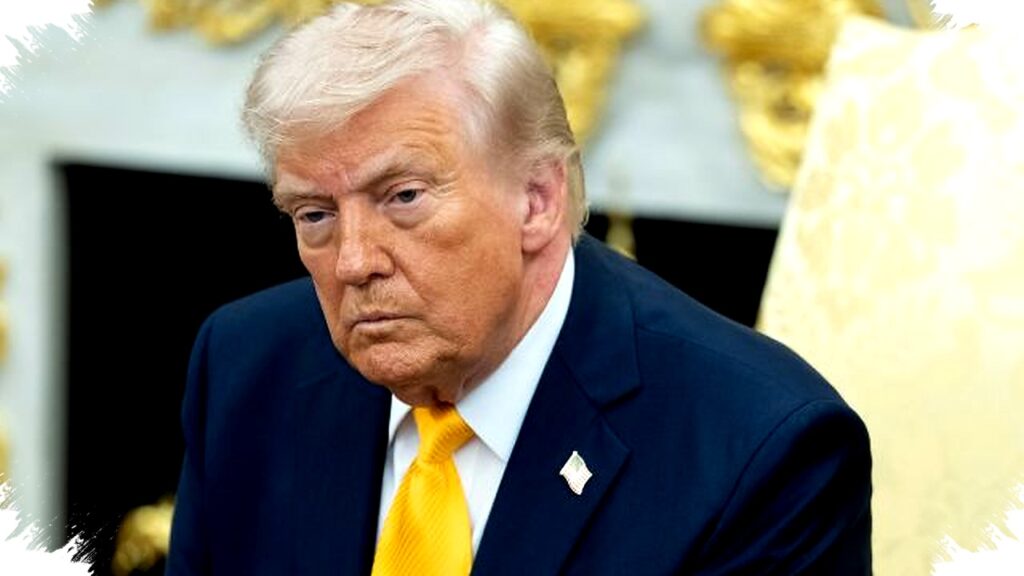
The Trump administration’s handling of U.S.-Israeli relations amid the Iran conflict has seemingly exacerbated Israel’s already fragile public image. Public opinion polls show a marked decline in American sympathy toward Israel compared to Palestinians, highlighting an unprecedented shift in historical views.
Compounding this, the conservative right in the United States has become deeply divided over increasing antisemitism within its ranks. Several prominent conservative voices have propagated conspiratorial narratives linking Israel to various domestic problems, further complicating pro-Israel support.
From the outset, skepticism about the U.S. entering the Iran conflict was widespread, creating fertile ground for blame directed at Israel. Contrary to expectations that U.S. leadership would defend its ally with a unified message, some Trump administration figures have instead implied that Israel compelled the U.S. to act.
A notable example came from Secretary of State Marco Rubio, who posited that Israel’s anticipated strike on Iran would inevitably provoke Iranian retaliation against U.S. targets. This argument painted Israel as the instigator and suggested that the United States was reacting under external pressure, a characterization diplomatically precarious for Israel.
Following the backlash, the administration distanced itself from that narrative but continued to present inconsistent rationales for the conflict. The lack of messaging coherence has further undermined Israel’s position in the eyes of many Americans.
Recent high-profile events have intensified this challenge. Joe Kent, the outgoing National Counterterrorism Center Director appointed by Trump, resigned citing the Iran war and explicitly accused Israel and its lobby of coercing the United States into conflict. Kent’s public statements echoed antisemitic conspiracy themes, causing concern given his official capacity and the administration’s prior support.
President Trump himself contributed to the controversy by publicly denying U.S. knowledge of Israel’s airstrike on the South Pars gas field, a critical Iranian energy site. Despite contradicting reports from U.S. and Israeli sources suggesting coordination, Trump’s assertion framed Israel as acting independently and left the American role ambiguous.
This denial risks reinforcing conspiracy narratives, casting Israel as solely responsible for escalating tensions while portraying the U.S. as a reactive party. Prime Minister Benjamin Netanyahu repudiated claims that Israel forced U.S. involvement, emphasizing Israel’s autonomy in its military actions and dismissal of such accusations as “ridiculous.”
Trump later reiterated that while the U.S. and Israel coordinate closely, both nations act independently and occasional unilateral Israeli actions may not receive American approval. Such statements raise questions about the unity and clarity of U.S.-Israeli policies in this conflict.
At recent Pentagon and congressional briefings, officials sidestepped direct answers about Israel’s military objectives and the implications for U.S. involvement. Defense Secretary Pete Hegseth provided vague assurances on alignment of objectives without addressing criticism inspired by Trump’s statements.
Similarly, Director of National Intelligence Tulsi Gabbard expressed uncertainty about Israel’s strategic goals, differentiating them from U.S. aims focused on disarming Iran’s nuclear and conventional capabilities. CIA Director John Ratcliffe, however, affirmed intelligence assessments indicating that any Israel-Iran conflict would likely draw Iran to attack U.S. targets.
The Iran war thus presents a severe test for the U.S.-Israel relationship, made more complicated by the Trump administration’s inconsistent communication and willingness to make politically expedient but diplomatically damaging remarks. This lack of cohesion undermines Israel’s image and fuels divisive narratives at home and abroad.
American public opinion, especially among conservatives, is increasingly fractured, and antisemitic conspiracy theories risk gaining traction within influential circles. This environment threatens to have lasting negative consequences for Israel’s reputation in the United States and beyond.
The Trump administration’s approach, marked by conflicting statements and controversial appointments, has not only complicated diplomatic coordination but also exposed fissures that could hinder long-term strategic partnerships. Observers warn that the fallout from these developments may persist, affecting both regional stability and Israel’s international standing for years to come.