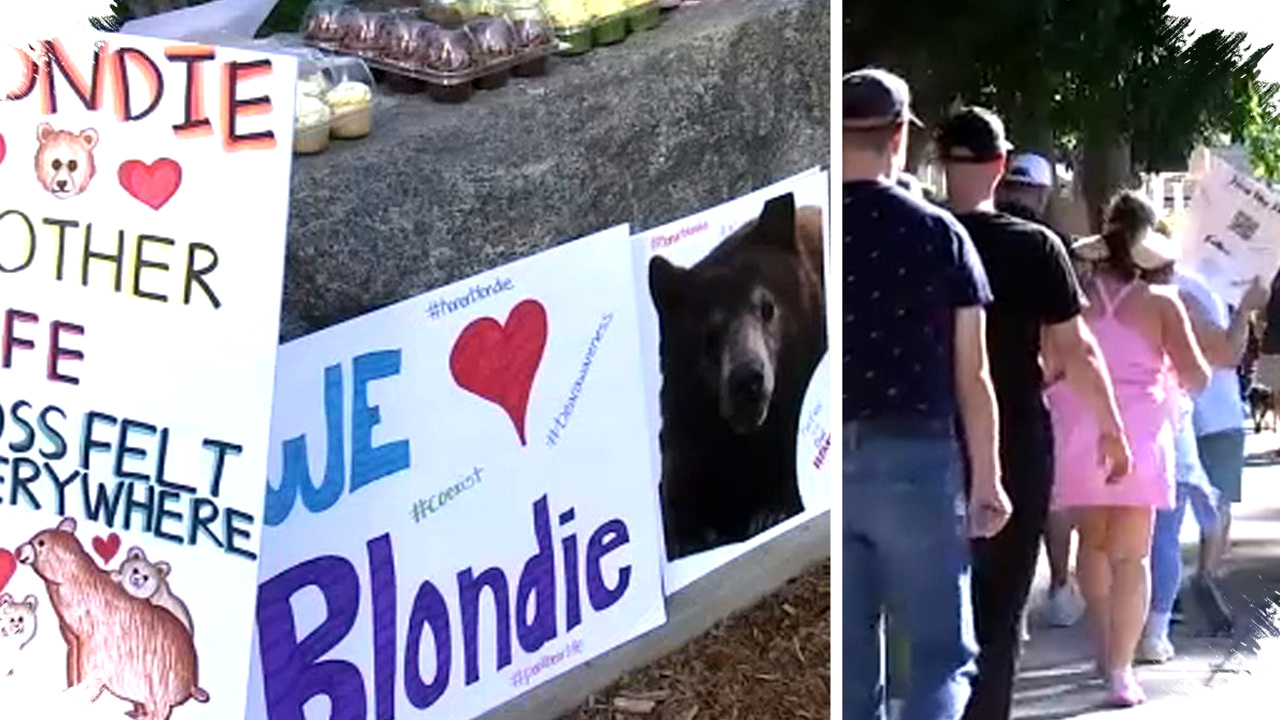
Residents of Monrovia gathered to honor a mother bear named Blondie, who was euthanized by California wildlife officials after being involved in an attack on a local woman. More than 100 community members participated in a memorial walk at Monrovia Library Park to pay tribute to the bear and raise awareness for policy change.
Blondie, known for having two young cubs, was euthanized following an incident where she clawed a woman walking her dog on Oakglade Drive. Authorities from the California Department of Fish and Wildlife (CDFW) considered the bear a public safety threat, leading to the decision despite public petitions seeking alternatives.
Incident and Response by Authorities
The attack occurred when Blondie approached the woman and clawed her knee, causing minor injuries that required hospital treatment. DNA evidence linked Blondie to a previous attack in Monrovia from the prior June, solidifying concerns about the bear’s behavior. Following the incident, state wildlife officials trapped Blondie and her cubs, ultimately deciding to euthanize the mother bear.
The Monrovia City Council requested relocation of Blondie and her cubs to Angeles National Forest. However, the decision rested with state officials and was finalized before the city could intervene. City Manager Dylan Feik expressed sorrow over the outcome and assured that the cubs remain healthy and will be relocated to a recovery facility before reintroduction into the wild.
Community Reaction and Calls for Policy Change
Residents voiced their disappointment, labeling the bear’s euthanasia as tragic and avoidable. Mike Janesin, a local neighbor, remarked that more time and understanding could have offered alternative solutions, especially considering Blondie’s dependent cubs. Participants like Emily Wu Troung emphasized the need for coexistence between humans and wildlife to prevent future euthanasia.
More than 3,800 people signed petitions advocating for Blondie’s life to be spared, and over 100 joined the community walk to symbolize support for her two cubs. Elizabeth Weisberg, who traveled from Redlands, stressed the importance of memorializing the bear and fostering dialogues about human-bear interactions.
Monrovia resident Jacqui Malouf urged concrete community actions beyond remembrance, such as improving waste management and conducting public education on living safely near bears.
CDFW’s Position on Wildlife Safety and Management
After the euthanasia, the CDFW released a statement defending the decision, emphasizing that the department’s highest priority is ensuring public safety. Officials explained that euthanasia is a last resort, used only when an animal poses a significant risk and cannot be safely relocated.
The department highlighted bear behavior, noting mother bears teach cubs foraging techniques, which can lead to habituation near human habitats if food attractants are present. They stressed the importance of residents securing trash, removing food sources, and blocking access to sheltered areas to reduce conflicts.
Relocation is not always effective, as bears have strong spatial memory and may return to areas of previous conflict or fail to adapt in unfamiliar environments. CDFW cautioned that without addressing attractants and habitat access, problematic encounters are likely to continue.
Steps to Reduce Human-Bear Conflicts
- Secure trash bins and remove unsecured food sources.
- Avoid leaving pet food outdoors.
- Block access to crawl spaces or sheltered areas around homes.
- Educate the community about living alongside local wildlife.
- Encourage local authorities to review and improve bear management policies.
The community of Monrovia remains engaged in discussions to find better approaches for managing wildlife interactions. Efforts to balance human safety with wildlife preservation are ongoing, as residents and officials seek to prevent such tragic outcomes in the future.
Read more at: abc7.com