


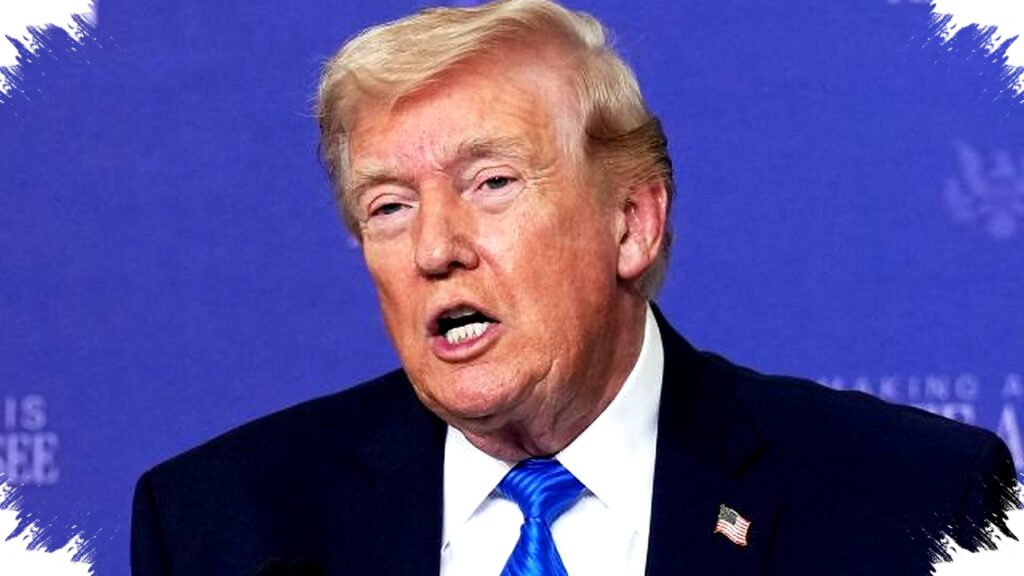
Former President Donald Trump cast a mail-in ballot in the Florida special election for House District 87, which includes his Mar-a-Lago residence. This vote comes despite his recent public assertions labeling mail-in voting as susceptible to fraud.
Trump voiced strong concerns about mail-in voting the day before, stating at a crime roundtable in Memphis that “mail-in voting means mail-in cheating.” He emphasized the need for reforms to address what he perceives as vulnerabilities in the mail voting system.
Records from Palm Beach County confirm that Trump submitted his mail-in ballot earlier this month for the special election held on Tuesday. He also used mail-in voting in the January primary for the same election, reflecting consistent use of this voting method in Florida state races.
Democrat Emily Gregory is projected by CNN’s Decision Desk to win the special election, signaling a possible shift in the traditionally Republican district. This development underscores the significance of voter behavior and campaign dynamics in local races.
Trump has consistently challenged the legitimacy of mail-in voting, claiming—without presenting evidence—that it leads to widespread election fraud. The former president’s legislative efforts include pushing the “SAVE America Act,” which aims to eliminate no-excuse mail voting but faces minimal chances of passing in the Senate.
Meanwhile, the U.S. Supreme Court recently heard arguments on a Republican-backed case seeking to impose stricter deadlines for mail ballot receipt. This legal challenge aligns with broader efforts to tighten regulations on absentee and mail-in voting nationwide.
A White House spokesperson, Olivia Wales, clarified that Trump’s proposed voter ID bill allows exceptions for mail-in ballots due to illness, disability, military service, or travel. She defended the former president’s mail-in voting as routine for a Palm Beach resident who primarily lives in Washington, D.C., calling the issue “a non-story.”
Trump was not expected to be physically present in Florida on Election Day, underscoring the practical reasons for his mail-in voting in state elections. His voting method contrasts with his public denunciations of the mail voting system, prompting discussion about consistency in political messaging.
House Minority Leader Hakeem Jeffries criticized Trump’s use of mail-in voting while campaigning to restrict it, describing the behavior as “king-like.” He argued that Trump’s stance epitomizes a “rules for me, not for thee” approach and dismissed the SAVE Act as unrelated to election integrity.
Some Palm Beach voters expressed surprise upon learning of Trump’s mail-in ballot. Republican voter Michelle Hall told CNN that mail voting should be limited to specific conditions such as disability or military deployment. She questioned the former president’s stance, asking why he would engage in a practice he publicly opposes.
This is not the first time Trump voted by mail. In the 2020 Florida presidential primary, he cast what he called an “absentee” ballot, attempting to distinguish it from universal mail-in voting. At that time, he suggested absentee ballots were acceptable, whereas broader mail-in voting systems could invite fraud.
In the 2024 election cycle, Trump cast early in-person votes both in the presidential primary and general election at polling stations near Mar-a-Lago, highlighting his varied use of voting methods. His voting history reflects the complexities and nuances involved in the ongoing debate over mail-in ballot security.
The evolving discourse surrounding mail-in voting continues to influence election law reforms and political strategy. As debates about election integrity advance, the role of mail ballots remains a focal point in American electoral processes.
Read more at: www.cnn.com