


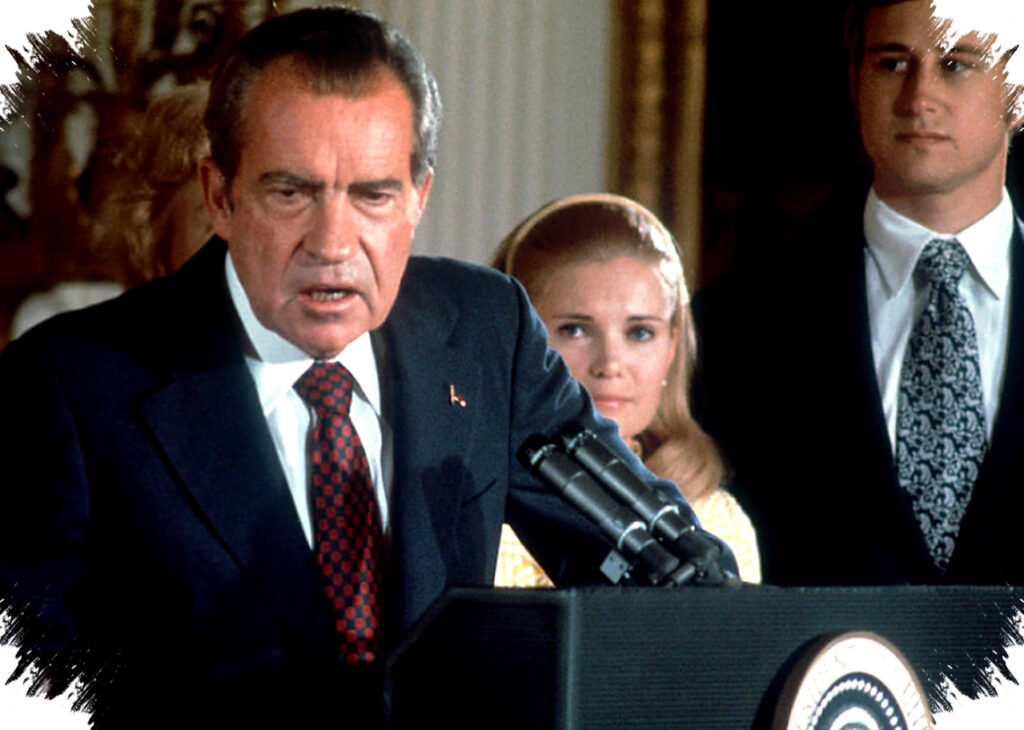
Richard Nixon is being reconsidered in a strange new light as modern political comparisons reshape how some observers view his legacy. A recent commentary argued that, despite Nixon’s abuses of power and the Watergate scandal, his record now appears more restrained and institutional than that of today’s most polarizing leaders.
The piece does not excuse Nixon’s wrongdoing, including the tape recordings, the cover-up, and the broader abuse of presidential power. Instead, it argues that the contrast highlights how far American political norms have shifted, especially when measured against attacks on democratic institutions, public agencies, and the rule of law.
Why Nixon is being re-evaluated
The argument centers on a basic comparison: Nixon was widely condemned in his time, but he still accepted constitutional limits when they finally caught up with him. When the Supreme Court ordered him to hand over the White House tapes, he complied, and when Republican leaders told him there were enough votes to impeach, he resigned.
That response matters because it shows Nixon, for all his flaws, still operated within a system he could not fully escape. By contrast, critics say current political behavior often involves open defiance of institutions, public pressure, and democratic outcomes.
Policy record that now looks more substantial
Nixon’s domestic legacy includes several major initiatives that still shape public life today. He created the Environmental Protection Agency, signed the Clean Water Act, and backed the Endangered Species Act, all of which reflected a strong federal role in environmental protection.
He also supported workplace safety and public assistance through the creation of OSHA, the Legal Services Corporation, and programs that expanded access to college loans and basic health coverage. In one notable health proposal from the early nineteen seventies, Nixon said the goal was to make sure “no American family will be prevented from obtaining basic medical care by inability to pay.”
Key areas where Nixon’s record stands out
- Environmental regulation: creation of the EPA and support for clean water and species protection
- Public safety: establishment of OSHA to address workplace hazards
- Legal access: creation of the Legal Services Corporation to help low-income Americans
- Health reform: serious attempts at broader medical coverage
- Foreign policy: pursuit of détente and nuclear arms limits with the Soviet Union
The column also notes that Nixon helped shape the early framework for modern arms control. He engaged in negotiations with the Soviet Union that produced the first real limits on nuclear arsenals between the two superpowers.
A complicated legacy, not a clean one
Any reassessment of Nixon has to include the damage he caused. His paranoia, dishonesty, and willingness to use aides in illegal schemes helped poison public trust in government for decades.
Still, the columnist argues that even a deeply flawed Nixon presided over an era when political collapse still had consequences. He left office after pressure from Congress and the courts, not after rejecting them outright, and that distinction is central to the renewed debate about his place in history.
Why the comparison resonates now
The renewed attention to Nixon reflects a broader frustration with modern politics, where scandal, conspiracy, and institutional erosion can seem routine. For some observers, Nixon no longer looks like the benchmark for presidential disgrace, because the boundaries of acceptable behavior have moved so far since Watergate.
That does not redeem him, but it does explain why his record is being revisited. In an era defined by polarization and repeated tests of democratic norms, even a president once seen as uniquely corrupt can appear, by comparison, as someone who still recognized the limits of power.
Read more at: www.dailyfreeman.com