The Final Four in men’s March Madness has a clear identity: four teams that entered the tournament with title hopes, then proved different strengths on the way to Indianapolis. Michigan, Arizona, UConn and Illinois all survived a bracket filled with higher seeds, late-game pressure and styles that tested every weakness.
The rankings below reflect how each team has performed in tournament play, based on balance, defense, offense, coaching and roster continuity. Each program now stands two wins from a national championship, with enough size, skill and experience to justify its spot on the sport’s biggest stage.
1. Michigan Wolverines


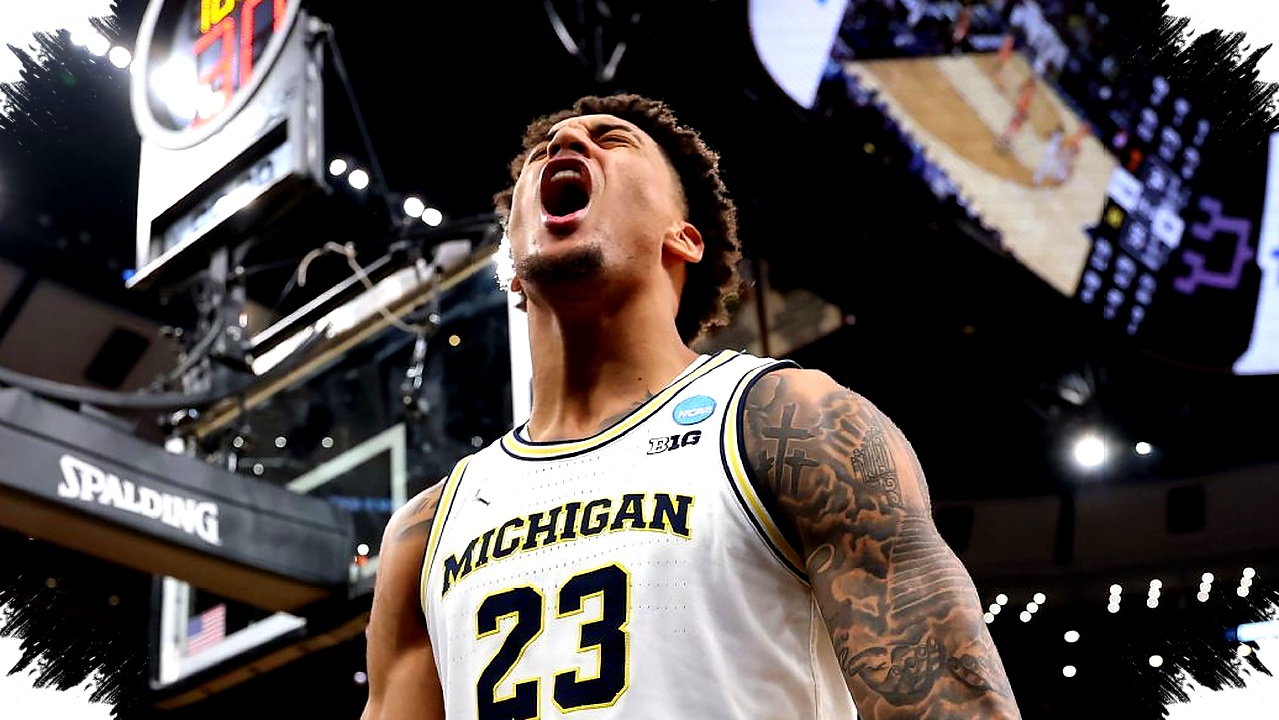
Michigan has looked like the most complete team in the field, with a frontcourt that has controlled both ends of the floor. The Wolverines entered the tournament as a No. 1 seed from the Midwest, then beat Howard, Saint Louis, Alabama and Tennessee by an average of more than 20 points.
Their defense has carried the surge. Michigan currently ranks first in adjusted defensive efficiency, and that edge showed in the Elite Eight when it pulled away from Tennessee by 23 points over the final 10 minutes of the first half.
Yaxel Lendeborg has emerged as one of the defining players of the tournament, finishing with 27 points and seven rebounds against Tennessee. He is part of a roster that includes three NBA-level prospects and gives Dusty May a strong case for one of the best coaching jobs in program history.
2. Arizona Wildcats
Arizona has been the most balanced team left, with top-10 marks in both offensive and defensive efficiency. The Wildcats also showed depth in the Elite Eight, when eight players scored in a win over Purdue.
Tommy Lloyd has built a roster that wins in more than one way, even without leaning on heavy 3-point volume. Arizona attempted just 26.4% of its field goals from deep this season, one of the lowest rates in Division I, but it has still generated enough scoring through size, talent and execution.
The Wildcats also bring major individual pieces, including Jaden Bradley and projected first-round NBA prospects Motiejus Krivas, Brayden Burries and Koa Peat. That mix of depth and defensive discipline makes Arizona a legitimate threat to win the title.
3. UConn Huskies
UConn has not always looked like the most talented team in the bracket, but it has repeatedly shown championship habits. Dan Hurley’s group trailed Duke by as many as 19 points in the Elite Eight before rallying for a one-point win, powered by poise, toughness and timely shot-making.
Alex Karaban remains the heart of the Huskies’ run, especially after he hit a 3-pointer and then made the assist on the winning 3 against Duke. Tarris Reed Jr. also gave UConn a major interior presence, helping the Huskies survive when the game tightened late.
Experience matters here. Three UConn starters have spent at least two years in Hurley’s system, and Karaban brings the rare edge of having already won back-to-back national titles. That combination keeps UConn dangerous even against more physically imposing opponents.
4. Illinois Fighting Illini
Illinois might rank fourth in this group, but the gap is small. The Illini have been one of the best offensive teams in the country for most of the season, and they showed more balance in the tournament by beating Houston and Iowa with strong defense and efficient scoring.
Brad Underwood has assembled a roster with players from Serbia, Croatia, Montenegro, Greece and the United States, creating a team that is both diverse and highly functional. Keaton Wagler has also become one of the breakout names of the postseason, while Tomislav Ivisic, Andrej Stojakovic and David Mirkovic give Illinois size and versatility.
The Illini’s success has not come from simply importing talent. It has come from fitting the right players into the right roles, and that structure has made the offense sustain high-end production while the defense has improved enough to survive deep into the bracket.
Final Four ranking at a glance
- Michigan — best defense, strongest overall form
- Arizona — most balanced roster and deepest rotation
- UConn — elite experience and late-game resilience
- Illinois — high-end offense with rising defensive value
The semifinal matchups should offer a sharp contrast in styles, with Michigan set to face Arizona and Illinois meeting UConn. That path guarantees at least one team built on defense, one built on balance, one built on experience and one built on offense will have a chance to play for the national title.
Read more at: www.espn.com