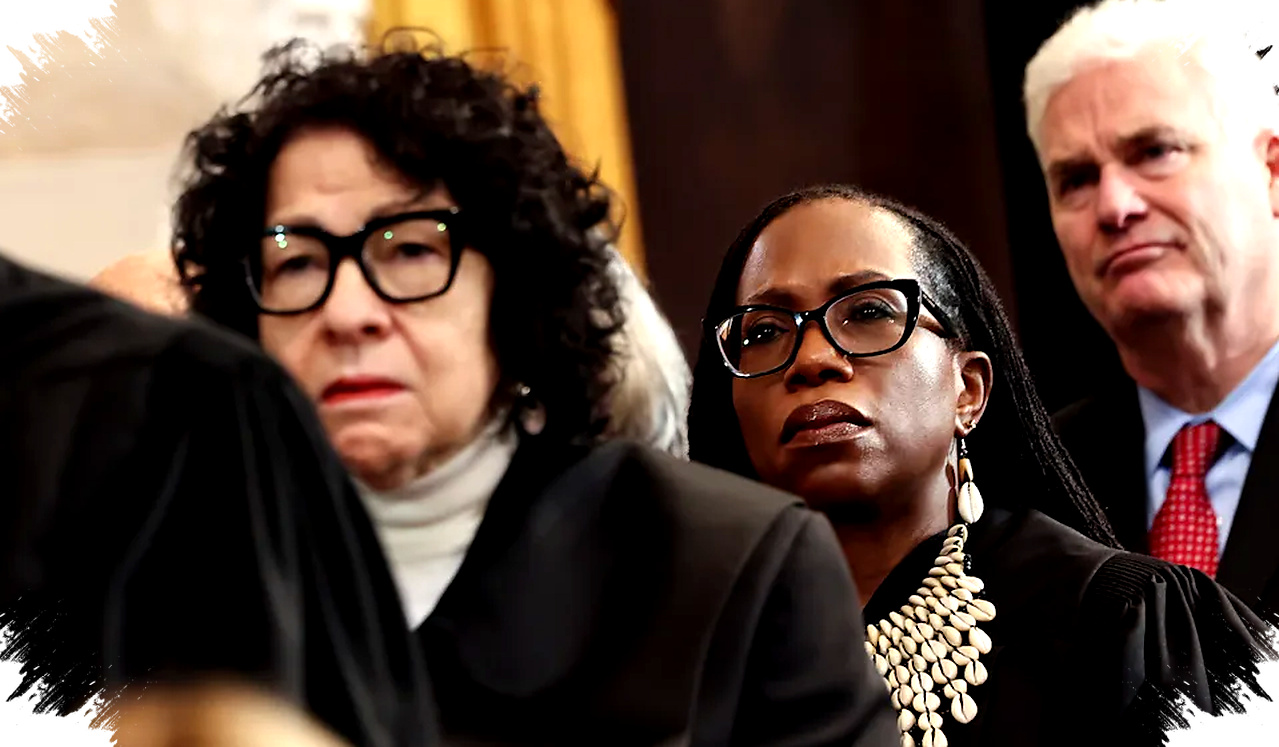
The Supreme Court again declined to take up a criminal case on Monday, and Justices Sonia Sotomayor and Ketanji Brown Jackson said the decision leaves a serious fairness problem unresolved. In a written dissent, Sotomayor argued that the court’s refusal keeps an “injustice in place” for a Louisiana prisoner whose case, she said, deserved closer review.
The dispute centers on James Skinner, who was convicted in the 1998 killing of Eric Walber after an earlier trial ended in a hung jury. His co-defendant, Michael Wearry, was later convicted and sentenced to death, but the Supreme Court overturned Wearry’s conviction in 2016 because prosecutors failed to disclose favorable evidence.
Why Sotomayor and Jackson objected


Sotomayor said Skinner’s case raised the same core constitutional problem as Wearry’s case. She wrote that prosecutors “failed to disclose the same favorable evidence” in Skinner’s case and warned that the court was not treating similar defendants alike.
Her dissent argued that the result could leave Skinner “spending the rest of his life in prison while Wearry walks free.” She also said the court was refusing to enforce its own precedent under Brady v. Maryland, the landmark ruling that requires prosecutors to turn over evidence favorable to the defense.
Jackson joined Sotomayor in dissent, but the two justices did not have enough votes to force review. The Supreme Court needs four justices to agree to hear a case, and only the two Democratic appointees supported taking up Skinner’s appeal.
What the state argued
Louisiana officials opposed review and said Wearry’s case does not control Skinner’s. They argued that Skinner had “no viable challenge” to his confessions and the other evidence that supported the verdict.
Skinner’s lawyers pushed back and said the state overstated the record. In their reply brief, they argued that the jury did not hear Skinner personally confess, but instead heard two informants describe alleged confessions. They also noted that those informants were themselves tied to Brady violations.
A pattern of dissent on the court
The Skinner case came days after Sotomayor also dissented when the court rejected a petition from Rodney Reed. In that case, she said Texas may carry out an execution without ever knowing whether another person’s DNA was on the murder weapon.
That sequence shows a familiar split on the court, with Sotomayor and sometimes Jackson or Elena Kagan pressing for deeper review in cases they see as raising unresolved fairness issues. Even when all three Democratic appointees align, they remain short of the four votes needed to secure Supreme Court review.
Key facts in the Skinner case
- Skinner was tried in Louisiana for the 1998 murder of Eric Walber.
- His first trial ended without a verdict, and a later trial led to a life sentence.
- Co-defendant Michael Wearry’s death sentence was vacated after a Brady violation.
- Sotomayor said the same type of evidence issue appeared in Skinner’s case.
- The Supreme Court declined to hear the appeal, leaving the lower court ruling in place.
The denial means Skinner’s conviction and sentence remain intact for now, while Sotomayor and Jackson have again used dissent to argue that the court is allowing a potentially unequal result to stand.
Read more at: www.yahoo.com