


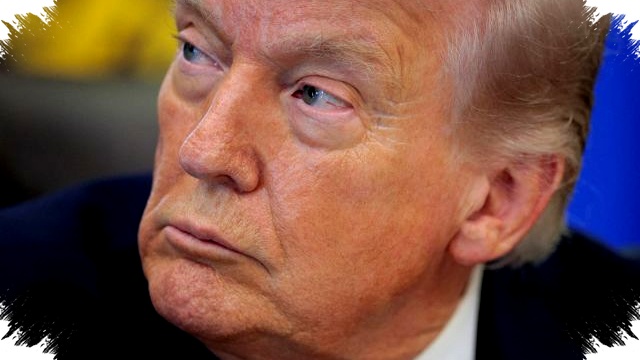
Trump’s day-care remark exposed a deeper image problem for the White House as it tries to defend the Iran strike. The president used a prime-time address to argue for the war effort, but a separate Easter lunch remark about choosing military spending over child care undercut that message almost immediately.
In the closed-door appearance, Trump told officials that the federal government should stop sending money for day care and leave it to the states. He framed the issue as a choice between paying for war and paying for day care, saying, “We’re fighting wars. We can’t take care of day care.”
Why the remark landed badly
Trump’s comments were not only blunt. They also highlighted the political weakness at the center of the administration’s case for military action against Iran, which many Americans already view as too expensive.
A CNN poll released the same day showed strong resistance to the Pentagon’s proposed $200 billion war spending plan, with 71% opposed and 29% in favor. The survey also found that 66% of Americans disapproved of taking military action against Iran, while 70% said the war was not worth it when lives and financial costs were considered.
That skepticism is not limited to the public at large. Even 35% of Republicans told pollsters the war was not worth it.
The cost argument is driving voter resistance
The White House has tried to present the war as a national security necessity, but the money question keeps getting in the way. High gas prices have sharpened that criticism, and a CBS News-YouGov poll found that 67% of Americans and 36% of Republicans did not want to pay more for gas because of the war.
- Large war costs weaken public support.
- Higher gas prices make the issue more personal.
- Voters reject the idea of open-ended sacrifice for the conflict.
- Families hear the debate in everyday terms, not strategic ones.
Trump’s child-care line made that tension even more visible. Instead of sounding like a commander-in-chief rallying support for a difficult decision, he sounded like a politician trying to justify an unpopular tradeoff.
White House defense does not fully match the tape
White House press secretary Karoline Leavitt said on X that Trump was talking about stopping scams and rooting out “billions of dollars in fraud” in key programs. But the full remarks showed a broader argument about who should pay for day care, health care, Medicaid, and Medicare.
Trump did briefly mention scams, yet the main thrust of his comments was fiscal and structural. He argued that states should raise taxes and take on more responsibility, while the federal government should focus on “military protection.”
That message was already difficult to sell. It became even harder after Trump appeared to reduce a major war debate to a comparison with child care.
A familiar communication problem for Trump
The daycare episode fits a broader pattern in Trump’s public messaging on economics and household costs. He has often struggled to explain policy in ways that sound practical to ordinary voters, especially during periods of persistent inflation and financial strain.
He has previously faced criticism for remarks that seemed detached from daily expenses, including telling Americans to buy fewer dolls and pencils. In this case, the problem was sharper because the comment came during a debate over war, spending, and national priorities.
Why Rubio’s message collided with Trump’s
The irony is that Secretary of State Marco Rubio had recently tried to make almost the opposite argument about Iran. Speaking on ABC’s “Good Morning America,” Rubio said: “Imagine an Iran that, instead of spending their wealth, billions of dollars, supporting terrorists or weapons, had spent that money helping the people of Iran.”
That line was meant to show that Iran’s leadership makes destructive choices with its resources. Trump’s day-care framing, however, shifted attention away from Iran and toward the political risk of the U.S. paying for the conflict.
The result was a messaging clash. Rubio emphasized Iranian waste and misplaced priorities, while Trump inadvertently reminded voters that Americans would bear the cost of war.
What the polling suggests about the White House challenge
The public response shows why the administration’s language matters so much. When voters are already doubtful that the operation is worth the money, any mention of sacrifice for everyday services can sound especially tone-deaf.
| Issue | Public sentiment |
|---|---|
| Pentagon’s $200 billion war proposal | 71% opposed |
| Military action against Iran | 66% disapproved |
| War worth the cost in lives and money | 70% said no |
| Americans willing to pay more for gas | 67% said no in CBS News-YouGov poll |
These numbers suggest that the White House does not just face a policy challenge. It also faces a framing problem, because the terms used to defend the war can make the costs feel even more immediate.
Trump’s remark about day care may fade quickly in the news cycle, but the larger issue remains. As long as the administration argues for military spending in a public mood shaped by costs, inflation, and skepticism about the war’s purpose, it will keep running into the same political resistance.
Read more at: www.cnn.com