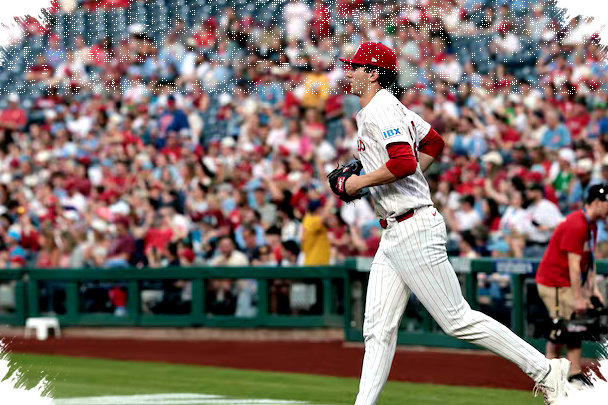
Phillies fans have two clear takeaways after Andrew Painter’s impressive major league debut: the young right-hander looked like a potential rotation difference-maker, and the early-season offense has not given him much margin for error. Painter held the Nationals in check with fewer than two runs allowed and at least eight strikeouts over five or more innings, a line that fits a strong historical indicator for pitchers who often go on to deliver quality seasons.
Andrew Painter’s debut points to real upside
Painter’s outing mattered because it matched a rare debut profile that has often translated into sustained success. Since the start of the recent 2023 sample cited in the reference data, 11 pitchers outside of Painter had that kind of start, and several later posted strong seasons, including Tanner Bibee, Shota Imanaga and Kodai Senga.

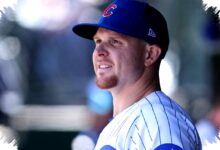
That does not guarantee Painter will follow the same path, but it does show why the Phillies can reasonably view him as more than a short-term fill-in. A debut that includes dominant command, swing-and-miss stuff and enough durability to finish five innings gives a team a meaningful signal about future rotation value.
Why the Phillies needed that start
Last season, Philadelphia finished with 65 games in which a starter worked at least five innings and allowed one run or fewer, and the club went 57-8 in those games. That record highlights how heavily the Phillies depend on starting pitching to tilt games in their favor, especially when the lineup goes through uneven stretches.
Ranger Suárez produced 14 such starts, while Cristopher Sánchez led the group with 17. If Painter becomes another reliable arm who can consistently reach that level, the rotation can remain a strength even if the offense continues to lag in April.
The offense has not done enough yet
The early run total has been ugly, but not uniquely disastrous. The Phillies have scored 23 runs in six games, and 8.6% of those runs came via ghost runners, a sign that the lineup has relied too much on extra-inning situations and too little on early pressure.
A closer look shows the problem is concentrated in the first seven innings, when Philadelphia has scored only 14 runs. Even so, the broader league context matters, because several playoff-caliber teams have opened slowly at the plate, including the Mets, Dodgers, Braves and Padres.
Early numbers can mislead, but not entirely
Small samples can create loud narratives, especially when stars start cold. Bo Bichette opened with a 3-for-27 line, Shohei Ohtani and Kyle Tucker were both quiet at the plate, and Bryce Harper and Kyle Schwarber also started unevenly by their standards.
That does not mean those players have changed in any meaningful way, and it does not mean the Phillies’ roster suddenly lacks firepower. It does mean the team needs time for the batting line to normalize, while also needing to avoid making one week of results look more predictive than it really is.
What matters next for Philadelphia
- Painter needs to build on the debut and show that his stuff plays beyond one strong outing.
- The rotation needs continued work from Zack Wheeler, Suárez and Sánchez to keep games close.
- The offense must produce more before the schedule tightens.
That schedule gets more demanding soon, with a 13-game stretch that includes two series each against the Cubs and Braves starting April 13. For a team trying to separate short-term noise from real concerns, Painter’s debut offered a reason for optimism, while the lineup’s slow start remains the bigger question that will decide how much that optimism matters.
Read more at: www.inquirer.com