


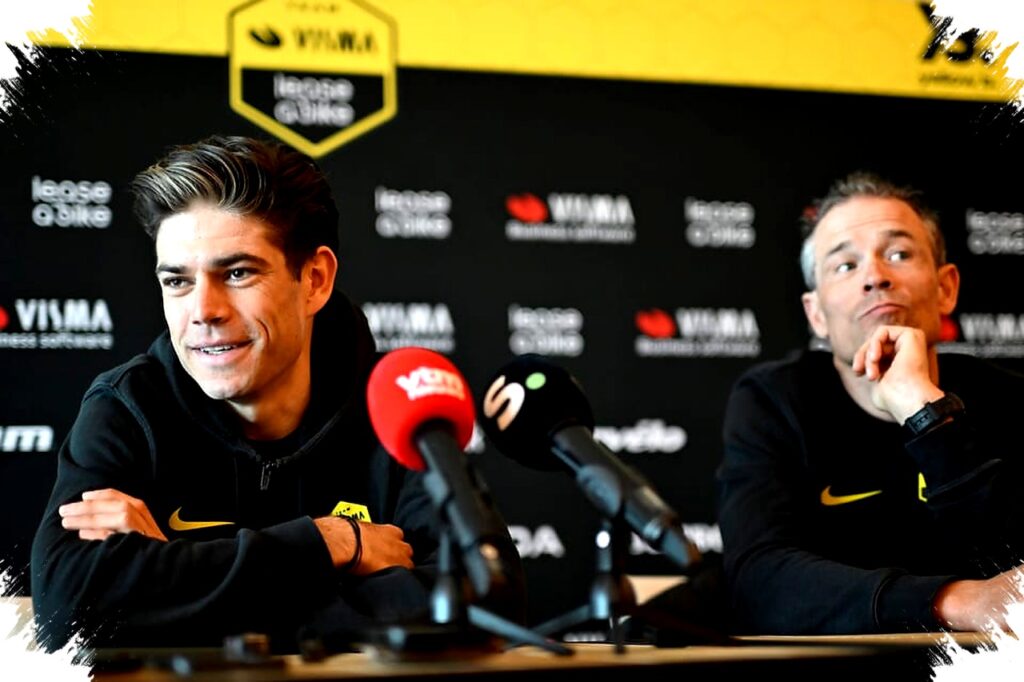
The build-up to the Tour of Flanders has turned into a contest of words as much as legs, with the race’s biggest names openly sizing each other up before Sunday’s Monument. Remco Evenepoel’s late announcement added another layer to the conversation, and the favourites have spent the week explaining where they see one another in the pecking order.
The result is a clear picture of respect, caution, and a few strategic messages. Tadej Pogačar, Mathieu van der Poel, Wout van Aert and Evenepoel now sit at the centre of the same pre-race debate, while riders such as Mads Pedersen and Jasper Stuyven remain in the wider chase for a result.
What the favourites are saying about each other
Evenepoel has been the loudest subject of conversation, even before he reached the start line. His entry surprised much of the peloton, but he said he had been planning for it once the Giro was no longer an option, and he made clear that he did not come to Flanders merely to test himself.
“Do I feel like I can win? Otherwise, I wouldn’t be starting here,” he said at the press conference. He also acknowledged the difference between strength and experience, placing himself behind the race’s established cobbled specialists despite believing his raw ability can close the gap.
That assessment matters because Evenepoel also named the order of respect around him. “Mathieu, Tadej, and Wout have already proven enough that they can win or are capable of winning here,” he said, adding that his own lack of front-line experience on this course leaves him below them for now.
Pogačar, the defending champion, responded with a measured tone after earlier saying he was “a little bit surprised and a little bit not” by Evenepoel’s move. The Slovenian has treated Flanders as a very different race from the other big one-day events, where positioning, repeated climbing and cobblestones make the finale unpredictable even for the strongest rider.
How each rider frames the rivalry
The conversation around Van der Poel, Pogačar and Van Aert has become a familiar one in spring classics racing. Van der Poel has three Tour of Flanders titles, Pogačar won the race last time he rode it, and Van Aert returns as one of the most watched riders on any start list.
Evenepoel’s comments suggest that he sees the trio as the benchmark rather than simply rivals. He said road racing on this course is “new” for him at elite level, and he described the route as one where differences are made on the climbs rather than through long, sustained chase work in the final kilometres.
Pogačar, meanwhile, is expected to remain the reference point for everyone else. His recent form and his ability to attack from far out make him the rider most likely to force the others into defensive racing, which is why his name has dominated pre-race talk alongside Van der Poel’s.
Van Aert sits in a slightly different position in the public discussion, often grouped with the top favourites but not always placed on the same tier as Pogačar and Van der Poel. Evenepoel’s own ranking reflects that view, as he put Van Aert behind the two riders who have already shown they can win Flanders.
What the race talk suggests about tactics
The favourites have also been careful when asked whether alliances could form on the road. Evenepoel dismissed the idea quickly, saying that everyone wants to win and that finals in Flanders usually become a direct fight between the strongest riders.
Here is how the main contenders are shaping the pre-race conversation:
- Tadej Pogačar is treated as the rider others must react to.
- Mathieu van der Poel remains the proven Flanders specialist and a key marker for the field.
- Wout van Aert is respected as a major threat, even if some place him just below the top two.
- Remco Evenepoel arrives with ambition, but with less cobbled-classics experience than the others.
Evenepoel’s reference to the Amstel Gold Race also gave a hint about how he may race if the chance appears. He pointed to that event, where he helped chase down Pogačar before finishing third, as evidence that patience and timing can still matter against the sport’s strongest attacker.
That idea fits the wider shape of Flanders, where the climbs, cobbles and repeated pressure usually break the race into moments rather than one long chase. Evenepoel said there are “plenty of places to make the difference,” which suggests he sees opportunity in the selective nature of the route even if he accepts that the established stars carry the bigger reputation.
Why the words matter before Sunday
The verbal sparring is not hostile, but it does show how tightly matched the leading names are viewed in the days before the Monument. Pogačar’s surprise, Evenepoel’s confidence, and the respect shown to Van der Poel and Van Aert all point to a race where status, form and course knowledge will matter as much as simple power.
Evenepoel’s late addition has raised the tension without changing the basic hierarchy in the minds of the riders themselves. For now, the strongest message from the favourites is that Flanders will likely be decided by the names already expected to shape it, even if one debutant believes he has enough to force his way into that group.
Read more at: escapecollective.com