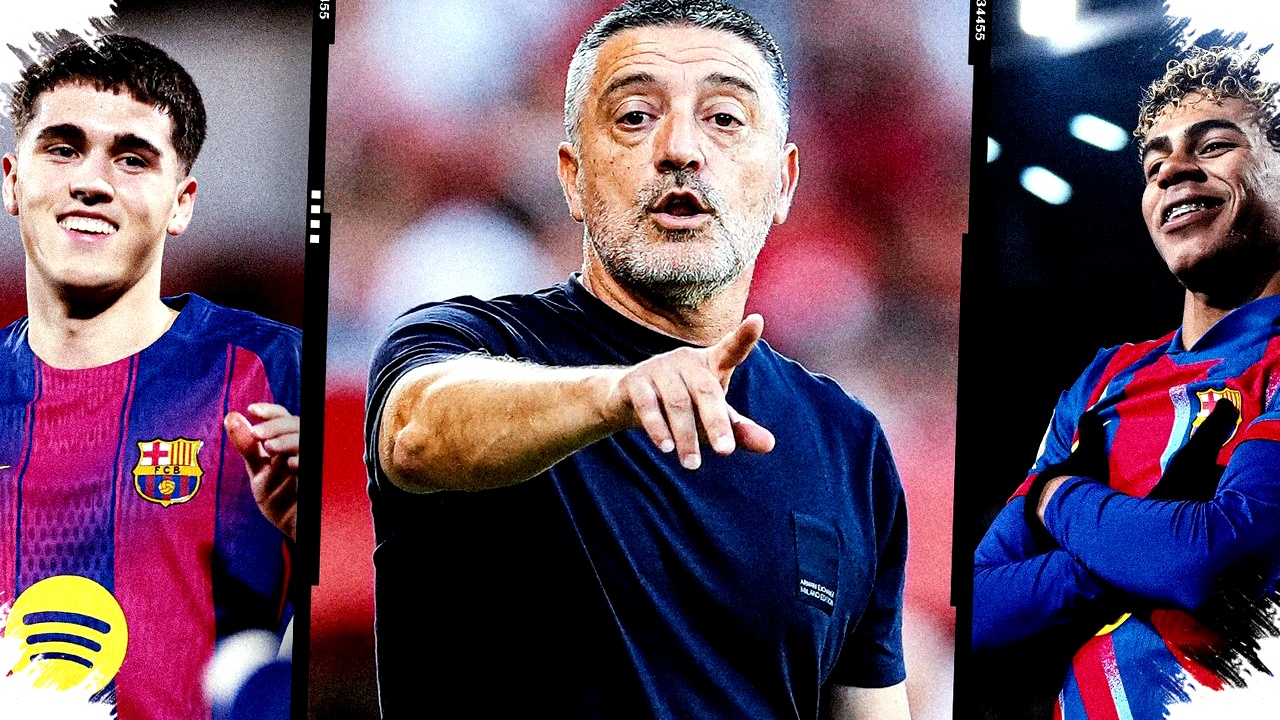
Barcelona’s Champions League run has once again been shaped by its academy, with Lamine Yamal and Pau Cubarsi at the centre of a team that has combined youth, talent and senior experience to keep its European push alive. The club’s latest knockout success also underlined how deeply La Masia still influences Barcelona’s identity, with the average age of the starting side in the record-breaking round-of-16 second leg brought down to just 25 years and 18 days.
That performance, a 7-2 home win over Newcastle, was Barcelona’s biggest victory against English opposition in 60 years and came with five academy graduates in the line-up. Yamal, Cubarsi and Marc Bernal started, while Xavi Espart added another homegrown option from the bench as Barcelona continued to lean on players developed inside the club’s own system.
La Masia remains central to Barcelona’s Champions League plan


The scale of Barcelona’s reliance on academy players has become one of the clearest stories of their season. Together with Fermin Lopez, Gavi and Eric Garcia, Espart is among 14 academy graduates who have featured at senior level this term, showing how the pathway from youth football to the first team remains active and productive.
Barcelona’s use of teenagers in the Champions League also has historical significance. By giving starts to Yamal, Cubarsi and Bernal in the knockout stages, the club moved ahead of Ajax for the most starts by teenagers in that phase of the competition.
That record reflects more than short-term necessity. It also shows a long-standing system that continues to produce players ready for elite football at the right moment, especially when the first team needs calm ball control under pressure.
Xavi Garcia Pimienta explains why the system works
Xavi Garcia Pimienta, who spent three decades in and around Barcelona as both a player and coach, said the club’s academy success is rooted in a clear footballing identity. He told Sky Sports that seeing so many homegrown players in the squad gives him a strong sense of connection because he was part of the same process.
“It’s an honour for me because I’ve been part of that process too, both as a player and a coach,” he said. He added that Barcelona’s method is not only about winning, but about “how you win,” in line with the style shaped by Johan Cruyff.
Garcia Pimienta said Cruyff created a before-and-after moment for the club. He described how the Dutch coach’s ideas became the standard across Barcelona’s training and game model, from youth levels to the first team, and helped turn La Masia into a system built on shared habits rather than isolated talent.
What makes La Masia different
Barcelona’s academy does not simply look for the strongest or fastest youngsters. It prioritises players who can understand space, timing and decision-making, because the club wants footballers who can adapt quickly to a possession-heavy style.
- Technical quality comes first.
- Intelligence and positioning matter as much as physical growth.
- Players train with the ball in a model that stays consistent across age groups.
- Graduates are given a clear route to the first team.
Garcia Pimienta said that approach helps explain why so many academy players step up successfully. In his view, they already know the football before they reach the senior squad, because they have learned the same principles for years.
He pointed to players such as Lamine Yamal, Cubarsi and Bernal as examples of youngsters who have grown together through the academy. He also noted that Barcelona have repeatedly trusted younger players and often seen them succeed at first-team level.
A culture built on belonging
The Barcelona coach’s explanation also goes beyond tactics. He believes the emotional side of academy development matters because players who rise through La Masia often carry a stronger sense of belonging when they reach the first team.
That feeling, he said, creates a different connection to the club. The players do not just represent Barcelona professionally, but also carry the identity of being supporters who have made it to the stadium and shirt they grew up dreaming about.
Garcia Pimienta linked that culture to the club’s past dominant teams under Pep Guardiola and Luis Enrique, where several key figures also came through La Masia. Those squads included names he coached at youth level, such as Lionel Messi, Andres Iniesta and Cesc Fabregas, which he cited as proof that the pathway can produce world-class performers.
Why Barcelona still trust youth in pressure moments
The use of academy players has also helped Barcelona cope with the demands of high-level European football. The team’s round-of-16 performance showed that young players can handle intense matches when the structure around them is stable and the style is familiar.
Barcelona’s model gives those players a clear advantage in transitions from academy football to the first team. They know the passing patterns, the spacing and the pressing triggers before they ever make a senior appearance, which reduces the adaptation period that many other clubs face.
That is one reason Barcelona continue to view La Masia as a competitive edge. A recent CIES Football Observatory study in January found that Barcelona’s under-contract academy graduates had a combined transfer value nearly three times higher than any other club in world football, a sign of both quality and market value.
Key Barcelona academy figures in the current push
| Player | Role in the run | Notable detail |
|---|---|---|
| Lamine Yamal | First-team starter | Teenager already central to big matches |
| Pau Cubarsi | First-team starter | Key defender from La Masia |
| Marc Bernal | Starter in Europe | Part of the record-breaking youth core |
| Xavi Espart | Bench option | 18-year-old midfielder trusted by Hansi Flick |
| Fermin Lopez | Senior academy graduate | Among the homegrown players in the squad |
Espart’s rise has been especially notable, with Hansi Flick comparing the 18-year-old midfielder to Philipp Lahm. His inclusion adds to the feeling that Barcelona’s squad is being built around players who understand the club’s ideas before they reach the highest stage.
Garcia Pimienta sees Barcelona’s model as exportable
Garcia Pimienta, who later coached Sevilla and also guided Las Palmas to promotion, said Barcelona’s philosophy can work elsewhere if the conditions are right. He argued that coaches need time, patience and the right type of player to make a possession-based structure succeed.
He said his experience at Las Palmas showed that a recognisable style can create results and connect with supporters. At Sevilla, he found the environment different, which made the challenge tougher and shortened his spell.
Even so, he remains convinced that Barcelona’s principles can travel. He said training should be enjoyable, centered on the ball and built around players who want to be active participants rather than passive runners, a message that matches the club’s long-standing football identity and its continued dependence on La Masia for Champions League ambitions.
Read more at: www.skysports.com