


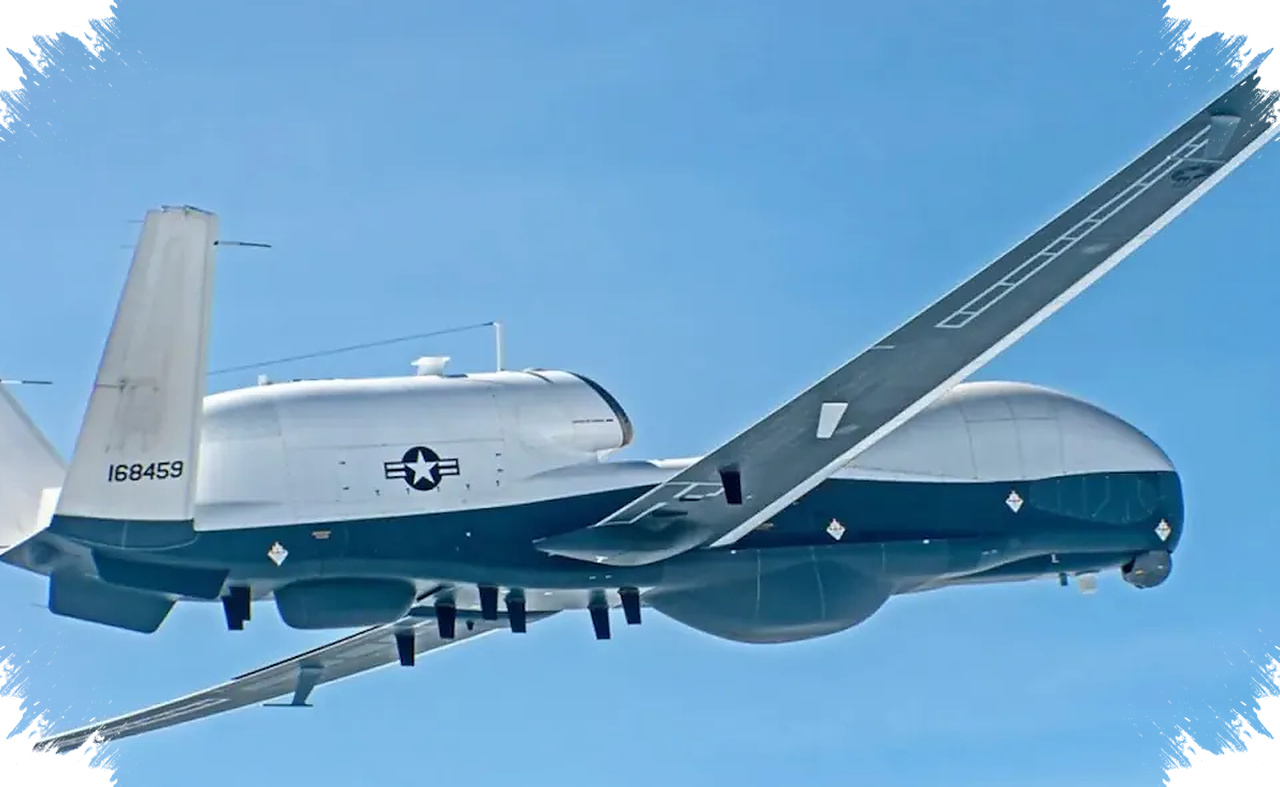
A US Navy MQ-4C Triton surveillance drone disappeared over the Strait of Hormuz after sending an in-flight emergency signal, raising fresh questions about security in one of the world’s most sensitive waterways. The aircraft, known as the US Navy’s most expensive drone, was tracking activity over the Persian Gulf and the Strait of Hormuz before it rapidly lost altitude and vanished from flight-tracking screens.
The incident came shortly after the United States and Iran reached a ceasefire agreement, with Iran also agreeing to reopen the Strait of Hormuz for shipping traffic. It is still not clear whether the drone crashed into the sea or was brought down, adding pressure on already fragile tensions tied to the Iran-US conflict.
What happened near the Strait of Hormuz
Flight-tracking data showed the MQ-4C Triton making a slight turn toward Iran before it broadcast code 7700, the emergency transponder signal used in general distress situations. The drone then began descending quickly, according to the online tracker Flightradar24, before disappearing from view.
The Pentagon had not immediately confirmed the fate of the aircraft, and no official explanation was available at the time of reporting. The Strait of Hormuz remains a critical chokepoint for global energy shipments, which makes any military or surveillance incident in the area closely watched.
Why the MQ-4C Triton matters
- The MQ-4C Triton is built for long-endurance maritime surveillance at high altitude.
- It can fly above 50,000 feet and stay airborne for more than 24 hours.
- Its range reaches about 7,400 nautical miles, allowing wide-area monitoring.
- It often works as a high-altitude intelligence platform for P-8A Poseidon patrol aircraft.
- The drone is designed to watch large sea lanes and chokepoints with persistent coverage.
The aircraft is worth more than $200 million, making it one of the most expensive drones in the US military inventory. As of 2025, the US Navy had 20 Triton drones and planned to add seven more, according to reports.
The strategic backdrop of US-Iran tensions
The disappearance of the drone adds another layer to the broader Iran war and US Iran ceasefire debate. The Strait of Hormuz has long been a flashpoint because it carries a major share of the world’s oil and commercial shipping, which gives any disruption immediate international impact.
A ceasefire can reduce direct hostilities, but it does not remove the risks around surveillance flights, maritime patrols, and air defense activity. In practice, the region can remain tense even when political leaders announce a pause in fighting.
The cost of the war remains high
The financial burden of the conflict is also significant, with estimates from the Stockholm International Peace Research Institute showing the US spending about $10,300 every second. Munitions and missiles make up the largest share of that cost at roughly $320 million per day, or 36% of daily spending.
A simple breakdown of estimated daily US war costs shows how expensive the campaign remains:
| Category | Estimated Daily Cost | Share |
|---|---|---|
| Munitions and missiles | $320 million | 36% |
| Air operations | $245 million | 27.5% |
| Naval operations | $155 million | 17.4% |
| Missile defence systems | $95 million | 10.7% |
| Intelligence and cyber operations | $45 million | 5% |
| Personnel and logistics | $30 million | 3.4% |
These figures underscore why the loss or disappearance of a high-value aircraft like the MQ-4C Triton attracts immediate attention. The drone is not only a surveillance asset but also part of a much larger and costly military posture across the Gulf region.
What remains unknown
The key unanswered question is whether the Triton malfunctioned, crashed, or was hit by hostile fire. Until officials provide confirmation, the incident will remain one of the most closely watched developments linked to the fragile US-Iran ceasefire and the ongoing security risk around the Strait of Hormuz.
For now, the disappearance of the MQ-4C Triton highlights how quickly the security environment in the Gulf can shift, especially when advanced US surveillance aircraft operate near Iranian airspace and critical shipping lanes.